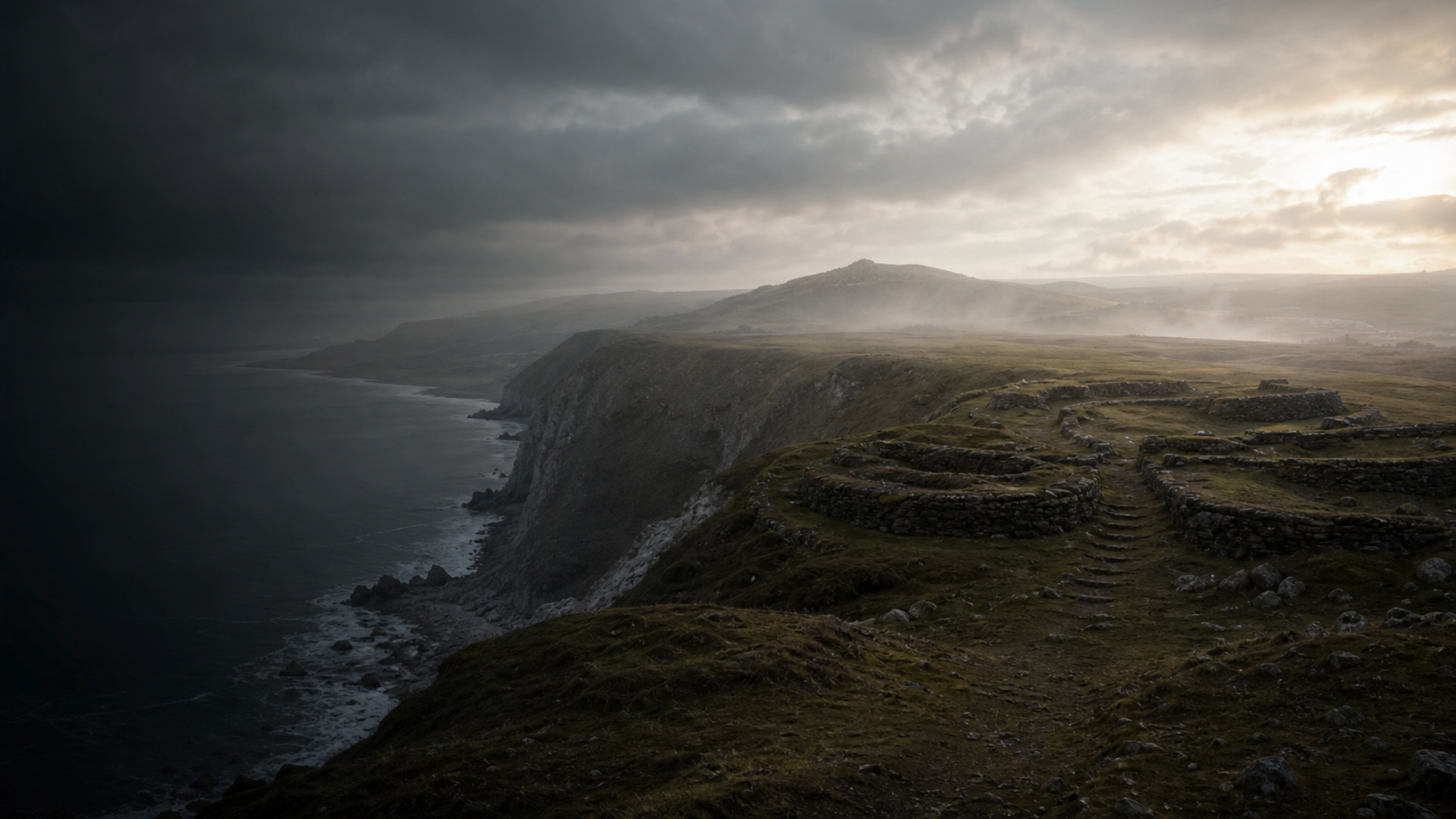
Vikings in England: Bones & Genes

Download PDF creates a visual, rasterized copy. Use Print for selectable text and better assistive-technology support.

Bericht wird vorbereitet

Verfügbare Informationen und Referenzen werden geladen

Verbindung mit dem archäologischen Quellenbestand...

Alte Quellen werden zusammengestellt

Zum Hauptinhalt springen
Vikings in England: Bones & Genes
Zivilisations-Spotlight

Vikings in England: Bones & Genes

Archaeology and ancient DNA reveal the tangled lives of Viking-era people in England.

880 CE - 1037 CE
United Kingdom (England, Wales)
Scrollen zum Start
Kapitel I

Die Geschichte

Die Vikings in England: Bones & Genes-Kultur verstehen

Ancient DNA from 33 individuals (880–1037 CE) from sites in England and Wales links archaeological evidence—mass graves and burials—with a mixed Norse–insular genetic signature, highlighting migration, violence, and integration during the Viking Age in England.

Time Period

880–1037 CE

Region

United Kingdom (England, Wales)

Common Y-DNA

R (17), I1 (7), I (6), Q (1), BT (1)

Common mtDNA

H (15), U (4), K (3), J (2), I (2)

Kapitel II

Zeitleiste

Zentrale Momente in der Geschichte dieser Kultur

878 CE

Battle of Edington and aftershocks

Guthrum's defeat and subsequent agreement with Alfred mark a turning point: pockets of Norse settlement and the emergence of the Danelaw reshape England's political and demographic landscape.

Kapitel III

Origins & Emergence

By the late ninth century CE, the map of England bore the marks of repeated maritime forays, seasonal camps and long-term settlements. Archaeological layers and place-names show Norse presence across coastal and riverine corridors; the genetic data from 33 burials dating 880–1037 CE offers a biological trace of those movements. Samples come from a spread of contexts: St John's College, Oxford; the Ridgeway Hill Mass Grave in Dorset; and Glyn Llanbedrgoch on Anglesey. Together these sites represent urban, rural and violent depositional contexts.

Archaeological data indicates a mosaic of outcomes: some individuals were newcomers, others local people living in newly Norse-influenced communities. Limited evidence suggests migration pulses rather than a single colonising event. The Y-chromosome counts (notably I1 at modest frequency) align with patterns expected from Scandinavian male-mediated immigration, while a substantial number of R-lineages likely reflect both local British and Scandinavian paternal backgrounds. Contextual archaeology—burial orientation, grave goods when present, and trauma patterns—helps anchor the genetic signatures to historical processes of raiding, settlement and assimilation. Where sample counts for particular lineages are low, interpretations remain provisional.

  • 33 samples dated 880–1037 CE from England and Anglesey
  • Sites include St John's College (Oxford), Ridgeway Hill (Dorset), Glyn Llanbedrgoch (Anglesey)
  • Evidence points to mixed origins: incoming Norse and local British contributions
Kapitel IV

Daily Life & Society

The human stories behind bones are fragmentary but compelling. Archaeology records coastal raiding, the establishment of seasonal bases and the slower processes of settlement where Norse newcomers and local populations negotiated everyday life. In urban centres like parts of Anglo-Saxon England, material culture reflects trade, workshop activity and hybrid crafts—textiles, metalwork and ship-related industries—while rural sites show a mix of agrarian continuities and new practices.

Violent death is archaeologically visible at contexts such as the Ridgeway Hill Mass Grave: clusters of perimortem trauma and bundled interments suggest episodes of massacre or execution. Other burials, found in domestic or church contexts, indicate integration and the adoption of local mortuary customs. Osteological markers point to strenuous lives—manual labour, healed injuries, and occasional battlefield trauma—consistent with a society shaped by mobility and conflict. Burial contexts combined with isotopic and DNA data can separate recent migrants from locals who adopted Norse cultural traits. However, with only 33 samples the picture is still a patchwork rather than a census.

  • Material culture shows both Norse and Anglo-Saxon influences
  • Ridgeway Hill evidence indicates episodes of mass violence
Kapitel V

Genetic Profile

The genetic dataset of 33 individuals yields a nuanced portrait: paternal and maternal lineages show both continuity with insular British populations and signals consistent with Scandinavian input. Y-DNA is dominated numerically by broad R lineages (17/33), followed by I1 (7) and other I (6). I1 is a lineage often associated with Scandinavian populations in the Viking Age; its presence here supports male-biased migration or male-mediated founder effects in some locales. R lineages are widespread across northern Europe and the British Isles, and their high count likely reflects a mix of local British males and some Norse paternal input.

Mitochondrial DNA is dominated by haplogroup H (15/33), with U, K, J and I also present. This maternal profile is common across western and northern Europe, suggesting that many women in these communities carried lineages typical of the insular population; however, mtDNA alone cannot pinpoint geographic origin with certainty. Rare findings—one Q and one BT on the Y-chromosome—warrant caution: both occur at very low counts (n<10) and may reflect long-distance mobility, unusual ancestry, or technical/ancestral resolution limits. Autosomal signatures (where available) generally indicate admixture between Scandinavian-like and local British-like ancestries, but the modest sample size means regional extrapolation should be conservative.

  • Y-DNA mix: strong R presence; I1 supports Scandinavian male input
  • mtDNA dominated by H, consistent with broad European maternal ancestry
Kapitel VI

Legacy & Modern Connections

The biological traces left by Viking Age mobility continue to ripple into the present. Many modern people in northern and eastern England carry genetic signals compatible with Scandinavian ancestry; place-names, legal traditions and some linguistic features also betray Norse influence. The England_Viking sample cluster adds concrete data tying specific burial contexts to those broader patterns.

Nevertheless, genetic legacy is uneven across regions and social groups. Integration, intermarriage and centuries of movement have blurred simple labels. The dataset's 33 individuals illustrate meaningful trends but cannot capture the full demographic complexity of the Viking Age in England; larger, geographically stratified sampling will sharpen our view. For museum visitors and descendants, these finds underscore a human story of movement, violence, adaptation and cultural blending that shaped medieval Britain and echoes in modern genomes.

  • Modern British populations retain regionally variable Scandinavian genetic contributions
  • Cultural traces (place-names, law, material culture) mirror genetic signals
KI-gestützt

KI-Assistent

Stellen Sie Fragen zur Vikings in England: Bones & Genes-Kultur

KI-Assistent von DNAGENICS

Funktion freischalten
Stellen Sie Fragen zur Kultur Vikings in England: Bones & Genes. Unser KI-Assistent kann genetische Befunde, historischen Kontext, archäologische Belege und moderne Verbindungen erläutern.
Beispiel einer KI-Analyse

Die Vikings in England: Bones & Genes-Kultur ist ein faszinierendes Kapitel der Menschheitsgeschichte...

Genetische Analysen zeigen Übereinstimmungen mit früheren Populationen und Hinweise auf besondere Anpassungen und kulturelle Innovationen. Alte DNA-Proben liefern Einblicke in Migrationsmuster, soziale Strukturen und genetische Verbindungen zwischen Populationen.

Dies ist eine Vorschau der KI-Analyse. Schalten Sie den vollständigen KI-Assistenten frei, um detaillierte Einblicke zu erkunden:

  • Genetische Zusammensetzung und genetische Ähnlichkeit
  • Migrationsmuster und Ursprünge
  • Alltag und kulturelle Praktiken
  • Genetischer Bezug zu heutigen Populationen

Weitere antike Kulturen erkunden

Geschichten von Zivilisationen aus der antiken Welt entdecken

Use code for 30% off • Expires Nov 08