Wusun of the Tian Shan

Download PDF creates a visual, rasterized copy. Use Print for selectable text and better assistive-technology support.

Bericht wird vorbereitet

Verfügbare Informationen und Referenzen werden geladen

Verbindung mit dem archäologischen Quellenbestand...

Alte Quellen werden zusammengestellt

Zum Hauptinhalt springen
Wusun of the Tian Shan
Zivilisations-Spotlight

Wusun of the Tian Shan

A glimpse into nomadic life where steppe archaeology and DNA converge

500 CE - 1 BCE
Tian Shan, Central Steppe (Kazakhstan)
Scrollen zum Start
Kapitel I

Die Geschichte

Die Wusun of the Tian Shan-Kultur verstehen

Three Iron Age individuals (500–1 BCE) from Turgen-2 and other Tian Shan localities in Kazakhstan reveal a mixed steppe genetic signal: Y haplogroups N and R, mtDNA HV6 and J. Limited sample size makes conclusions preliminary but evocative of northern–western Eurasian contacts.

Time Period

500–1 BCE

Region

Tian Shan, Central Steppe (Kazakhstan)

Common Y-DNA

N (2), R (1) — small sample (n=3)

Common mtDNA

HV6 (2), J (1) — small sample (n=3)

Kapitel II

Zeitleiste

Zentrale Momente in der Geschichte dieser Kultur

2500 BCE

Deep steppe roots

Broader Bronze Age steppe expansions establish mobile pastoral networks that later shape Iron Age groups across the Tian Shan; a deep genetic and cultural substrate begins to form.

Kapitel III

Origins & Emergence

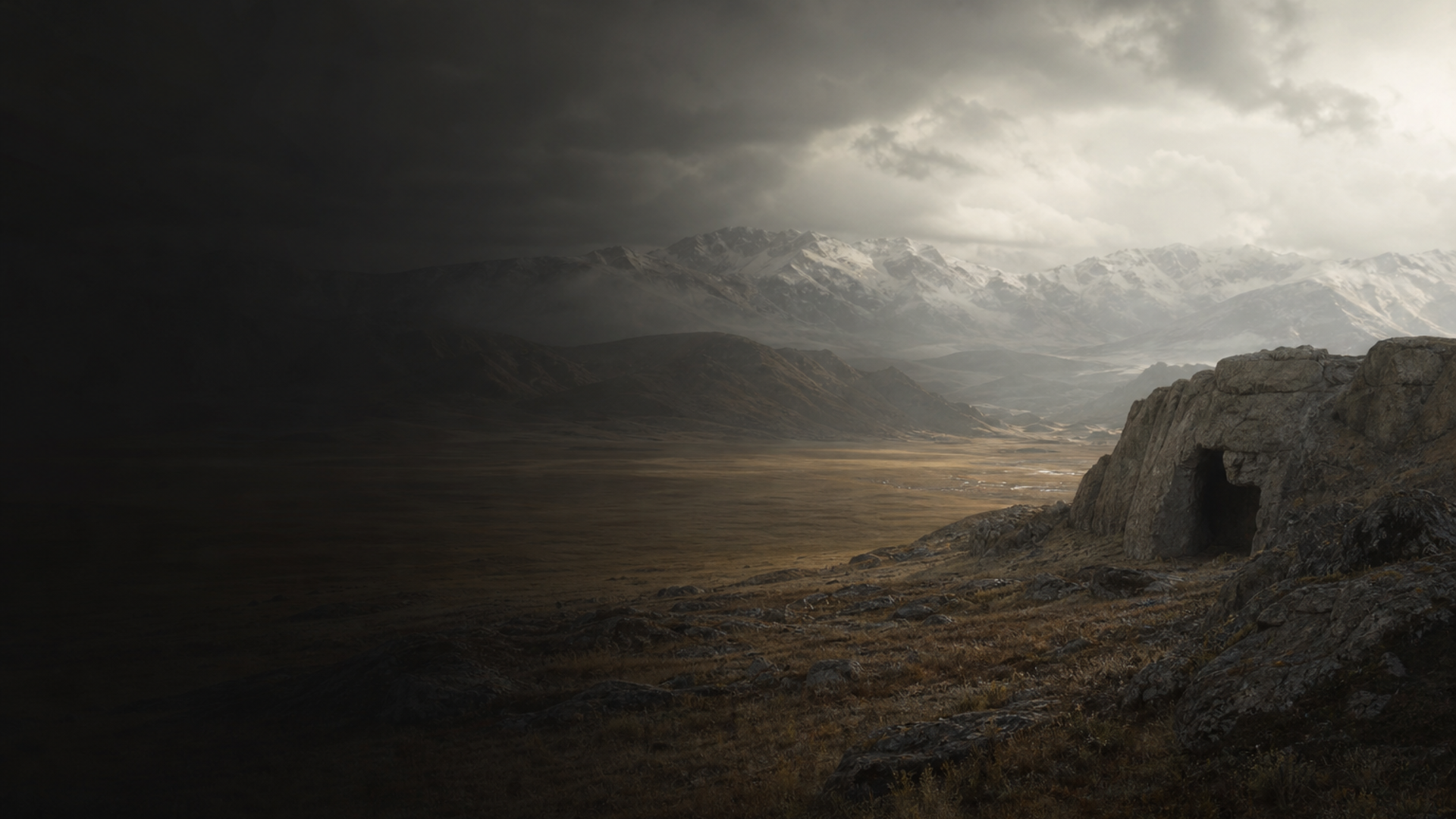
The Wusun material from the Tian Shan foothills sits at the crossroads of mobile steppe traditions and highland routes into Central Asia. Archaeological data indicates occupation and burial activity in valley margins and low ridges; the three analysed individuals come from the Central Steppe and the Turgen-2 locality (Almaty Region).

Limited evidence suggests these communities were part of the wider Iron Age tapestry of the Central Steppe — a time when nomadic formations, funerary kurgans, and intensifying long-distance contacts shaped social landscapes. Turgen-2, as a named excavation locus, provides local context: graves and surface finds recorded there connect to regional patterns of mobility, metallurgy, and animal pastoralism.

Material culture parallels tie the Wusun-era assemblages to neighboring steppe groups, but the archaeological picture remains patchy in this sector of the Tian Shan. Where ceramics, metalwork, or burial architecture are preserved they hint at influences both from southerly routes into Transoxiana and northerly steppe traditions.

Given only three ancient genomes are available, any narrative about Wusun origins must be tentative. These samples offer important anchor points but require larger, spatially broader sampling to resolve the tempo and direction of cultural and genetic admixture across the Central Steppe.

  • Samples from Tian Shan foothills and Turgen-2 (Almaty Region, Kazakhstan)
  • Archaeological context shows steppe burial traditions and mobile lifeways
  • Conclusions are preliminary—larger sampling needed
Kapitel IV

Daily Life & Society

Archaeological indicators from Wusun-era contexts on the Central Steppe point to a lifestyle adapted to seasonal movement and pastoral economies. Faunal remains and wear patterns on tools in comparable contexts indicate reliance on sheep, goats, and cattle; horses played an increasingly central role across the steppe during the first millennium BCE, shaping mobility and warfare.

Settlement traces are typically ephemeral for nomadic groups: campsite features, corrugated hearths, and temporary enclosures leave a light archaeological footprint compared with sedentary villages. Burials at Turgen-2 and nearby sites provide richer snapshots — grave goods, weaponry fragments, and personal ornaments supply clues about status differentiation, gendered roles, and craft connections to wider exchange networks.

Metals and finished items suggest access to long-distance metalworking traditions, though the degree of local production versus importation varies. Textile impressions and small portable items (spindle whorls, beads) imply domestic craft activities that traveled with people rather than anchored them to one place.

Archaeological data indicates social life among Wusun communities combined mobility with enduring connections: seasonal corridors through the Tian Shan allowed contact with highland and lowland neighbors, producing a cultural mosaic visible in burial rites and portable material culture.

  • Pastoral economy with seasonal mobility and horse use
  • Burials at Turgen-2 reveal status markers and long-distance connections
Kapitel V

Genetic Profile

Genetic data from three individuals dated between 500 and 1 BCE offers a first, constrained window into the Wusun genetic landscape. Y-chromosome lineages include haplogroup N in two males and haplogroup R in one male. Mitochondrial lineages are HV6 (two individuals) and J (one individual).

Haplogroup N has strong associations with northern Eurasian and Siberian populations in many studies and may signal gene flow from northerly or forest-steppe source populations into the Central Steppe. Haplogroup R is widespread across Eurasia and is common among many Bronze-to-Iron Age steppe groups; its presence here aligns with broader steppe ancestries. On the maternal side, HV6 and J are branches of West Eurasian mitochondrial diversity and suggest maternal connections to western or southwestern Eurasian gene pools.

Taken together, this combination is consistent with admixture between northern Eurasian and western/steppe-related gene pools, possibly reflecting a history of multi-directional contact across the Tian Shan corridor. However, with only three samples (n=3), statistical power is very limited: patterns of sex-biased admixture, timing of gene flow, and population structure cannot be robustly resolved.

Archaeogenetic interpretation remains provisional; expanding the dataset across sites and time slices is essential to test whether these haplogroup signals are representative of the Wusun population or reflect localized or individual-level ancestry.

  • Y haplogroups: N (2), R (1) — suggests northern and steppe affinities
  • mtDNA: HV6 (2), J (1) — maternal lines tied to West Eurasian diversity; conclusions are preliminary
Kapitel VI

Legacy & Modern Connections

The Wusun appear in historical records outside archaeology — Chinese chronicles reference Wusun groups in Central Asia — and genetic data provides a complementary line of evidence for their biological heritage. The mixed haplogroup pattern seen in these three Iron Age individuals hints at the layered genetic landscape that ultimately contributed to modern Central Asian diversity.

Modern populations of Kazakhstan and neighboring regions carry a mosaic of lineages derived from millennia of Steppe, Siberian, Iranian, and East Asian contacts. While the tiny sample set prevents direct ancestry claims, these genomes demonstrate how local populations could embody both northerly and west/steppe-derived ancestries. As paleogenomic sampling grows, researchers can better trace which ancient lineages persisted, shifted, or were absorbed into later formations such as Saka or early medieval steppe polities.

Careful synthesis of archaeology, historical texts, and expanding DNA datasets will clarify long-term connections between Iron Age Wusun-era communities and the genetic fabric of contemporary Central Asia.

  • Historical sources and genetics together suggest layered ancestry in Central Asia
  • Current findings are a first step; broader sampling will clarify long-term continuity
KI-gestützt

KI-Assistent

Stellen Sie Fragen zur Wusun of the Tian Shan-Kultur

KI-Assistent von DNAGENICS

Funktion freischalten
Stellen Sie Fragen zur Kultur Wusun of the Tian Shan. Unser KI-Assistent kann genetische Befunde, historischen Kontext, archäologische Belege und moderne Verbindungen erläutern.
Beispiel einer KI-Analyse

Die Wusun of the Tian Shan-Kultur ist ein faszinierendes Kapitel der Menschheitsgeschichte...

Genetische Analysen zeigen Übereinstimmungen mit früheren Populationen und Hinweise auf besondere Anpassungen und kulturelle Innovationen. Alte DNA-Proben liefern Einblicke in Migrationsmuster, soziale Strukturen und genetische Verbindungen zwischen Populationen.

Dies ist eine Vorschau der KI-Analyse. Schalten Sie den vollständigen KI-Assistenten frei, um detaillierte Einblicke zu erkunden:

  • Genetische Zusammensetzung und genetische Ähnlichkeit
  • Migrationsmuster und Ursprünge
  • Alltag und kulturelle Praktiken
  • Genetischer Bezug zu heutigen Populationen

Weitere antike Kulturen erkunden

Geschichten von Zivilisationen aus der antiken Welt entdecken

Use code for 30% off • Expires Nov 08




