Yonne Iron Age — Gurgy Les Noisats

Download PDF creates a visual, rasterized copy. Use Print for selectable text and better assistive-technology support.

Bericht wird vorbereitet

Verfügbare Informationen und Referenzen werden geladen

Verbindung mit dem archäologischen Quellenbestand...

Alte Quellen werden zusammengestellt

Zum Hauptinhalt springen
Yonne Iron Age — Gurgy Les Noisats
Zivilisations-Spotlight

Yonne Iron Age — Gurgy Les Noisats

Three Iron Age individuals from Yonne offer cautious glimpses of life and ancestry in 300–100 BCE France

300 CE - 100 BCE
Bourgogne-Franche-Comté, Yonne, France
Scrollen zum Start
Kapitel I

Die Geschichte

Die Yonne Iron Age — Gurgy Les Noisats-Kultur verstehen

Archaeological remains from Gurgy Les Noisats (Yonne, France) dated 300–100 BCE are paired with DNA results from three individuals. Limited samples hint at shared Western European lineages (Y: R, I; mt: K1a, U, H3) and underscore the need for broader genomic sampling to clarify regional Iron Age dynamics.

Time Period

300–100 BCE

Region

Bourgogne-Franche-Comté, Yonne, France

Common Y-DNA

R (1), I (1)

Common mtDNA

K1a (1), U (1), H3 (1)

Kapitel II

Zeitleiste

Zentrale Momente in der Geschichte dieser Kultur

2500 BCE

Bronze Age transformations begin

Bronze Age metallurgy and long-distance exchange set foundations in western Europe that influenced later Iron Age social and material networks.

Kapitel III

Origins & Emergence

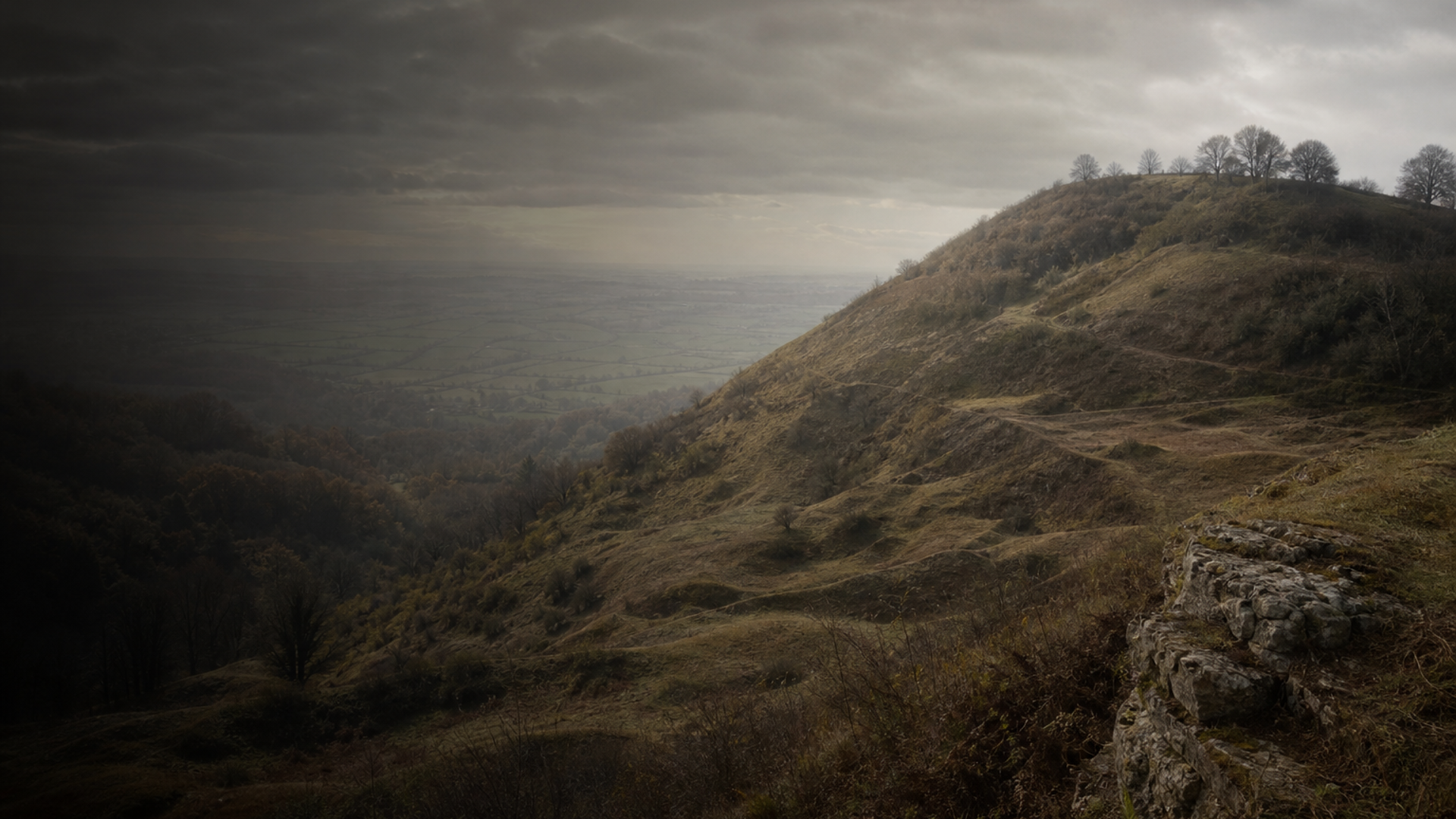
The human remains recovered at Gurgy Les Noisats sit in the cool river valleys of the Yonne, where Iron Age communities reshaped older Bronze Age landscapes. Archaeological data indicates settlement and funerary activity in this part of Bourgogne-Franche-Comté between roughly 300 and 100 BCE, a period when material culture in central France shows local traditions entangling with wider Hallstatt–La Tène influences.

Limited evidence suggests that the people living here were part of the broader cultural mosaic often described as the Iron Age Culture of Yonne: communities tied to agrarian economies, ironworking, and long-distance exchange along river corridors. The site itself provides a snapshot rather than a panorama — only a handful of human remains and associated finds have been published from Gurgy Les Noisats — so conclusions about migration, language, or political organization remain provisional.

Cinematic as the image of smoke and forge-light may be, scientific caution is required: archaeological traces point to continuity with earlier regional groups in some craft and burial practices, even while stylistic affinities connect Yonne to the pan-European Iron Age world. Future excavations and more extensive radiocarbon and genomic sampling would help trace when and how these local traditions fused with incoming cultural currents.

  • Site: Gurgy Les Noisats (Yonne Department, Auxerre arrondissement)
  • Era: Iron Age Culture of Yonne, ca. 300–100 BCE
  • Evidence is limited; wider regional ties evident in material culture
Kapitel IV

Daily Life & Society

Archaeological traces from the Yonne landscape evoke daily rhythms of field, craft, and river trade. Agricultural terraces and pollen records in the wider Bourgogne region suggest cereal cultivation and mixed farming sustained communities; local craft specializations included iron tool production and ceramic traditions that echo broader La Tène aesthetics. Finds from nearby Iron Age sites reveal household assemblages of grinders, loom weights, and iron blades — tools of labor, textile production, and food preparation.

Burial practices in the region vary, and at Gurgy Les Noisats the small number of recovered individuals limits firm conclusions. Skeletal remains can preserve evidence of diet, workload, and interpersonal violence; where preservation permits, isotope studies often help reconstruct childhood mobility and consumption. In this case, there is potential to explore river-based exchange routes along the Yonne and Seine that connected these communities to markets and cultural ideas across Gaul.

Social life likely balanced kin-based households with emerging social hierarchies visible elsewhere in Iron Age France (e.g., grave goods and settlement fortifications). Yet the cinematic image of chieftain graves and abundant ornaments should be held lightly here: the Gurgy assemblage is modest, and archaeological data indicates a community rooted in local landscapes, interacting with but not wholly subsumed by continental trends.

  • Economy: mixed farming, ironworking, local crafts
  • Social life inferred from modest funerary and domestic remains
Kapitel V

Genetic Profile

Three individuals from Gurgy Les Noisats underwent targeted genetic analysis, yielding a concise but tentative portrait of Yonne Iron Age ancestry. Y-chromosome haplogroups recovered include one R and one I; mitochondrial lineages include K1a, U, and H3. These haplogroups are broadly present across prehistoric and historic Europe: R-lineages (in later periods often R1b) became common in western Europe after the Bronze Age, while I-lineages frequently reflect older European hunter-gatherer ancestry. MtDNA haplogroups H, U, and K variants are likewise widespread in European prehistory.

Because the sample count is only three, any inference about population structure is preliminary. Limited evidence suggests a mixture of ancestries consistent with a Western European Iron Age cohort, but the dataset is too small to resolve proportions of steppe-derived, Neolithic farmer, or Mesolithic hunter-gatherer ancestry. No extensive autosomal summaries are available from these three samples to robustly model ancestry components.
Archaeogenetic context: if larger regional datasets from neighbouring Iron Age sites align with these haplogroup observations, they would strengthen interpretations of continuity and admixture patterns in central France. For now, the Gurgy samples serve as valuable data points that hint at continuity with broader western European genetic lineages while underscoring the urgent need for more genome-wide sampling to move from evocative suggestion to statistical confidence.

  • Small sample size (N=3): conclusions are preliminary
  • Y: R (1), I (1); mt: K1a, U, H3 — lineages common in prehistoric Europe
Kapitel VI

Legacy & Modern Connections

The skeletal fragments and DNA from Gurgy Les Noisats act like a whisper across millennia: they connect modern residents of Burgundy to a complex Iron Age past without claiming direct lineal continuity. Archaeological data indicates long-term occupation of the Yonne river valley and its role in regional networks; genetic signals, though sparse here, fit into a larger European pattern of mixing and persistence.

Limited though the sample is, these finds help anchor future research directions — targeted radiocarbon dating, isotopic mobility studies, and expanded genome-wide sampling could illuminate migration, marriage networks, and social organization in Iron Age Gaul. For the public, such discoveries deepen place-based identity: the landscape of Bourgogne was shaped by hands that farmed, forged iron, and navigated river routes, and traces of their DNA persist in the genetic tapestry of Europe, albeit in ways that require careful, evidence-led interpretation.

  • Provides local anchors for broader Iron Age studies in central France
  • Highlights need for more samples to trace ancestry, mobility, and social structure
KI-gestützt

KI-Assistent

Stellen Sie Fragen zur Yonne Iron Age — Gurgy Les Noisats-Kultur

KI-Assistent von DNAGENICS

Funktion freischalten
Stellen Sie Fragen zur Kultur Yonne Iron Age — Gurgy Les Noisats. Unser KI-Assistent kann genetische Befunde, historischen Kontext, archäologische Belege und moderne Verbindungen erläutern.
Beispiel einer KI-Analyse

Die Yonne Iron Age — Gurgy Les Noisats-Kultur ist ein faszinierendes Kapitel der Menschheitsgeschichte...

Genetische Analysen zeigen Übereinstimmungen mit früheren Populationen und Hinweise auf besondere Anpassungen und kulturelle Innovationen. Alte DNA-Proben liefern Einblicke in Migrationsmuster, soziale Strukturen und genetische Verbindungen zwischen Populationen.

Dies ist eine Vorschau der KI-Analyse. Schalten Sie den vollständigen KI-Assistenten frei, um detaillierte Einblicke zu erkunden:

  • Genetische Zusammensetzung und genetische Ähnlichkeit
  • Migrationsmuster und Ursprünge
  • Alltag und kulturelle Praktiken
  • Genetischer Bezug zu heutigen Populationen

Weitere antike Kulturen erkunden

Geschichten von Zivilisationen aus der antiken Welt entdecken

Use code for 35% off • Expires Nov 09




