Zhalainuoer: Iron Age Echoes

Download PDF creates a visual, rasterized copy. Use Print for selectable text and better assistive-technology support.

Bericht wird vorbereitet

Verfügbare Informationen und Referenzen werden geladen

Verbindung mit dem archäologischen Quellenbestand...

Alte Quellen werden zusammengestellt

Zum Hauptinhalt springen
Zhalainuoer: Iron Age Echoes
Zivilisations-Spotlight

Zhalainuoer: Iron Age Echoes

A lone ancient genome from a Hulunbuir mining site illuminates Northern China’s Iron Age horizon

81 CE - 236 CE
Inner Mongolia — Hulunbuir, Zhalainuoer mining site
Scrollen zum Start
Kapitel I

Die Geschichte

Die Zhalainuoer: Iron Age Echoes-Kultur verstehen

Archaeogenetic and archaeological evidence from a single individual (81–236 CE) at the Zhalainuoer mining site in Hulunbuir, Inner Mongolia suggests local northern Asian lineages and a community shaped by metallurgy and steppe-sinic interactions. Conclusions are preliminary due to one sample.

Time Period

81–236 CE (Eastern Han era)

Region

Inner Mongolia — Hulunbuir, Zhalainuoer mining site

Common Y-DNA

C (1 sample)

Common mtDNA

N (1 sample)

Kapitel II

Zeitleiste

Zentrale Momente in der Geschichte dieser Kultur

800 BCE

Broader Iron Age transformations

The Iron Age in northern China and adjacent steppe regions introduced new metallurgy and long-distance interactions.

81 CE

Earliest bound of sample date range

Start of the radiocarbon or contextual date range for the individual from Zhalainuoer (81–236 CE).

220 CE

End of Eastern Han turbulence

Political fragmentation after the Han dynasty’s collapse affected frontier trade and mobility across northern China.

Kapitel III

Origins & Emergence

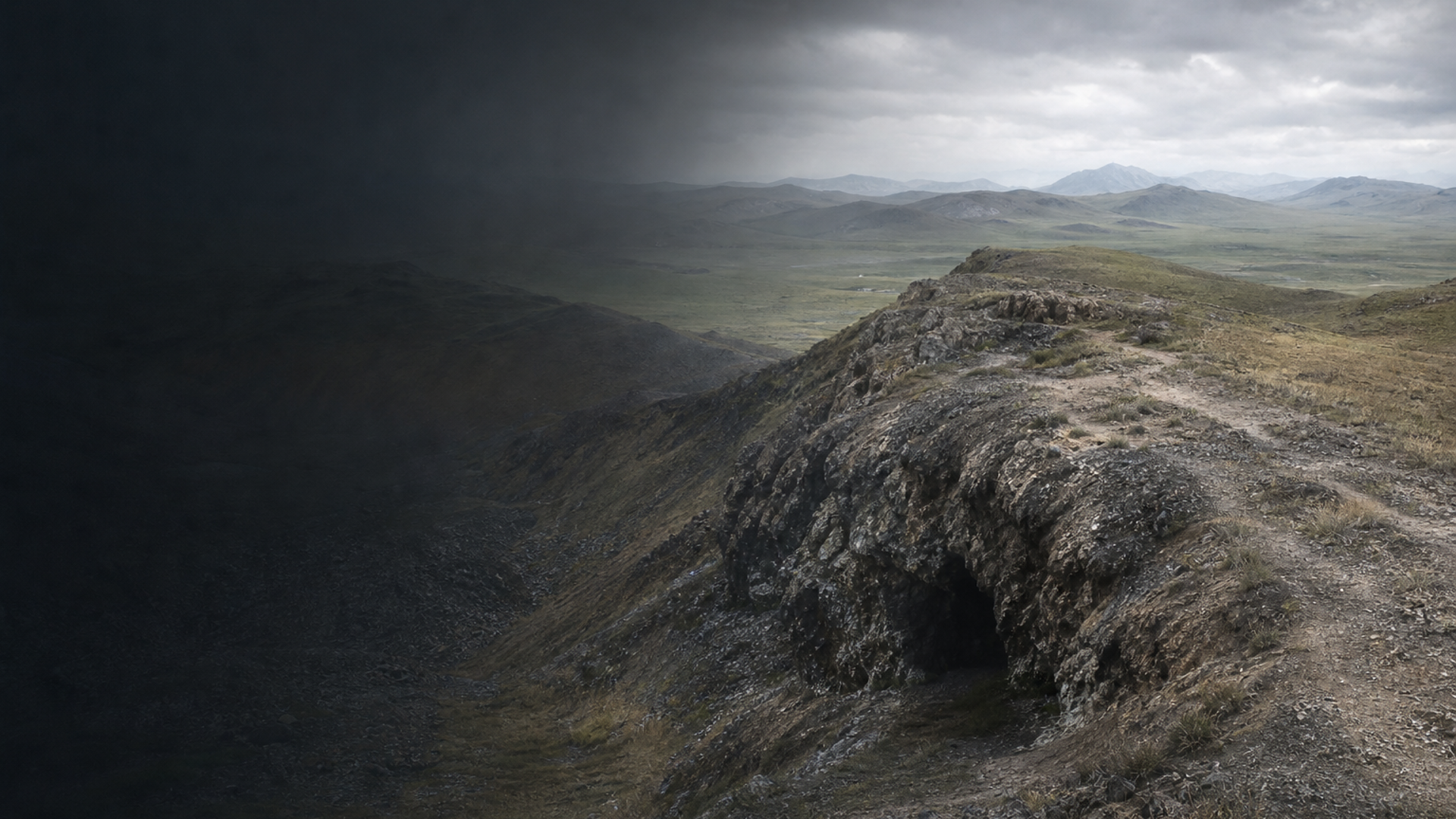
The Zhalainuoer mining site sits like a weathered ledger on the northern margins of the Han world: exposed rock, slag, and the echoes of hammers. Archaeological data indicate active metallurgical activity at Hulunbuir during the late first to early third centuries CE, a period when the Eastern Han polity interacted with mobile steppe groups along its peripheries. Limited evidence suggests that mining and metal-working were focal points for local settlement, drawing together pastoral, agricultural, and craft specialists.

Geographically this place is a crossroads: the forests and grasslands of Inner Mongolia meet routes that reach toward the Mongolian Plateau and the Yellow River basin. In cinematic terms, miners and smiths stood at a threshold — taking ore from the earth while ideas and peoples flowed across it. Material traces at similar sites in the region—slag, tuyères, and fragments of iron and copper — point to a practiced tradition of metallurgy adapted to local ores. Archaeological context suggests interaction rather than isolation: trade in metal, tools, and perhaps labour would have tied Zhalainuoer to broader economic and cultural networks during the Iron Age of China.

  • Located in Hulunbuir, Inner Mongolia — a northern frontier zone
  • Associated with metallurgical activity and mining landscapes
  • Positioned between steppe routes and the Yellow River cultural sphere
Kapitel IV

Daily Life & Society

Daily life at a mining site like Zhalainuoer would have been shaped by the rhythm of extraction and smelting: seasonal labour to follow ore veins, fires kept hot for bloomery furnaces, and workshops where metal was forged into tools, nails, or ornaments. Archaeological data indicates temporary habitations and work-focused architecture at comparable sites, with a social fabric woven from itinerant miners, resident smiths, pastoral families, and traders.

Foodways in northern China’s frontier zones combined agriculture, foraged resources, and livestock herding. Craft specialists lived alongside households, and the constant demand for fuel and water would have structured settlement patterns. The cinematic image is of smoke-streaked mornings, the steady ring of hammer on anvil, and caravans arriving with salt, cloth, or traded goods. Social organization likely ranged from household-based workshops to small corporate groups controlling access to mine pits and smelting sites. Archaeological evidence, however, is fragmentary for Zhalainuoer specifically, and much of the social reconstruction draws on parallels from documented Iron Age and Han-period frontier sites.

  • Work-centered settlement with smithing and seasonal labour
  • Mixed subsistence: herding, farming, and trade connections
Kapitel V

Genetic Profile

Only a single genome has been reported from Zhalainuoer, dated between 81 and 236 CE. That individual carried Y-DNA haplogroup C and mtDNA haplogroup N. Haplogroup C is broadly distributed across northern Eurasia and is often associated with populations of northeastern Asia and the steppe; its presence here aligns with an expectation of northern lineage continuity or influence. mtDNA N is an ancient Eurasian matrilineal branch found across East Asia and Eurasia, consistent with deep regional maternal ancestry.

Because the dataset is a single individual (sample count = 1), any broader population-level claims would be premature. Archaeogenetic context from nearby regions suggests fluid admixture between eastern steppe groups and settled Chinese agricultural populations during the late first millennium BCE through the early centuries CE. The Zhalainuoer genome fits a pattern compatible with northern East Asian ancestry and possible steppe ties, but we cannot estimate admixture proportions, sex-biased mobility, or kinship structure from one sample. Future sampling across burials, workshop deposits, and nearby settlements is essential to test hypotheses about migration, craft specialist mobility, and the genetic character of frontier communities.

  • Y-DNA C — aligns with northern Asian/steppe-associated paternal lineages
  • mtDNA N — reflects widespread ancient East Eurasian maternal ancestry
Kapitel VI

Legacy & Modern Connections

Zhalainuoer’s lone genome offers a tentative window into how the northern frontiers of Han-era China were inhabited and connected. Archaeological traces of metallurgy and the genetic signal of northern haplogroups hint at long-term continuities in the region’s population and economy. Modern inhabitants of Inner Mongolia exhibit diverse genetic legacies shaped by centuries of movement, and isolated ancient samples like this one are pieces of a much larger, unfinished mosaic.

In evocative terms, the mining site is a palimpsest: layers of labour, trade, and human movement inscribed on the landscape. The genetic data underscore continuity with northern Eurasian lineages but must be read as preliminary. As more samples and archaeological contexts emerge, we will better understand how communities like those at Zhalainuoer contributed to the deep genetic and cultural currents of East Asia.

  • Suggests continuity with northern Eurasian lineages in Inner Mongolia
  • Single-sample evidence is preliminary — more data needed for population claims
KI-gestützt

KI-Assistent

Stellen Sie Fragen zur Zhalainuoer: Iron Age Echoes-Kultur

KI-Assistent von DNAGENICS

Funktion freischalten
Stellen Sie Fragen zur Kultur Zhalainuoer: Iron Age Echoes. Unser KI-Assistent kann genetische Befunde, historischen Kontext, archäologische Belege und moderne Verbindungen erläutern.

Beispiel einer KI-Analyse

Die Zhalainuoer: Iron Age Echoes-Kultur ist ein faszinierendes Kapitel der Menschheitsgeschichte...

Genetische Analysen zeigen Übereinstimmungen mit früheren Populationen und Hinweise auf besondere Anpassungen und kulturelle Innovationen. Alte DNA-Proben liefern Einblicke in Migrationsmuster, soziale Strukturen und genetische Verbindungen zwischen Populationen.

Dies ist eine Vorschau der KI-Analyse. Schalten Sie den vollständigen KI-Assistenten frei, um detaillierte Einblicke zu erkunden:

  • Genetische Zusammensetzung und genetische Ähnlichkeit
  • Migrationsmuster und Ursprünge
  • Alltag und kulturelle Praktiken
  • Genetischer Bezug zu heutigen Populationen

Weitere antike Kulturen erkunden

Geschichten von Zivilisationen aus der antiken Welt entdecken

Use code for 30% off • Expires Nov 08




