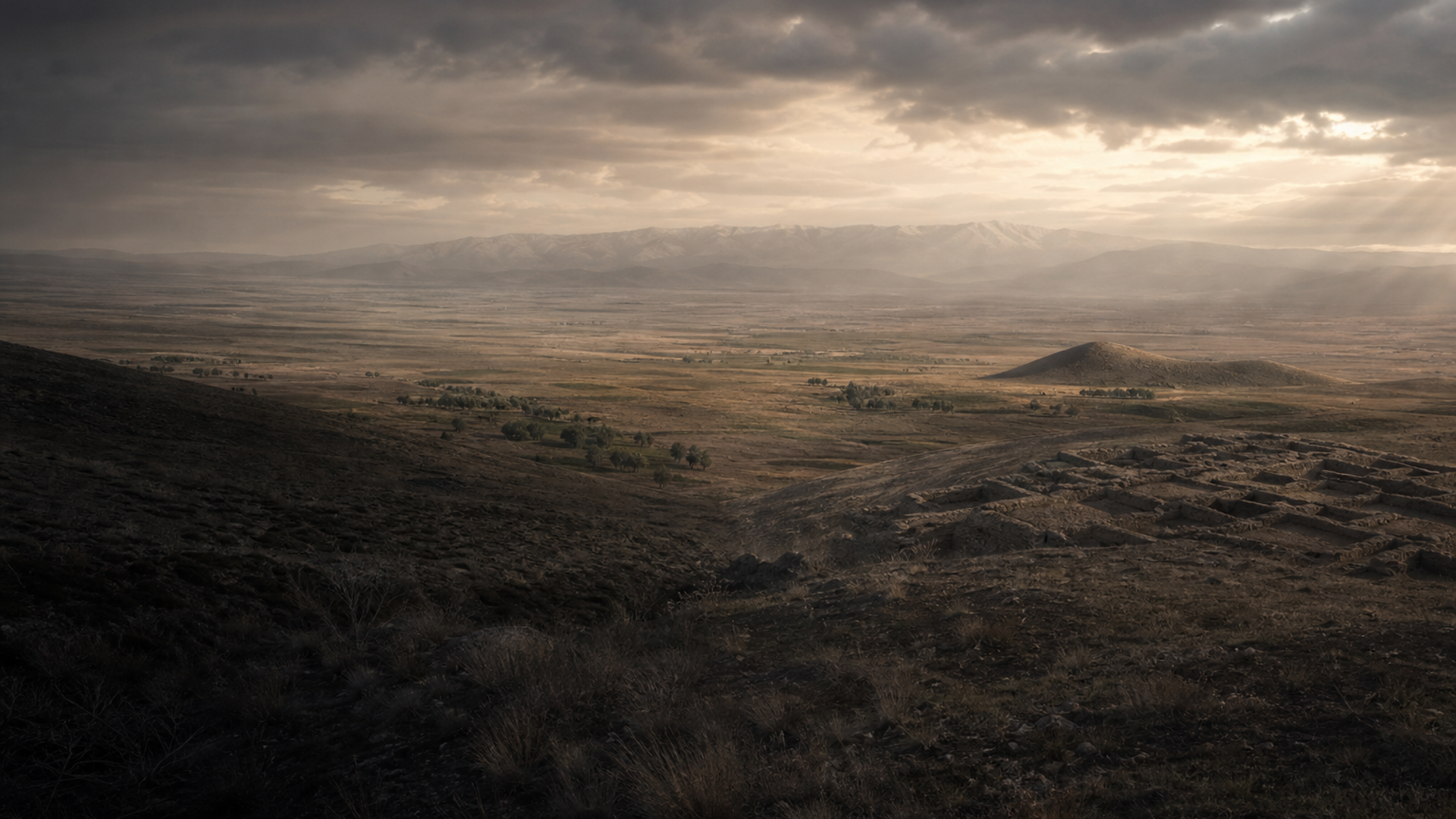
Life in the Neolithic tell unfolded beneath low roofs and within plastered rooms where households cooked, crafted, and buried their dead beneath floor levels. Çatalhöyük’s archaeology paints cinematic scenes: women and men moving through narrow alley-roofed streets, murals and built-in platforms lined with painted plaster, and everyday items — grinding stones, hearths, and pottery — arranged for repeated, intimate use. Funerary practice often involved interment beneath house floors; plastered skulls and small figurines point to complex ancestor remembrance and ritual.
Economy relied on mixed farming: domesticated wheat, barley, pulses, sheep and goats, with hunting and foraging supplementing diets. The adoption of ceramics altered domestic routines — cooking pots and storage jars enabled new food processing and preservation strategies, leaving residues that archaeologists can trace. Socially, Çatalhöyük has been interpreted as relatively egalitarian at large scales, with households displaying variability in size and material wealth rather than stark hierarchical markers.
Archaeological traces of craft production, obsidian exchange, and painted symbolism suggest sustained links across Anatolia. Yet many aspects of social organization, including household kinship structures and the precise role of ritual imagery, remain debated; interpretations continue to evolve as archaeological and genetic data are integrated.