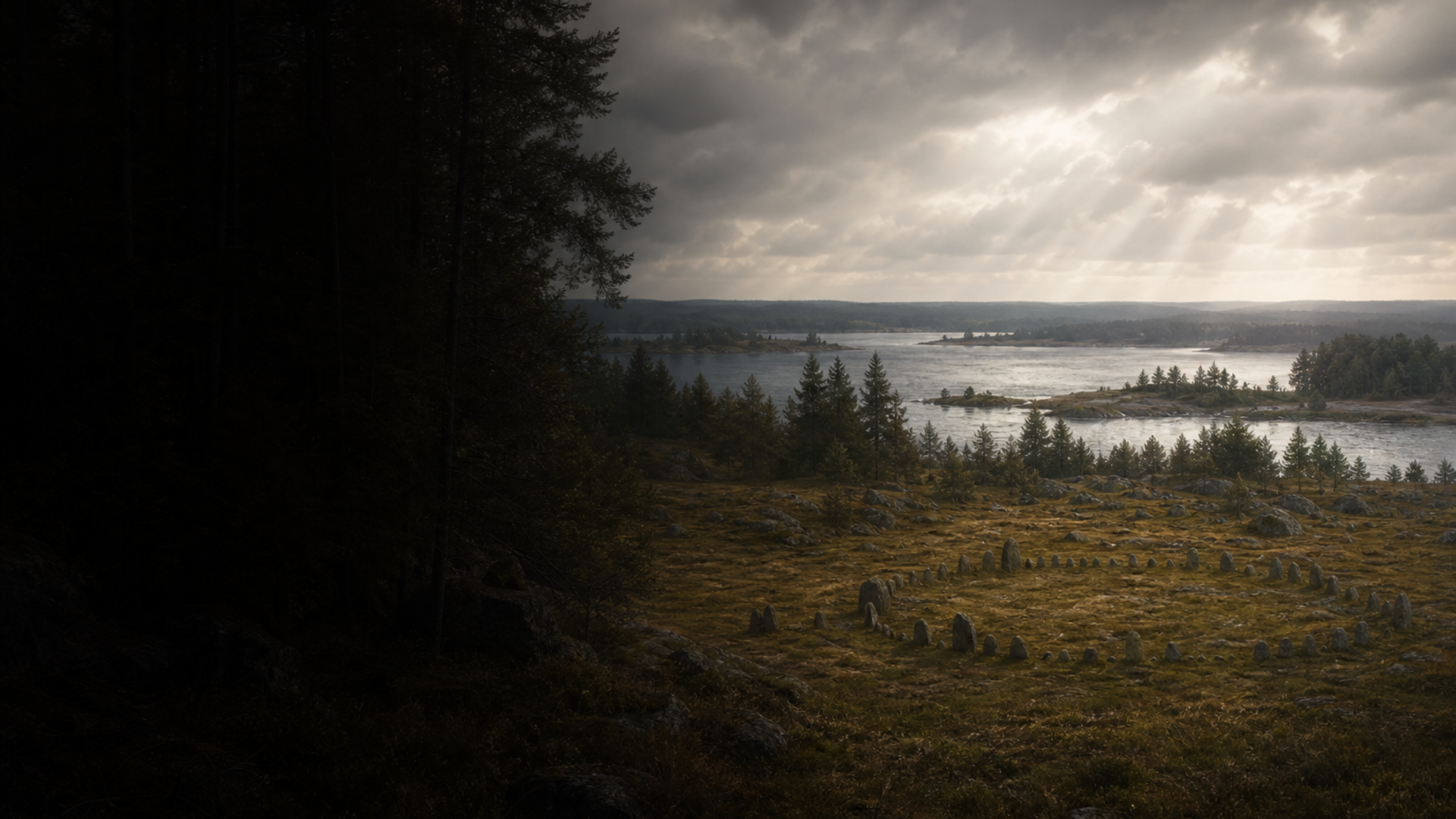
Archaeological remains paint a cinematic portrait of life around the Mälaren basin: longhouses clustered among cultivated fields, cattle and horse corrals, and boats pulled ashore for fishing and trade. Burial assemblages from Vendel and surrounding sites emphasize warrior status—helmets, spears, and gilded fittings—indicating an aristocratic stratum whose identity was performed in both life and death. Smaller everyday objects—knives, combs, spindle whorls—speak to domestic economies run by families who farmed, herded and crafted.
Archaeological indicators such as animal bone assemblages and pollen records suggest a mixed economy of cereal cultivation, dairying and exploitation of marine and freshwater resources. Craft specialization is visible in metalwork and textile tools recovered from graves and settlements. Social life likely revolved around seasonal cycles, feasting, and long-distance gift exchange, rituals that bound kin groups and emerging elite households to wider trade and alliance networks.
Caution: funerary assemblages emphasize particular social strata, so the material record skews toward elite behaviors rather than the full spectrum of daily life.