انتقل إلى المحتوى الرئيسي
ملفات الحمض النووي

Central Sweden — Pre‑Viking Vendel Circle

Four funerary samples hint at Vendel-era lifeways and northern genetic threads

242 CE - 620 CE
Central Sweden (Uppsala, Ekerö)

القصة

Archaeological and genetic glimpses from Vendel, Fullero, Lovö and Alsike (242–620 CE) suggest ties to northern Y-DNA lineages and diverse maternal ancestry. Evidence is preliminary: only four samples inform early Vendel-era population history in central Sweden.

Time Period

242–620 CE

Region

Central Sweden (Uppsala, Ekerö)

Common Y-DNA

R (2 samples), N (1 sample)

Common mtDNA

U (1), I (1), H (1)

الموضوعات

الخط الزمني

2500 BCE

Bronze Age foundations

Bronze Age trade and metallurgy help shape long-term social networks around the Baltic, setting economic foundations centuries before Vendel-era burials.

Origins & Emergence

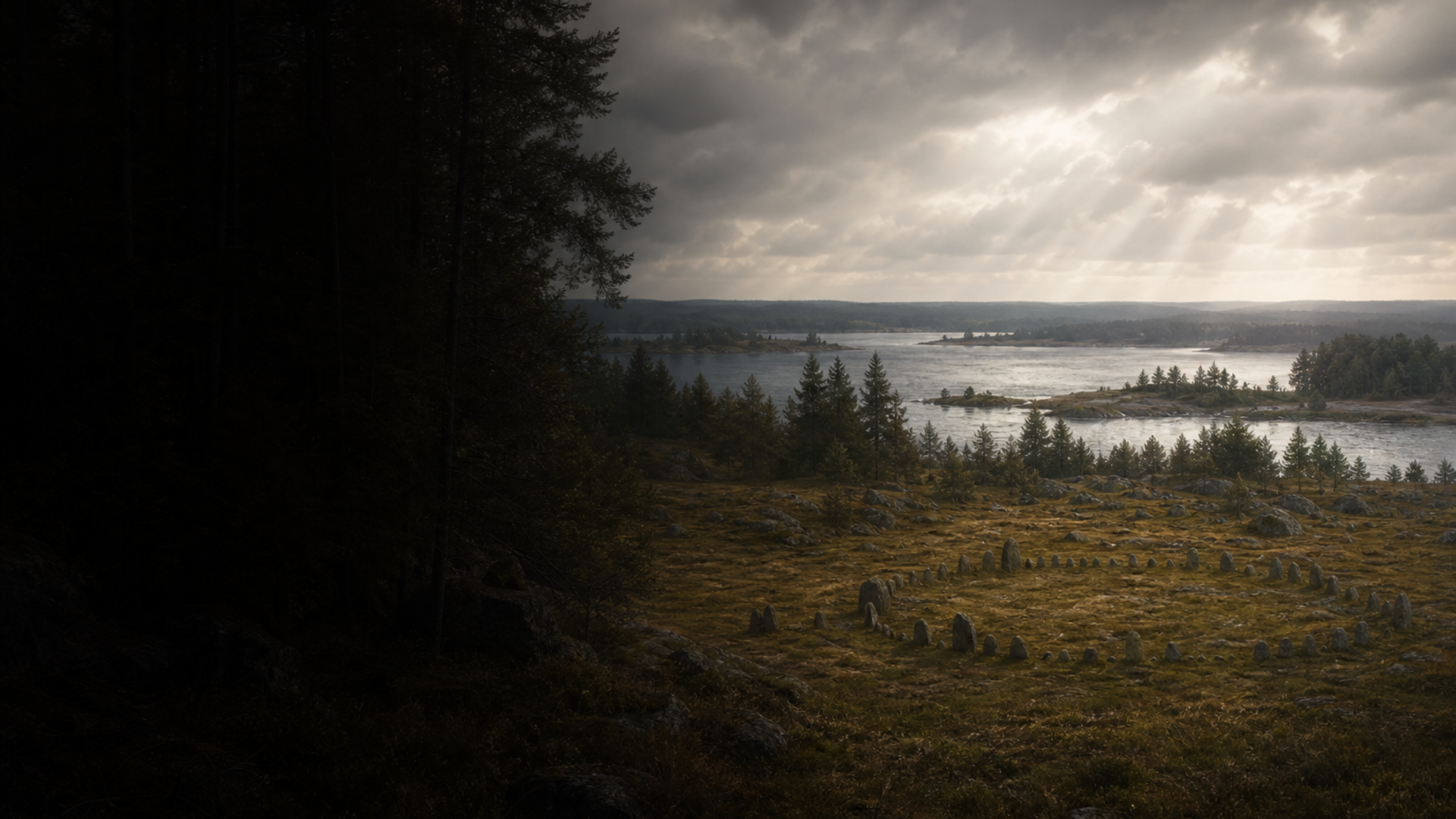
The landscapes of central Uppland—rolling moraine ridges and sheltered bays—hold the graves that anchor this small dataset. Archaeological data links these burials to the Vendel cultural horizon, a late Iron Age constellation of high-status graves, weapon deposits and richly furnished mounds concentrated around Vendel and the strandlines of Lake Mälaren. Radiocarbon dates for the four analysed individuals span roughly 242–620 CE, placing them in the transitional centuries that precede and overlap with classic Vendel expressions.

Limited evidence suggests continuity with earlier Migration Age communities and growing interregional connections: grave goods and boat-imitation burials point to seafaring networks and elite mobility within the Baltic world. Material culture at Vendel and nearby Fullero and Lovö often shows stylistic affinities with southern Scandinavian and Baltic art — archaeological traits that, when combined with ancient DNA, can reveal webs of kinship, marriage, and movement.

Because the sample set is small, these origins remain provisional; each genome is a lantern in fog, illuminating possible demographic threads rather than definitive population histories.

  • Samples dated to 242–620 CE from Vendel, Fullero, Lovö, Alsike
  • Archaeological context: Vendel Culture burials and high-status goods
  • Evidence suggests regional continuity with Migration Age and rising interregional ties

Daily Life & Society

Archaeological remains paint a cinematic portrait of life around the Mälaren basin: longhouses clustered among cultivated fields, cattle and horse corrals, and boats pulled ashore for fishing and trade. Burial assemblages from Vendel and surrounding sites emphasize warrior status—helmets, spears, and gilded fittings—indicating an aristocratic stratum whose identity was performed in both life and death. Smaller everyday objects—knives, combs, spindle whorls—speak to domestic economies run by families who farmed, herded and crafted.

Archaeological indicators such as animal bone assemblages and pollen records suggest a mixed economy of cereal cultivation, dairying and exploitation of marine and freshwater resources. Craft specialization is visible in metalwork and textile tools recovered from graves and settlements. Social life likely revolved around seasonal cycles, feasting, and long-distance gift exchange, rituals that bound kin groups and emerging elite households to wider trade and alliance networks.

Caution: funerary assemblages emphasize particular social strata, so the material record skews toward elite behaviors rather than the full spectrum of daily life.

  • Economy: mixed farming, dairying, fishing, and local craft specialization
  • Social emphasis on warrior-elites visible in weapon-rich burials and ritual display

Genetic Profile

The genetic dataset from central Sweden is small but suggestive. Four ancient individuals dated 242–620 CE yield Y-DNA haplogroups reported as two R-lineages and one N-lineage (one individual's Y assignment was unavailable or unreported). On the maternal side, mtDNA haplogroups include U, I and H (one sample lacked a reported mtDNA call).

Interpretation: the presence of R-lineages aligns with broader northern and western European male lineages commonly found in Iron Age and later Scandinavian contexts. The N-lineage is notable because haplogroup N is often associated with northeastern Eurasian and Uralic-speaking groups; its appearance here may reflect long-distance contacts, gene flow from eastern Baltic or Finland-adjacent populations, or localized retention of older lineages. Maternal haplogroup diversity (U, I, H) is consistent with a northern European mitochondrial pool common throughout the late Iron Age.

Caveats: with only four samples, all in central Uppland, conclusions are highly preliminary. Low sample count (<10) means population-level statements are speculative; stochastic survival of graves and sampling bias toward elite burials can distort apparent genetic structure. Increased sampling across social classes and neighboring regions is required to resolve whether these lineages reflect broad regional ancestry or localized kin groups.

  • Y-DNA: R (2), N (1) — suggests mix of common northern European and eastern-associated paternal lines
  • mtDNA: U, I, H — maternal diversity typical of northern Europe; interpretations are preliminary

Legacy & Modern Connections

The archaeological splendour of Vendel-era graves prefigures the iconography and social forms of the Viking Age: boat imagery, martial display, and elite networks recur in later centuries. Genetically, small-scale continuity is plausible—some Y and mtDNA lineages observed here persist in later Scandinavian populations—but the present sample set cannot quantify how much ancestry was retained, replaced, or augmented by migration.

Modern inhabitants of Uppland may carry fragments of this deep ancestry, but genetics shows that ancestry is layered: Bronze Age, Iron Age, and historic migrations all contribute to present-day genomes. The true legacy of the Vendel circle is thus both cultural and genetic: dramatic burial rites and motifs that shaped northern identity, and threads of DNA that, when more densely sampled, will allow us to trace family lines and population movements across the centuries.

  • Cultural continuity: Vendel motifs and social forms anticipate Viking Age elites
  • Genetic continuity plausible but unquantified—further sampling needed to assess links to modern populations

مساعد الذكاء الاصطناعي

مساعد الذكاء الاصطناعي من DNA Genics

فتح هذه الميزة
اطرح أسئلة عن ثقافة Central Sweden — Pre‑Viking Vendel Circle. يمكن للمساعد شرح النتائج الجينية والسياق التاريخي والأدلة الأثرية والصلات بالعصر الحديث.
مثال على تحليل بالذكاء الاصطناعي

لمحة عن ثقافة Central Sweden — Pre‑Viking Vendel Circle

تساعد عينات الحمض النووي القديم الباحثين على دراسة أنماط الهجرة والعلاقات الجينية بين المجموعات السكانية القديمة.

هذه معاينة للتحليل. يتيح المساعد الكامل استكشاف الموضوعات التالية:

  • التركيب الجيني والأصول
  • أنماط الهجرة والأصول
  • الحياة اليومية والممارسات الثقافية
  • الإرث الجيني المعاصر