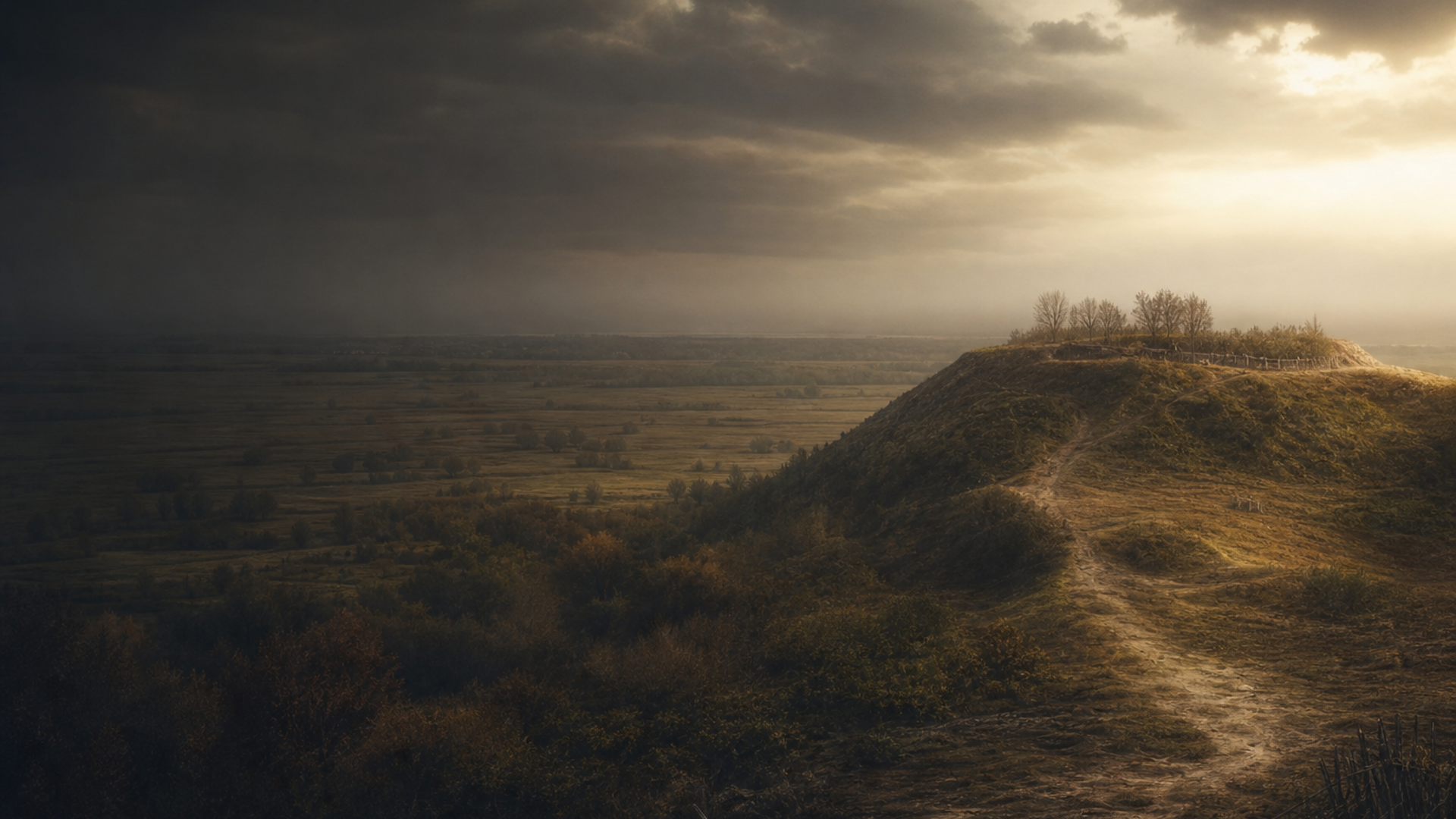
Imagine dawn mist over low fields by the Płońsk rivers: people tending rye and barley, mending tools, and moving along the same lanes that had carried earlier generations. Archaeological layers in the Płońsk area preserve fragments of that daily choreography—pottery shards, iron working debris, and the muted contours of small homesteads. These traces, while fragmentary, indicate a village economy centered on mixed agriculture, local craft, and exchange within Masovia and across nearby trade routes.
Burial practices, as recorded in the excavated cemeteries accompanying the 17 genetic samples, reflect community-scale ritual: bodies placed with modest grave goods, orientation and treatment that align broadly with early medieval Central European norms. Variation between graves hints at social differentiation but the archaeological record here remains limited and unevenly sampled.
Social life would have been shaped by kin networks, seasonal cycles, and occasional strangers: merchants, craftsmen, or travelers. The genetic data supports a picture of a largely local population matrix—maternal continuity and predominantly regional cultural markers—yet small-scale genetic inputs point to moments of contact that could be economic, marital, or mobile in origin. Archaeology supplies the stage; DNA supplies a few distinct faces in the crowd, and both together let us imagine the rhythms of everyday life in medieval Płońsk.