Saltar al contenido principal
Cultura destacada

Płońsk Echoes

Medieval Płońsk (1000–1200 CE): archaeology meeting DNA in Masovia

1000 CE - 1200 CE
Central Poland (Płońsk, Masovian Province)

La historia

Seventeen medieval individuals from Płońsk (1000–1200 CE) reveal a local maternal continuity and a surprising mix of Y‑chromosome lineages. Archaeological context and DNA together hint at regional roots and rare long‑distance connections, but interpretations remain cautious.

Time Period

1000–1200 CE

Region

Central Poland (Płońsk, Masovian Province)

Common Y-DNA

M (3), L (1), PF (1), N (1)

Common mtDNA

H (4), U (4), T (2), H1e (1), T2b (1)

Cronología

1000 CE

Płońsk samples date to early medieval period

Seventeen individuals from Płońsk are dated to 1000–1200 CE, anchoring the genetic dataset in early medieval Masovia.

Origins & Emergence

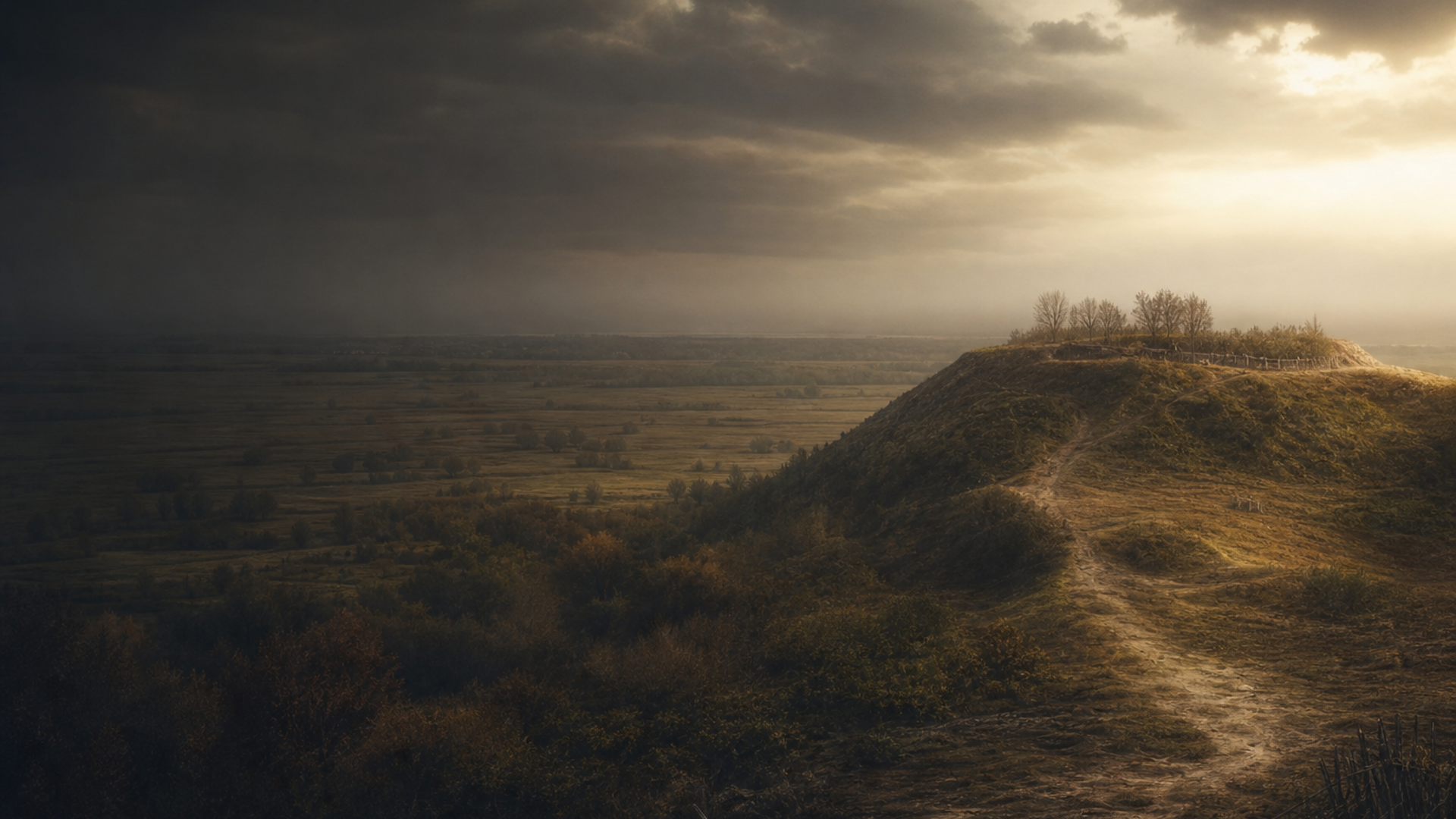
Płońsk sits on the flat, fertile plains of Masovia where rivers carve corridors of movement across centuries. The human story recorded at Płońsk between 1000 and 1200 CE unfolds against the backdrop of early medieval Poland: a patchwork of villages, seasonal fields, and nascent regional centers. Archaeological data indicates small rural cemeteries and settlement layers around Płońsk, with material traces that echo longer regional traditions tied to the Iron Age Płońsk cultural horizon.

The genetic dataset—17 individuals excavated in and near Płońsk—offers a window into who these people might have been. Maternal lineages such as mtDNA H and U are common across Europe and suggest broad continuity with earlier and neighboring populations. By contrast, several Y‑chromosome calls (M and L in a few males) are unexpected for Central Europe and demand caution: these could reflect rare surviving lineages, post‑medieval movement, uncertain haplogroup labeling, or sampling idiosyncrasies. Limited evidence suggests a community rooted in regional landscapes while also connected, in small ways, to wider networks of mobility.

Interpretation must balance the cinematic sweep of landscape and the granular limits of the dataset: archaeological context anchors the story; genetics adds provocative details that need further testing.

  • Samples dated 1000–1200 CE from Płońsk, Masovian Province
  • Archaeological traces suggest rural cemeteries and settlement continuity
  • Genetic mix shows common European maternal lines and surprising Y signals

Daily Life & Society

Imagine dawn mist over low fields by the Płońsk rivers: people tending rye and barley, mending tools, and moving along the same lanes that had carried earlier generations. Archaeological layers in the Płońsk area preserve fragments of that daily choreography—pottery shards, iron working debris, and the muted contours of small homesteads. These traces, while fragmentary, indicate a village economy centered on mixed agriculture, local craft, and exchange within Masovia and across nearby trade routes.

Burial practices, as recorded in the excavated cemeteries accompanying the 17 genetic samples, reflect community-scale ritual: bodies placed with modest grave goods, orientation and treatment that align broadly with early medieval Central European norms. Variation between graves hints at social differentiation but the archaeological record here remains limited and unevenly sampled.

Social life would have been shaped by kin networks, seasonal cycles, and occasional strangers: merchants, craftsmen, or travelers. The genetic data supports a picture of a largely local population matrix—maternal continuity and predominantly regional cultural markers—yet small-scale genetic inputs point to moments of contact that could be economic, marital, or mobile in origin. Archaeology supplies the stage; DNA supplies a few distinct faces in the crowd, and both together let us imagine the rhythms of everyday life in medieval Płońsk.

  • Rural economy: mixed agriculture, local craft, and regional exchange
  • Cemeteries show community burial practices with modest variability

Genetic Profile

The Płońsk genetic series (n = 17) provides a measured glimpse into medieval population structure in Masovia. On the maternal side, mtDNA haplogroups are dominated by H (4) and U (4), with several T lineages (T and T2b) and a specific H1e. These haplogroups are widespread in Europe and are consistent with maternal continuity and regional ancestry that track well with other Central European medieval datasets. Mitochondrial diversity here suggests stable matrilineal ties to broader European gene pools rather than isolated insularity.

The paternal profile is more surprising. Reported Y‑haplogroups include M (3), L (1), PF (1), and N (1). Haplogroups M and L are typically associated with South and South‑Central Asian populations in modern surveys; haplogroup N has strong ties to northeastern Eurasia and Uralic speakers. ‘‘PF’’ as reported requires clarification in standard haplogroup nomenclature and may represent a subclade or notation artifact. Several interpretive pathways are plausible: rare local survival of uncommon lineages, male‑mediated long‑distance mobility (merchants, mercenaries, or migrants), or technical and nomenclatural uncertainties in assigning deep Y branches.

Given the moderate sample size, conclusions about broad demographic processes remain tentative. The maternal picture points to regional continuity, while the paternal signals flag episodes of complexity. Additional high‑resolution Y‑chromosome sequencing and broader sampling across Masovia would clarify whether these rare lineages reflect genuine medieval connections or methodological ambiguity.

  • mtDNA dominated by European H and U lineages, suggesting maternal continuity
  • Unexpected Y markers (M, L, N) suggest rare long‑distance inputs or require further clarification

Legacy & Modern Connections

The Płońsk assemblage embodies the layered heritage of Masovia: rooted local maternal lineages alongside hints of wider connections. For modern genetic landscapes in Poland, the strongest signal from this group is continuity through common European mtDNA lineages that persist into the present. The unusual paternal calls are reminders that medieval Europe was not genetically uniform; rare episodes of movement could leave detectable traces.

These findings have museum‑worthy resonance: the stones, fields, and graves of Płońsk tell a story of everyday people whose descendants live in the same landscapes today. Yet scientific humility is crucial—some results challenge expectations and invite follow‑up rather than definitive narratives. Future work integrating broader archaeological sampling, isotope mobility studies, and deeper Y‑chromosome resolution will better anchor the tantalizing signals found here. In the meantime, the Płońsk samples reveal a medieval Masovian community both familiar and unexpectedly cosmopolitan in small ways.

  • Maternal continuity links medieval Płońsk to broader European genetic patterns
  • Uncommon paternal signals highlight the need for further sampling and higher‑resolution testing

Asistente de IA

Asistente de IA por DNAGENICS

Desbloquear esta función
Pregunta sobre la cultura Płońsk Echoes. El asistente con IA puede explicar hallazgos genéticos, contexto histórico, pruebas arqueológicas y conexiones modernas, con sus límites de interpretación.
Ejemplo de análisis con IA

La cultura Płońsk Echoes representa un capítulo de la historia humana...

El análisis genético permite estudiar similitudes con poblaciones anteriores y posibles adaptaciones. Las muestras de ADN antiguo aportan información para investigar patrones migratorios y relaciones entre poblaciones, con límites que dependen del estudio y del contexto arqueológico.

Esta es una vista previa del análisis con IA. Accede al asistente completo para explorar información sobre:

  • Composición y similitud genética
  • Patrones migratorios y orígenes
  • Vida cotidiana y prácticas culturales
  • Contexto genético moderno