Ryahovets & Samovodene: Medieval Bulgarian Threads

Download PDF creates a visual, rasterized copy. Use Print for selectable text and better assistive-technology support.

Zum Hauptinhalt springen
Zivilisations-Spotlight

Ryahovets & Samovodene: Medieval Bulgarian Threads

Fragments of life in Veliko Tarnovo’s hinterland, read through archaeology and maternal DNA

889 CE - 1250 CE
Veliko Tarnovo area, Bulgaria

Die Geschichte

Archaeological finds from Ryahovets and Samovodene (889–1250 CE) illuminate life on the edges of medieval Veliko Tarnovo. Three mitochondrial genomes (all haplogroup U) hint at deep European maternal lineages; conclusions are preliminary given the small sample set.

Time Period

889–1250 CE

Region

Veliko Tarnovo area, Bulgaria

Common Y-DNA

Undetermined (no consensus from 3 samples)

Common mtDNA

U (3 samples)

Zeitleiste

889 CE

Dynastic change in Bulgaria

A period of political transition at the end of the 9th century; region enters a new phase of integration into medieval Bulgarian state structures.

1185 CE

Uprising and founding of the Second Bulgarian Empire

The Asen and Peter uprising establishes a renewed Bulgarian polity centered on Veliko Tarnovo, reshaping regional power and trade.

1250 CE

Mid-13th-century regional dynamics

A phase of shifting alliances and regional consolidation around Veliko Tarnovo that affected hinterland fortifications and settlements.

Origins & Emergence

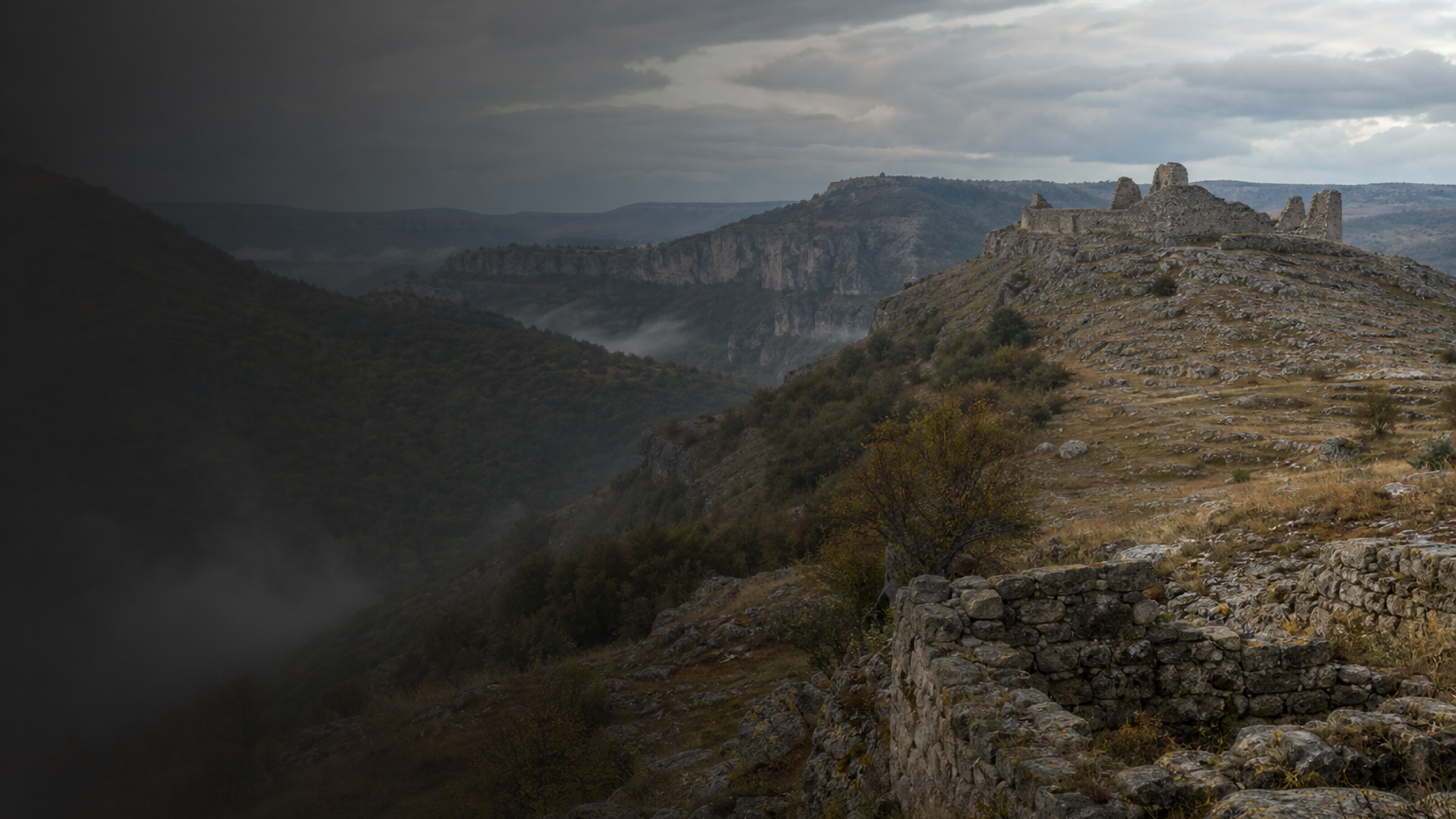
The sites sampled—fortified Ryahovets near Gorna Oryahovitsa and the settlement area of Samovodene in the Veliko Tarnovo region—sit within the political and economic orbit of medieval Bulgarian states. Archaeological layers at Ryahovets document repeated occupation and fortification activity that archaeologists associate with local elites and military control during the high Middle Ages; Samovodene occupies the fertile floodplain approaches to Veliko Tarnovo, a regional urban center from the First into the Second Bulgarian Empires.

Material culture recovered in the region includes glazed ceramics, imported metalwork fragments and building remains that signal participation in interregional trade routes connecting the central Balkans to Byzantine and Central European markets. Archaeological data indicates continuity of settlement and craft activity across the 10th–13th centuries, but the record is spotty: many contexts have been disturbed by later use and modern development.

Genetically, the three individuals sampled from these sites were all assigned mitochondrial haplogroup U, a lineage with deep roots across Europe. Limited evidence suggests maternal continuity with broad European mitochondrial diversity, but the paucity of samples and lack of securely dated comparative samples from nearby cemeteries mean any narrative of population origins remains tentative. Future excavations and expanded aDNA sampling are essential to clarify demographic processes—migration, local persistence, and assimilation—that shaped medieval communities around Veliko Tarnovo.

  • Sites: Ryahovets fortress (Gorna Oryahovitsa) and Samovodene (Veliko Tarnovo)
  • Material culture shows trade links with Byzantine and central Balkan networks
  • Genetic signal currently based on 3 mtDNA samples—interpret cautiously

Daily Life & Society

Archaeological remains paint a cinematic but fragmentary picture of everyday life in the Veliko Tarnovo hinterland. Fortified towers and ramparts at Ryahovets imply a landscape governed by defense and control of movement—watchposts that oversaw roads, river crossings and grain-producing lowlands. Within the shadow of such strongholds, villagers and artisans would have tended fields, maintained livestock and worked in small workshops producing pottery, leather goods and metal tools.

Samovodene’s archaeological strata include hearths, craft debris and domestic architecture indicative of household-based production. Archaeological data indicates household economies tied to urban markets in Veliko Tarnovo: surplus grain, crafted wares and textiles could move uphill to the city, while luxury imports filtered back through merchant networks.

Religious life was shaped by Eastern Orthodox Christianity after the Christianization of Bulgaria; churches and ecclesiastical objects appear in the region’s archaeological record from the 10th century onward. Burial practices visible in nearby cemeteries show a mix of Christian rites and residual local traditions—grave goods are comparatively modest but occasionally include personal adornments that signal status. Bioarchaeological evidence is limited for this small sample set, so reconstructions of diet, health, and mobility remain provisional and would benefit greatly from isotope and wider aDNA sampling campaigns.

  • Fortresses controlled trade routes and local resources
  • Household craft and market exchange linked to urban Veliko Tarnovo

Genetic Profile

Three individuals sampled from Ryahovets and Samovodene (dated between 889 and 1250 CE) share mitochondrial haplogroup U. Haplogroup U is an ancient maternal lineage widespread in Europe since the Mesolithic and later periods; in medieval contexts it often represents local maternal continuity or assimilation of diverse maternal lines into emerging medieval communities.

Because all three samples are mtDNA-only successes (no robust Y‑chromosome calls are reported for these individuals), the paternal genetic picture remains undetermined for this dataset. The small sample count (n=3) is well below the threshold for population-level inferences, so any claims about demographic shifts, migrations or continuity must be framed as preliminary. Limited evidence suggests that the maternal lineages observed are consistent with broader Balkan mtDNA diversity seen in other medieval and modern datasets, where mixtures of long-standing local European ancestry and inputs from Slavic and steppe-influenced groups are detectable at autosomal levels in more extensive studies.

Archaeogenetic interpretation benefits from integration: mitochondrial results provide hints about maternal descent, archaeology provides cultural and chronological frames, and future autosomal and Y‑chromosome data from the same sites would allow testing of hypotheses about sex-biased migration, social structure, and population continuity around Veliko Tarnovo. In short: these mitochondrial findings are a compelling first glance, but they are the opening chapter of a story that needs many more voices.

  • All three samples are mtDNA haplogroup U—suggesting deep European maternal ancestry
  • No conclusive Y‑DNA data; small sample size (<10) makes population claims preliminary

Legacy & Modern Connections

The archaeological and genetic traces from Ryahovets and Samovodene connect the present to a landscape of fortified approaches, market exchanges and household craft that fed the rhythms of medieval Veliko Tarnovo. Mitochondrial haplogroup U appears today across Europe and in the Balkans; its presence in these medieval individuals may reflect long-standing maternal lineages that persisted through centuries of political change.

However, direct continuity between these three medieval individuals and modern populations cannot be asserted from such limited data. Archaeological data indicates cultural links to larger medieval Bulgarian and Byzantine spheres, while genetics hints at wider European connections. The strongest legacy of this work is methodological: combining careful archaeological context with expanding aDNA sampling can reveal how families, villages and towns were woven into medieval social networks. Expanded sampling—especially of autosomal and Y‑chromosome markers from well-dated graves—will clarify whether the maternal continuity suggested here mirrors broader population stability or conceals episodes of migration and admixture.

  • mtDNA U ties these medieval individuals to deep European maternal lineages
  • Broader conclusions need more samples and complementary genetic markers

KI-Assistent

KI-Assistent von DNAGENICS

Funktion freischalten
Stellen Sie Fragen zur Kultur Ryahovets & Samovodene: Medieval Bulgarian Threads. Unser KI-Assistent kann genetische Befunde, historischen Kontext, archäologische Belege und moderne Verbindungen erläutern.
Beispiel einer KI-Analyse

Die Ryahovets & Samovodene: Medieval Bulgarian Threads-Kultur ist ein faszinierendes Kapitel der Menschheitsgeschichte...

Genetische Analysen zeigen Übereinstimmungen mit früheren Populationen und Hinweise auf besondere Anpassungen und kulturelle Innovationen. Alte DNA-Proben liefern Einblicke in Migrationsmuster, soziale Strukturen und genetische Verbindungen zwischen Populationen.

Dies ist eine Vorschau der KI-Analyse. Schalten Sie den vollständigen KI-Assistenten frei, um detaillierte Einblicke zu erkunden:

  • Genetische Zusammensetzung und genetische Ähnlichkeit
  • Migrationsmuster und Ursprünge
  • Alltag und kulturelle Praktiken
  • Genetischer Bezug zu heutigen Populationen
Use code for 25% off • Expires Nov 13




