Tuoganbai: Bronze Age Crossroads

Download PDF creates a visual, rasterized copy. Use Print for selectable text and better assistive-technology support.

Zum Hauptinhalt springen
Zivilisations-Spotlight

Tuoganbai: Bronze Age Crossroads

A small Xinjiang community (2250 BCE) where material culture and genes hint at east–west encounters

2250 BCE
Xinjiang (Aletai Region, Habahe County)

Die Geschichte

Tuoganbai (Habahe County, Aletai, Xinjiang) is a Bronze Age assemblage dated to 2250 BCE. Four ancient genomes reveal a mix of western and northern lineages (Y: R, Q; mtDNA: H, R), suggesting local communities at an ecological and genetic frontier. Conclusions are preliminary.

Time Period

2250 BCE

Region

Xinjiang (Aletai Region, Habahe County)

Common Y-DNA

R (2), Q (1)

Common mtDNA

H (3), R (1)

Zeitleiste

2250 BCE

Tuoganbai burials dated

Archaeological contexts at Tuoganbai, Habahe County, are dated to c.2250 BCE, anchoring a small Bronze Age assemblage at an Altai frontier.

Origins & Emergence

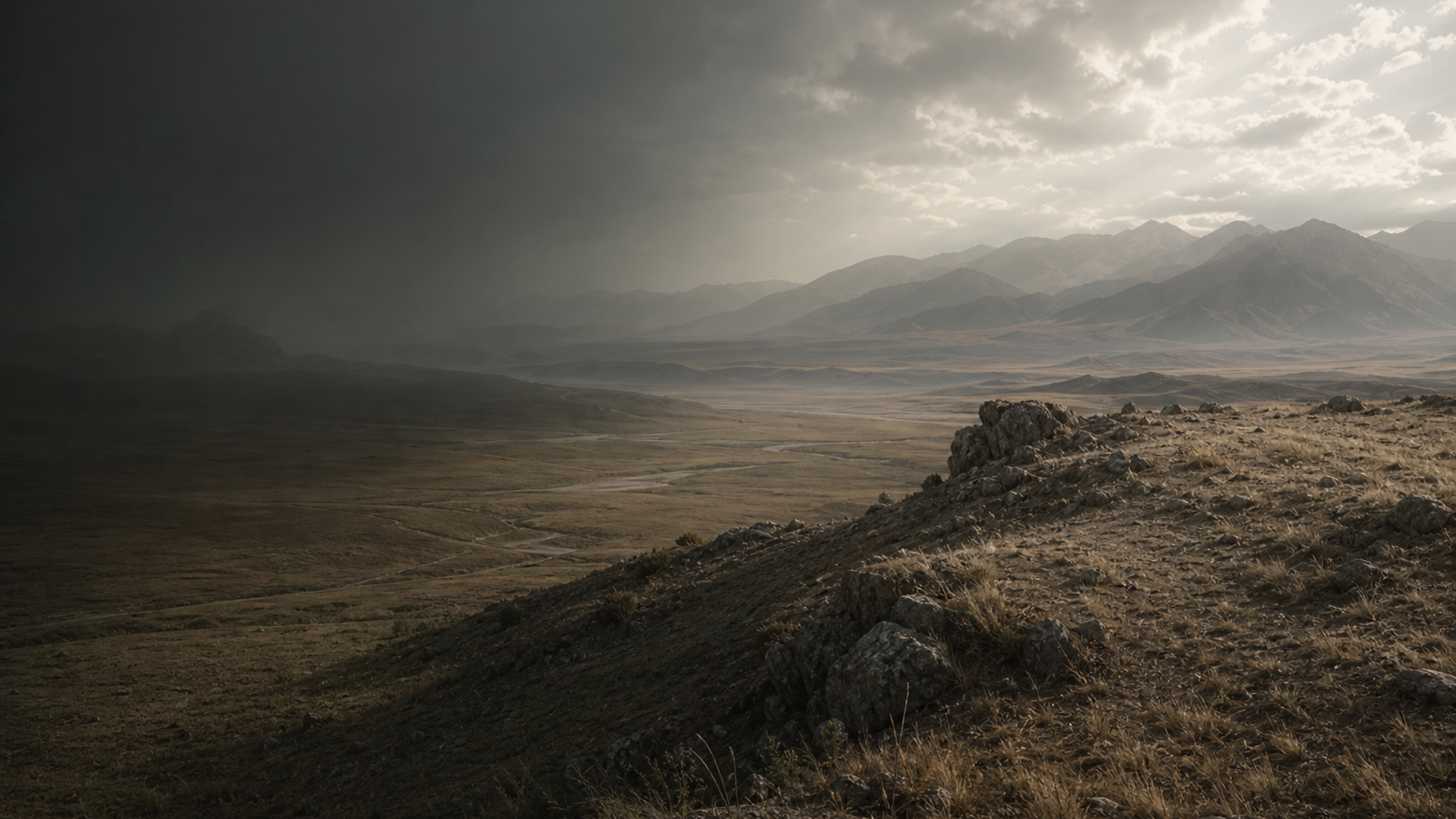
At the northern rim of the vast Eurasian steppe, Tuoganbai sits in the Aletai foothills of what is today Habahe County, Xinjiang. Archaeological data indicates Bronze Age occupation dated tightly to around 2250 BCE. The landscape — wind-bent ridges, braided rivers and seasonal pastures — favored mobile pastoralism alongside localized hunting and foraging. Tuoganbai occupies a geographic threshold where cultural practices and material motifs from both eastern and western Eurasia could meet, blend, or pass by.

Limited evidence from excavated contexts at Tuoganbai suggests funerary practices and artefact types consistent with Bronze Age lifeways in northern Xinjiang, but the assemblage is small and interpretation remains cautious. Radiocarbon and stratigraphic correlation provide the 2250 BCE anchor, yet the broader sequence of settlement and long-distance connections requires more data. The presence of western-associated genetic markers (see Genetics) hints at episodic gene flow, perhaps linked to small-scale migrations or long-distance exchange rather than wholesale population replacement.

Overall, Tuoganbai exemplifies an archaeological frontier: a place where environmental marginality and mobility create opportunities for cultural and genetic mixing. Given the limited number of studied burials and specimens, hypotheses about origins are provisional and framed to encourage further targeted sampling and multidisciplinary study.

  • Located in Tuoganbai, Habahe County, Aletai Region, Xinjiang
  • Securely dated to ~2250 BCE through archaeological context
  • Site lies at an ecological and cultural threshold between steppe and mountain zones

Daily Life & Society

Although direct evidence for household layout and tools at Tuoganbai is limited, Bronze Age communities in northern Xinjiang are typically reconstructed as seasonal, mobile or semi-sedentary pastoral groups. People here would have moved herds across summer pastures and sheltered in valley basins during colder months, knitting a rhythm of life to the altai winds and the rise and fall of river ice.

Archaeological indicators from the region — burial deposits, metal fragments found in contemporary sites, and faunal remains from nearby coeval localities — point to a mixed subsistence economy: pastoral herding (sheep, goats, perhaps cattle), supplemented by hunting and opportunistic plant use. Craft specializations may have included basic metallurgy and leatherworking, with ornament styles reflecting broader Bronze Age artistic language across Xinjiang and the steppe. Social organization was likely kin-based and flexible, capable of forming larger alliances for seasonal grazing or exchange.

Given the small excavated sample at Tuoganbai, details about house forms, settlement density, age-structured mortuary practice, and social ranking remain largely speculative. Archaeological data indicates a community adapted to thresholds — environmental, economic, and cultural — with daily life shaped by mobility, trade, and the need to negotiate diverse ecological zones.

  • Seasonal pastoralism likely formed the economic core
  • Material culture suggests contact with broader Bronze Age networks

Genetic Profile

Four ancient genomes from Tuoganbai (sample count = 4) provide a rare molecular glimpse into a small Bronze Age community in northern Xinjiang. Y-chromosome results show two individuals carrying haplogroup R and one carrying Q; mitochondrial lineages include three H and one R. These markers are informative but must be interpreted with caution because of the very small sample size: conclusions are preliminary and susceptible to sampling bias.

Haplogroup R on the Y-chromosome is widespread across western Eurasia and often appears in contexts linked to steppe populations; its presence in two Tuoganbai males may indicate western-affiliated paternal ancestry or gene flow from populations to the west. Haplogroup Q, comparatively frequent in parts of Siberia and among populations with north Eurasian connections, suggests a northern or Inner Asian paternal input. On the maternal side, mtDNA H is common in western Eurasia and its prevalence in three individuals at Tuoganbai points to substantial western maternal influence, while mtDNA R is an older, broadly distributed lineage.

Archaeological data indicates Tuoganbai occupied a contact zone; genetic signals are consistent with that picture, showing a mixture of lineages traceable to both western and northern Eurasian sources. However, with only four samples, it is impossible to resolve proportions of ancestry, the timing of gene flow, or whether observed lineages represent transient individuals or established local kin groups. Further sampling and genome-wide analyses will be required to test models of migration, admixture, and continuity in the Aletai region.

  • Y-DNA: R (2), Q (1) — suggests mixed western and northern paternal inputs
  • mtDNA: H (3), R (1) — high proportion of western-associated maternal lineages; conclusions preliminary due to small n

Legacy & Modern Connections

Tuoganbai sits in a landscape that later historical narratives identify as a corridor for peoples and ideas moving between the Eurasian steppes and East Asia. The genetic mixture observed in the small Tuoganbai sample set resonates with later ethnolinguistic and genetic complexity across Xinjiang: a palimpsest of western, northern and eastern influences layered over millennia.

Although no direct line from these four individuals to any single modern population can be asserted, archaeological data indicates that Bronze Age contact zones like Tuoganbai contributed to the long-term genetic and cultural mosaic of northwest China. As ancient DNA sampling expands across Xinjiang and adjacent regions, Tuoganbai will serve as an early data point pointing to heterogeneous ancestry and the permeability of prehistoric frontiers.

Because the sample count is low, these connections should be viewed as hypotheses that invite more comprehensive sampling, collaborative fieldwork, and integration with linguistic and paleoenvironmental studies.

  • Early signal of mixed ancestry in northern Xinjiang; informs models of later regional diversity
  • Findings are provisional — broader sampling needed to link to modern populations

KI-Assistent

KI-Assistent von DNAGENICS

Funktion freischalten
Stellen Sie Fragen zur Kultur Tuoganbai: Bronze Age Crossroads. Unser KI-Assistent kann genetische Befunde, historischen Kontext, archäologische Belege und moderne Verbindungen erläutern.
Beispiel einer KI-Analyse

Die Tuoganbai: Bronze Age Crossroads-Kultur ist ein faszinierendes Kapitel der Menschheitsgeschichte...

Genetische Analysen zeigen Übereinstimmungen mit früheren Populationen und Hinweise auf besondere Anpassungen und kulturelle Innovationen. Alte DNA-Proben liefern Einblicke in Migrationsmuster, soziale Strukturen und genetische Verbindungen zwischen Populationen.

Dies ist eine Vorschau der KI-Analyse. Schalten Sie den vollständigen KI-Assistenten frei, um detaillierte Einblicke zu erkunden:

  • Genetische Zusammensetzung und genetische Ähnlichkeit
  • Migrationsmuster und Ursprünge
  • Alltag und kulturelle Praktiken
  • Genetischer Bezug zu heutigen Populationen
Use code for 25% off • Expires Nov 13




