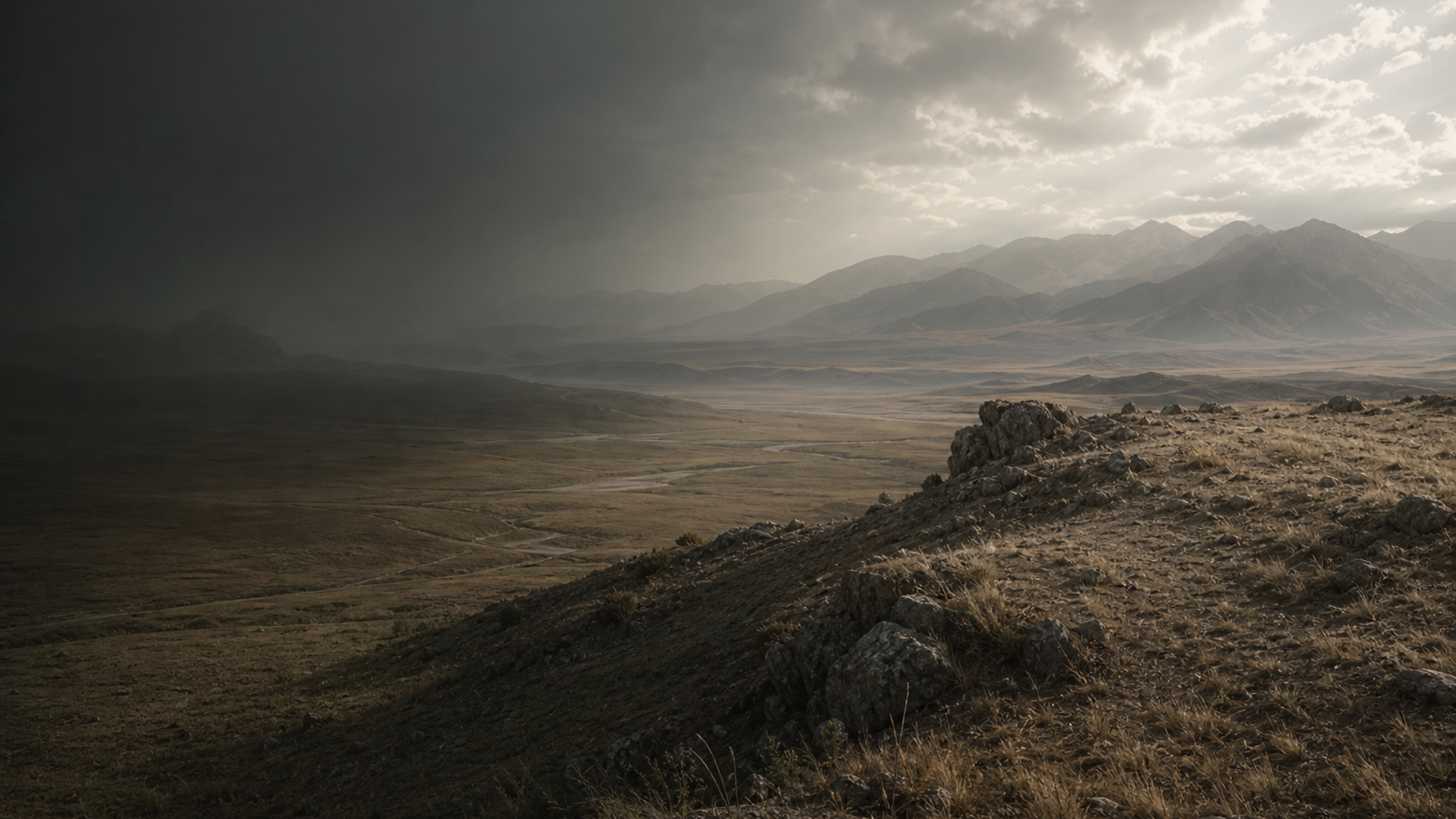
Although direct evidence for household layout and tools at Tuoganbai is limited, Bronze Age communities in northern Xinjiang are typically reconstructed as seasonal, mobile or semi-sedentary pastoral groups. People here would have moved herds across summer pastures and sheltered in valley basins during colder months, knitting a rhythm of life to the altai winds and the rise and fall of river ice.
Archaeological indicators from the region — burial deposits, metal fragments found in contemporary sites, and faunal remains from nearby coeval localities — point to a mixed subsistence economy: pastoral herding (sheep, goats, perhaps cattle), supplemented by hunting and opportunistic plant use. Craft specializations may have included basic metallurgy and leatherworking, with ornament styles reflecting broader Bronze Age artistic language across Xinjiang and the steppe. Social organization was likely kin-based and flexible, capable of forming larger alliances for seasonal grazing or exchange.
Given the small excavated sample at Tuoganbai, details about house forms, settlement density, age-structured mortuary practice, and social ranking remain largely speculative. Archaeological data indicates a community adapted to thresholds — environmental, economic, and cultural — with daily life shaped by mobility, trade, and the need to negotiate diverse ecological zones.