ADMIXTURE analysis models genome-wide SNP data as mixtures of inferred components to reveal population structure. Learn how it works, how to interpret results, and why it is not a direct ancestry report.
G25 coordinates provide a compact, multidimensional view of how your DNA sits relative to reference populations in genetic space. Learn how they work, how to interpret distances, and why they are exploratory tools—not definitive ancestry labels.
Compare four leading consumer DNA tests, learn how they work, and discover how uploading your raw DNA to DNAGENICS unlocks 500+ ancestry reports and traits.
Explore how genetic traits shape who we are, how they connect to ancestry, and why environment matters alongside DNA. A balanced, accessible guide for all readers.
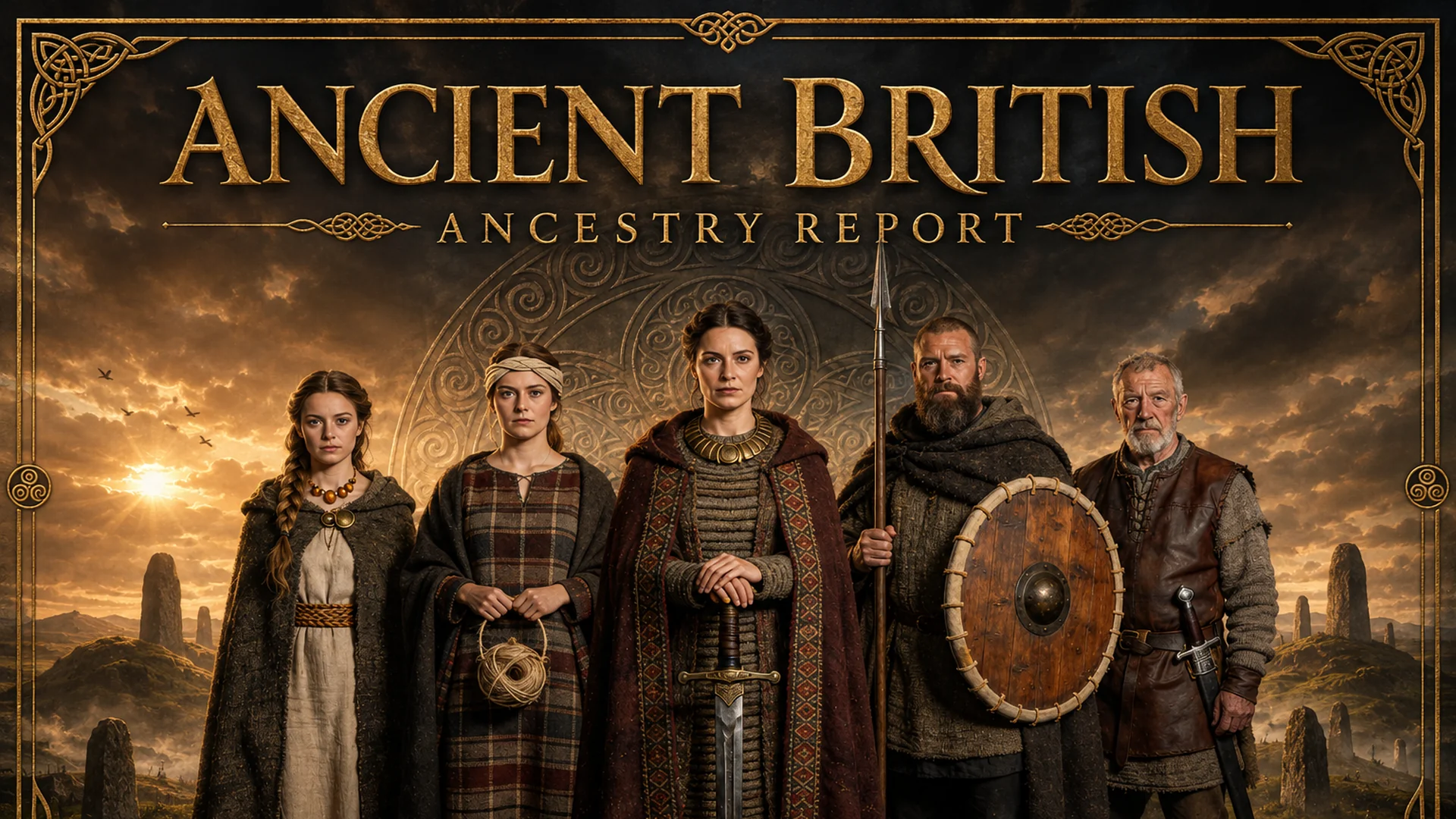
DNAGENICS launches a new regional ancient DNA report covering England, Scotland, Wales, and Ireland. Match your genome against 500 archaeological samples across nine cultural periods, from Mesolithic hunter-gatherers to Medieval populations.
The Global Ancient Composition Report has been significantly refreshed for September 2026, with a larger and newly curated ancient reference dataset covering more regions and historical periods worldwide.
The update expands the pool of ancient individuals used across closest-match results, mixture models, composite profiles, the interactive map, and PCA analysis. This broader coverage may surface new matches, refine existing estimates, and provide a more complete view of genetic similarity from the Paleolithic through the Early Modern era.
If you have run the report before, we recommend revisiting your results to see what has changed.
As always, these results indicate genetic similarity to ancient reference populations and individuals; they do not constitute proof of direct genealogical descent.
Explore how Y-chromosome and mitochondrial DNA reveal a striking paternal and maternal split in Latin America, with the Andes showing the strongest Native American continuity.
New ancient DNA from a Kunpeszér burial shows the earliest Avar elite in Hungary carried strong Northeast Asian ancestry, reshaping ideas about migration and identity.
Ancient DNA shows the Guanches were North African Berbers who settled the Canary Islands around the 3rd century AD, lived in isolation, and shaped today’s Canarians.