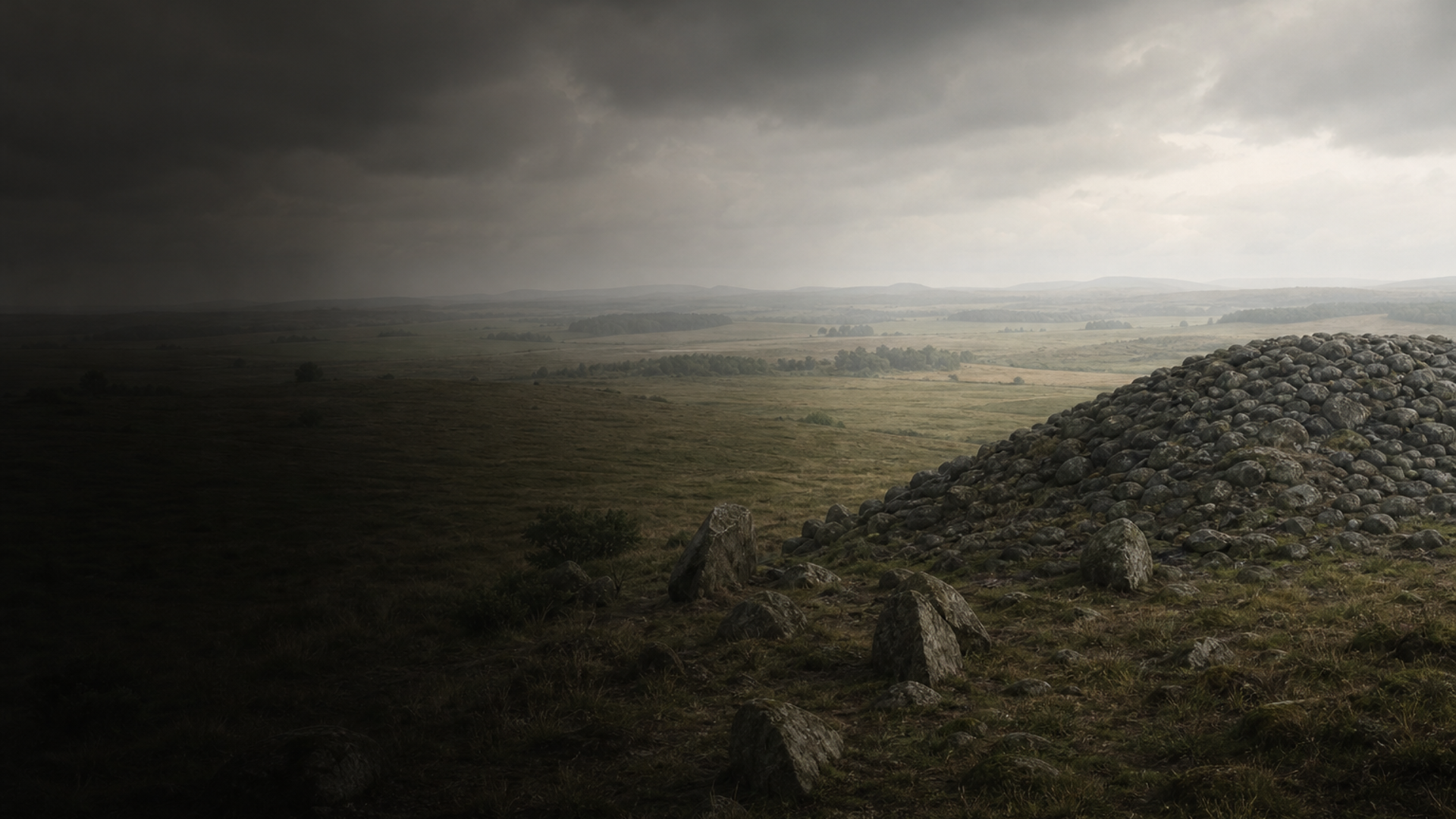
The genetic palette from Falköping-5 is compact but informative. Among eight individuals, paternal lineages include I1 (3), a broadly Scandinavian-associated branch, a generic I (1), and a single R lineage (1). Maternal lineages are diverse: H (3), W (1), HV6 (1), U (1), and I3d (1). These results point toward a mix of local northern European ancestry and traces of broader continental influence.
Interpretations must be cautious: n = 8 is small, and several individuals lack reported Y data (likely females or unreadable Y profiles). The frequency of I1 is interesting because I1 becomes common in later Scandinavian populations, suggesting continuity of at least some paternal lines. The presence of an R lineage is consistent with the known expansion of steppe-derived Y-haplogroups into northern Europe during the 3rd–2nd millennia BCE, but a single R sample cannot resolve timing or source. Maternal haplogroups such as H and U reflect deep European lineages—H is widespread in Neolithic and later Europe, while U often links to more ancient hunter-gatherer ancestry.
Overall, the Falköping-5 genomes suggest local continuity with admixture from incoming groups. Because the sample count is low (<10), these patterns are preliminary and should be tested with broader regional sampling and higher-resolution haplogroup assignment.