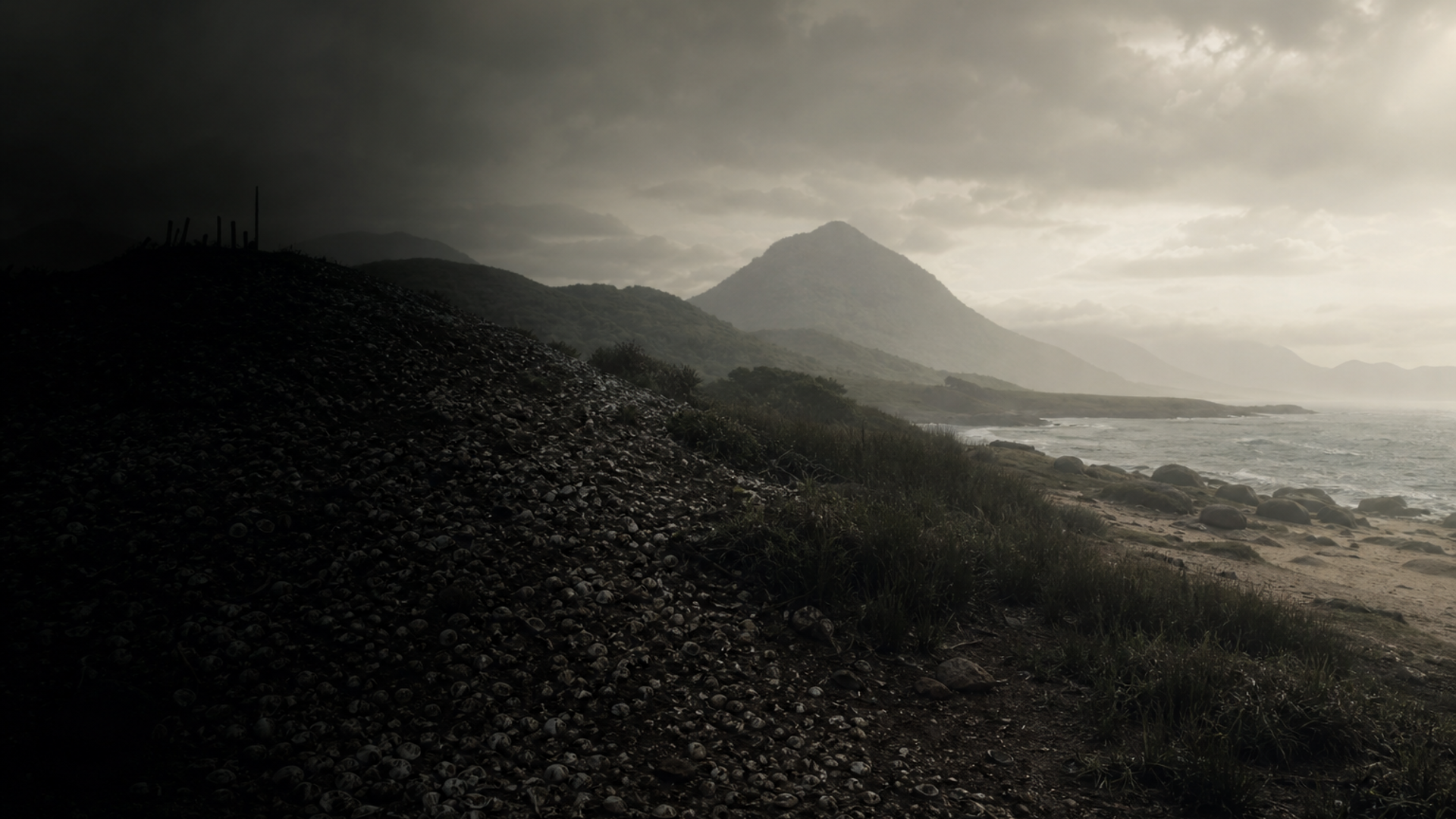
Sambaqui communities were intimately tied to the sea. Archaeological traces—shellfish remains, fish bone, stone tools, and occasional horticultural evidence—paint a picture of coastal resource reliance combined with inland exchanges. Living on the southeast coast, residents of Sambaqui sites would have exploited estuaries, rocky shores, and nearby terrestrial zones, producing dense midden deposits that formed the mounds themselves.
Mortuary practice within Sambaqui contexts often reflects complex social landscapes. Burials may be isolated interments, secondary burials, or part of larger cemeteries incorporated into the mound. The act of burying the dead within a mound integrates memory with everyday refuse and food production, producing a cinematic layering of life and death in the landscape.
By the 17th–20th centuries, European contact altered trade networks, introduced new diseases, and reshaped social organization. Archaeological signatures of these processes can include shifts in artifact types, changes in dietary isotopes, and altered burial practices. For a single burial sample, however, such community-scale transformations remain difficult to assess without comparative material from the same site and wider region.