انتقل إلى المحتوى الرئيسي
ملفات الحمض النووي

Kuskokwim Athabaskan Horizon

Riverine hunter-gatherers of interior Alaska whose DNA gives cautious glimpses of ancestry

1000 CE - 14501100 CE
Western Interior Alaska (Upper Kuskokwim River)

القصة

Archaeological and ancient-DNA data from Tochak McGrath (Upper Kuskokwim River, Alaska) illuminate a small sample of Ancient Athabaskan life between 1000–1450 CE. Limited genetic evidence (Y haplogroup Q; mtDNA A) aligns with northern Native American lineages but remains preliminary.

Time Period

1000–1450 CE (≈1100 BP)

Region

Western Interior Alaska (Upper Kuskokwim River)

Common Y-DNA

Q (observed in 2 of 3 samples)

Common mtDNA

A (observed in all 3 samples)

الخط الزمني

1000 CE

Riverine occupation at Tochak McGrath

Archaeological contexts at Tochak McGrath mark seasonal riverine occupations beginning around 1000 CE and continuing intermittently into the mid-2nd millennium.

Origins & Emergence

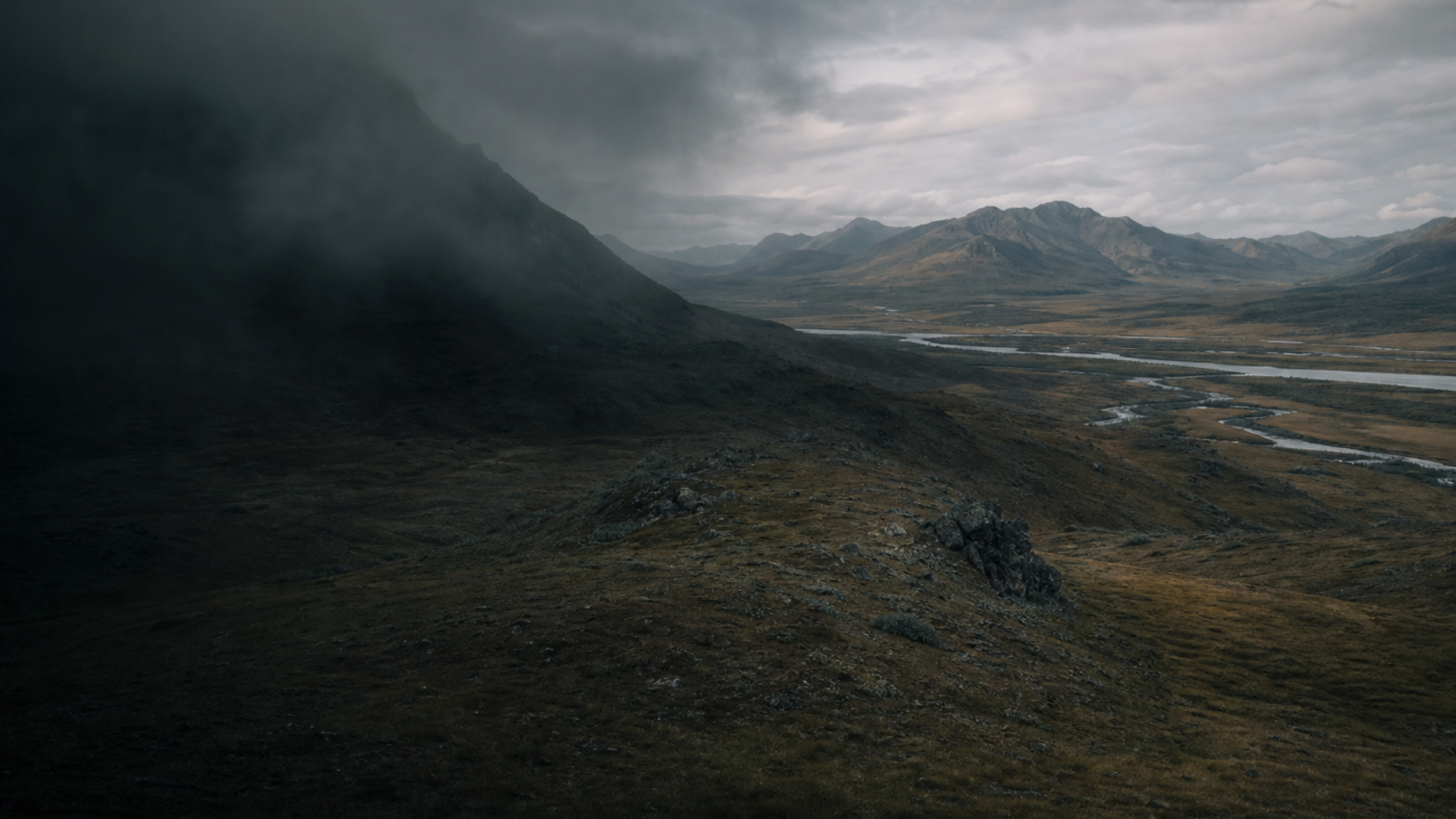
Along the braided channels of the Upper Kuskokwim River, the Tochak McGrath locality preserves a fragmentary but evocative window onto Athabaskan lifeways dated to roughly 1000–1450 CE. Archaeological data indicates repeated seasonal occupations: hearth features, shallow dwelling depressions, and scatters of stone and bone working debris that suggest mobile family groups exploiting riverine resources. Culturally, these occupations fit within a broader Ancient Athabaskan horizon that emerged across interior Alaska during the late first and early second millennia CE.

Linguistic and archaeological models propose that Athabaskan-speaking groups spread through interior northwestern North America in successive waves, adapting to diverse subarctic environments. Limited evidence from Tochak McGrath is compatible with such regional patterns, but the picture remains incomplete: preservation biases, intermittent site use, and the small number of directly dated contexts restrict resolution. Radiocarbon and stratigraphic indicators place the main occupation between approximately 1000 and 1450 CE, a period of climatic variability that likely influenced mobility and resource scheduling.

In cinematic terms, the people who paused along the Kuskokwim were part of a living landscape: moving with salmon runs and caribou migrations, threading social networks along river corridors. Yet, as with fog over a river at dawn, many details are indistinct—archaeology sketches outlines that genetics now begins to color, though cautiously.

  • Occupations at Tochak McGrath dated c. 1000–1450 CE
  • Evidence of seasonal riverine camps and toolmaking loci
  • Fits within a broader Ancient Athabaskan interior-Alaska horizon

Daily Life & Society

Archaeological traces from the western interior of Alaska suggest a rhythm of life tuned to the tides of resource availability. At sites like Tochak McGrath, features interpreted as hearths and small house depressions imply households that vacated and reoccupied locations on a seasonal schedule. Material traces—flakes from stone tool production, fragments of bone working, and dispersed organic remains—indicate subsistence that combined fishing (notably salmon runs where they occurred), riverine and floodplain fish, seasonal mammals (including caribou when ranges permitted), and gathered plant foods.

Social organization likely centered on small kin groups with flexible alliances. River corridors served as highways: they connected distant winter camps, hunting territories, and exchange routes. Archaeological indicators of long-distance raw material movement—obsidian or lithic types distinct from local stone—have been documented regionally and point to wider social networks, though specific evidence at Tochak McGrath is limited.

Material culture would have been practical and mobile: lightweight projectile points, bone and antler implements, and organic containers and textiles (rarely preserved) used for carrying and storage. Seasonal cycles—spring fish runs, summer berry harvests, autumn hunting—would have shaped ceremonies and social rhythms, even if the archaeological signal is subtle. Overall, the material record paints a picture of resilient adaptations in a demanding subarctic environment.

  • Seasonal mobility tied to fish runs and hunting
  • Small kin-based camps with evidence of toolmaking and trade

Genetic Profile

Three individuals from the Tochak McGrath assemblage provide the genetic window for this cultural horizon. All three carry mitochondrial haplogroup A, a lineage broadly distributed among northern Native American populations. Two of the three males tested carry Y-chromosome haplogroup Q, the dominant paternal lineage among many Native American groups across North and South America.

These findings are consistent with broader patterns observed in Arctic and subarctic regions: maternal lineages like A and paternal lineages like Q are common components of pre-contact genetic diversity in northern North America. However, the sample count is very small (<10 samples), so the conclusions must remain tentative. Limited evidence suggests continuity with regional genetic profiles, but small numbers can over-emphasize particular lineages or miss additional diversity that larger, more spatially varied samples would reveal.

When combined with archaeology, the genetic data offer a preliminary picture of demographic persistence: mitochondrial uniformity here may reflect kin-structured groups or matrilineally transmitted residence patterns, while the presence of Y-Q aligns with known paternal ancestry in indigenous populations. Yet alternative explanations—temporal clustering, chance sampling, or unrecognized admixture—cannot be ruled out. Expanded sampling, careful direct dating, and collaboration with descendant communities are essential to move from intriguing hints to robust population history.

  • mtDNA A found in all 3 samples — common in northern Native Americans
  • Y-DNA Q found in 2 of 3 males — aligns with widespread Native American paternal lineages

Legacy & Modern Connections

The faint echoes of life at Tochak McGrath resonate into the present through cultural continuities and genetic threads. Modern Athabaskan-speaking communities of interior Alaska carry languages, stories, and subsistence knowledge that reflect millennia of adaptation to riverine and boreal landscapes. Genetic signatures observed in these ancient samples—while preliminary—are broadly compatible with patterns seen among present-day indigenous populations in the region, suggesting points of continuity alongside centuries of change.

Importantly, framing ancient DNA and archaeology as tools for understanding shared pasts requires respectful, collaborative engagement with descendant communities. Material remains and genetic data are fragments of human lives; their interpretation must balance scientific inquiry with cultural values. Continued research, expanded sampling, and co-produced narratives can transform the cautious glimpses we now have into richer, community-centered histories that honor both the archaeological record and living traditions.

  • Genetic patterns tentatively align with modern Athabaskan ancestry
  • Emphasis on collaborative research and respect for descendant communities

مساعد الذكاء الاصطناعي

مساعد الذكاء الاصطناعي من DNA Genics

فتح هذه الميزة
اطرح أسئلة عن ثقافة Kuskokwim Athabaskan Horizon. يمكن للمساعد شرح النتائج الجينية والسياق التاريخي والأدلة الأثرية والصلات بالعصر الحديث.
مثال على تحليل بالذكاء الاصطناعي

لمحة عن ثقافة Kuskokwim Athabaskan Horizon

تساعد عينات الحمض النووي القديم الباحثين على دراسة أنماط الهجرة والعلاقات الجينية بين المجموعات السكانية القديمة.

هذه معاينة للتحليل. يتيح المساعد الكامل استكشاف الموضوعات التالية:

  • التركيب الجيني والأصول
  • أنماط الهجرة والأصول
  • الحياة اليومية والممارسات الثقافية
  • الإرث الجيني المعاصر