انتقل إلى المحتوى الرئيسي
ملفات الحمض النووي

Roman Sardinia: Shores of Movement

Three Roman-era burials from Alghero reveal a small, vivid window into island life and mobility

100 CE - 310 CE
Sardinia, Italy (Alghero; SS. Aho M. Carru)

القصة

Archaeological and genetic evidence from three Roman-period individuals (100–310 CE) at Alghero and SS. Aho M. Carru, Sardinia. Limited ancient DNA hints at Mediterranean connections, but small sample size makes conclusions preliminary.

Time Period

100–310 CE

Region

Sardinia, Italy (Alghero; SS. Aho M. Carru)

Common Y-DNA

G (1 sample)

Common mtDNA

U, L, T2b (each 1 sample)

الخط الزمني

100 CE

Roman-period burials sampled in Alghero region

Three individuals dated between 100–310 CE were recovered from Alghero and SS. Aho M. Carru, providing the basis for preliminary ancient DNA analysis.

Origins & Emergence

The individuals sampled date to the Roman Imperial period (100–310 CE), recovered from burials near Alghero and the locality recorded as SS. Aho M. Carru on Sardinia's northwest coast. Archaeological data indicate occupation zones and funerary deposits that reflect Roman-era settlement and cemetery practices layered on a long island history—Nuragic monuments and earlier Mediterranean contacts remain visible in the landscape.

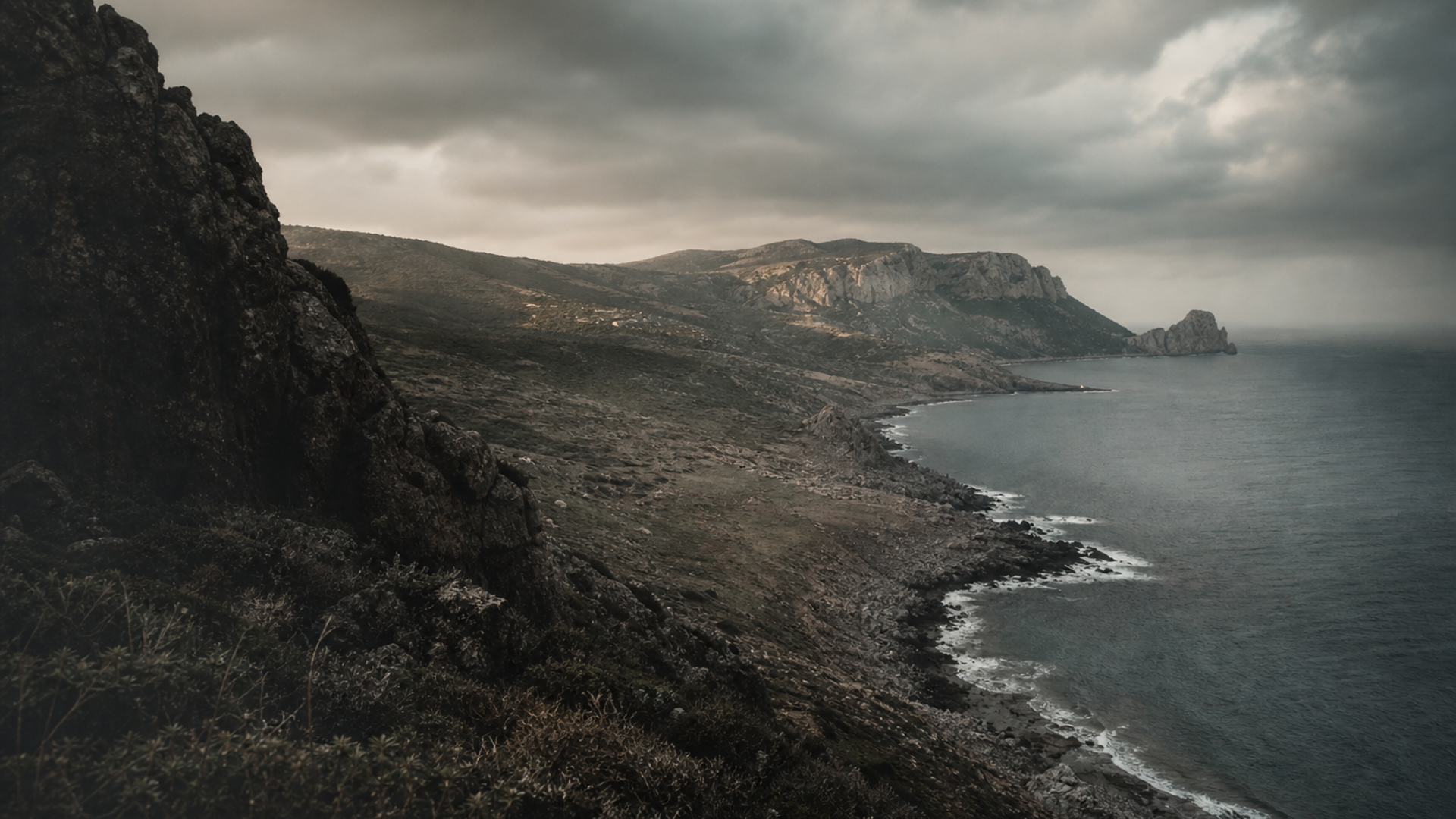
Visually, the scene is cinematic: coastal reefs glinting under Mediterranean light, amphorae and imported ceramics arriving in harbor settlements, and local communities negotiating Roman administration. Material culture from nearby sites shows continuity of local traditions alongside imported wares and architectural features tied to the Empire. Limited evidence suggests these burials belong to populations engaged in maritime trade, artisanal production, and agrarian life under Roman influence.

Because we have only three samples, archaeological inference must remain cautious. The skeletal contexts and associated artifacts provide the primary cultural framework: these are Roman-period Sardinian burials that sit at an intersection of local resilience and imperial mobility. Future excavation and targeted sampling across more cemeteries will be essential to clarify patterns of continuity, migration, and social identity on Roman Sardinia.

  • Dating: 100–310 CE; Roman Imperial period on Sardinia
  • Sites: Alghero; SS. Aho M. Carru — coastal cemetery contexts
  • Context: Local traditions alongside imported Roman material culture

Daily Life & Society

The Roman-period shoreline of Sardinia was a stage of everyday rhythms shaped by sea, soil, and empire. Archaeological remains from the Alghero region show evidence for mixed economies—olive oil, cereal cultivation, and small-scale animal herding—paired with maritime exchange. Amphora fragments, communal ovens, and tools speak to households oriented around production for local use and wider trade.

Social life would have blended local Sardinian customs with Roman administrative structures: local elites might adopt Roman dress and inscriptions, while rural communities maintained traditional burial practices. The cinematic contrast of island isolation and cosmopolitan traffic is visible in funerary assemblages: locally made pottery sits beside imported tablewares, hinting at networks that carried people, goods, and ideas across the Mediterranean.

Archaeobotanical and zooarchaeological studies from analogous Sardinian sites document diet diversity, but direct data for these three burials are limited. Osteological indicators may hint at physically demanding lives—maritime and agrarian labor—but preservation and sample size constrain confident social reconstructions. Archaeology frames a lived landscape of hybrid identities during Rome's island rule, a mosaic that ancient DNA can begin to illuminate when combined with more extensive sampling.

  • Economy: agriculture, pastoralism, and maritime trade
  • Social fabric: local traditions combined with Roman influences

Genetic Profile

Three ancient DNA samples from Alghero/SS. Aho M. Carru provide a tentative glimpse of Roman-period genetic diversity on Sardinia. Y-chromosome data show haplogroup G in one male individual—a lineage present at low frequency across the Mediterranean and Europe, often associated with Neolithic agricultural expansions and later regional pockets. Mitochondrial haplogroups are U, L, and T2b, each observed once across the three individuals.

Interpretive caution is essential: with only three samples, patterns may reflect individual life histories rather than population-level processes. The presence of mtDNA haplogroup L—commonly associated with sub-Saharan African maternal ancestry in modern datasets—raises the possibility of long-distance connections mediated by trade, slavery, or mobility within the Roman Mediterranean; archaeological evidence records African contacts in Roman ports, but a single L lineage cannot confirm widespread African ancestry. Haplogroup T2b and U are both found in ancient European and Mediterranean populations, consistent with local/native and wider regional maternal lineages.

Together, these genetic markers align with archaeological indications of a connected island: a mingling of local Sardinian ancestry with Mediterranean inputs. However, the small sample count (<10) means any inference about sex-biased mobility, migration rates, or demographic impact of Roman-era movements remains preliminary. Expanded sampling across cemeteries and integration with isotopic and archaeological data would allow robust testing of mobility, ancestry, and social stratification hypotheses.

  • Sample size is very small (3); conclusions are preliminary
  • Observed haplogroups: Y-G; mtDNA U, L, T2b — suggesting mixed Mediterranean connections

Legacy & Modern Connections

Modern Sardinians are often genetically distinctive due to long-term relative isolation and continuity from prehistoric populations. The Roman-period data from Alghero hint at episodes of contact that contributed to the island's genetic tapestry. If signals like mtDNA L reflect incoming maternal lineages, they testify to the mobility and human complexity of the Roman Mediterranean: sailors, merchants, soldiers, and enslaved people moved people as well as goods.

Yet any link between these three Roman-era individuals and present-day Sardinians must be drawn cautiously. Limited sampling cannot resolve how much admixture entered Sardinian gene pools during the Roman era or how it persisted. What we can say with confidence is that archaeology and ancient DNA together offer a powerful, cinematic narrative: Sardinia during the Roman Empire was a place of layered identities where local lifeways met the currents of a connected Mediterranean. More comprehensive ancient DNA surveys will reveal whether such threads wove into the long-term genetic fabric of the island.

  • Modern Sardinian distinctiveness reflects long-term continuity plus episodic contacts
  • These Roman-era samples hint at Mediterranean mobility but require more data to connect to modern populations

مساعد الذكاء الاصطناعي

مساعد الذكاء الاصطناعي من DNA Genics

فتح هذه الميزة
اطرح أسئلة عن ثقافة Roman Sardinia: Shores of Movement. يمكن للمساعد شرح النتائج الجينية والسياق التاريخي والأدلة الأثرية والصلات بالعصر الحديث.
مثال على تحليل بالذكاء الاصطناعي

لمحة عن ثقافة Roman Sardinia: Shores of Movement

تساعد عينات الحمض النووي القديم الباحثين على دراسة أنماط الهجرة والعلاقات الجينية بين المجموعات السكانية القديمة.

هذه معاينة للتحليل. يتيح المساعد الكامل استكشاف الموضوعات التالية:

  • التركيب الجيني والأصول
  • أنماط الهجرة والأصول
  • الحياة اليومية والممارسات الثقافية
  • الإرث الجيني المعاصر