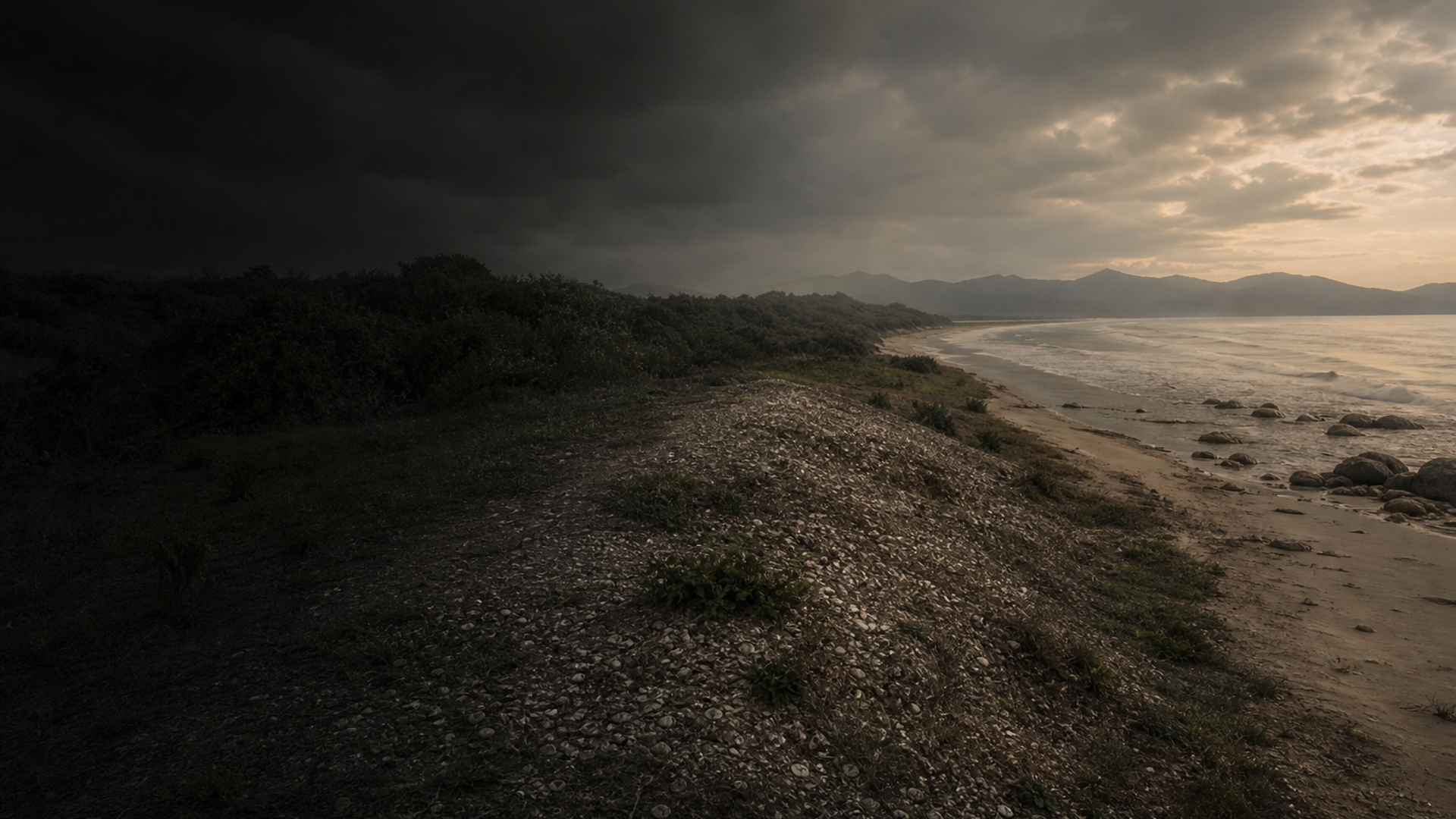
The genetic dataset from Jabuticabeira II comprises 14 ancient individuals dated between 742 BCE and 1 BCE. Mitochondrial DNA is uniformly C1c across all 14 samples, indicating a remarkable maternal homogeneity in this cemetery sample. On the paternal side, Y-chromosome haplogroup Q is the most frequent (observed in 9 identified male individuals), a lineage commonly found among Native American populations.
These genetic signals have several possible interpretations. Uniform mtDNA C1c could reflect maternal continuity — perhaps a stable local maternal pool, founder effects within a burial community, or sampling bias linked to preservation or burial practice. The prevalence of Y-haplogroup Q aligns with broad Pan-American paternal ancestry patterns but does not, by itself, identify specific regional origins or migrations. Comparative aDNA from other Sambaqui sites and inland groups is limited; therefore, while the Jabuticabeira II genomes provide clear markers of Indigenous ancestry and local continuity, broader population dynamics (gene flow, marriage networks, mobility) remain areas for further study.
Importantly, 14 samples offer moderate statistical power: conclusions about population structure are informative but not definitive. Future sampling, combined with isotopic and archaeological context, will refine interpretations about kinship, residence patterns (e.g., matrilocality vs. patrilocality) and connections to contemporary Indigenous groups.