Zum Hauptinhalt springen
mtDNA · Mütterliche Linie

C1C5

mtDNA Haplogroup C1C5

Ein Referenzprofil für einen Abstammungszweig. Gemeinsame Haplogruppen begründen weder eine familiäre Beziehung noch eine kulturelle Identität.

Referenzprofil

Hintergrund des Zweigs

Historischer Kontext für den mtDNA-Abstammungszweig C1C5

Origins and Evolution

mtDNA haplogroup C1C5 is a subclade of C1C, itself a descendant of the broader C1 lineage associated with the maternal founding lineages of the Americas. The parent clade C1C has been placed in a Beringian/Northeast Asian context around the Late Pleistocene (~15 kya). C1C5 likely formed shortly after the initial Beringian isolation or during early dispersal into the Americas, with a plausible coalescence in the Late Pleistocene to Early Holocene (approximately 12 kya, with uncertainty depending on molecular clock calibration and sample coverage).

As with many deeply rooted Native American mtDNA clades, the evolutionary history of C1C5 reflects a period of bottleneck and subsequent regional diversification after initial entry into the Western Hemisphere. Limited sampling and the relatively slow mutation rate of the mitochondrial genome mean that precise branching dates and internal structure remain subject to refinement as more complete ancient and modern mitogenomes are sequenced.

Subclades (if applicable)

At present, C1C5 is treated as a named subclade under C1C and may comprise further internal lineages defined by private mutations in complete mtDNA sequences. Because sampling of Indigenous populations across the Americas (and comparative Northeast Asian populations) remains incomplete, the internal subdivision of C1C5 is not fully resolved. Future high-coverage mitogenomes from both modern and ancient individuals will likely reveal additional sub-branches and clarify geographic microstructure.

Geographical Distribution

C1C5 shows a distribution consistent with a maternal lineage that diversified within the Americas after the initial Beringian episode. Modern occurrences are most reliably reported among Indigenous groups throughout the Americas, with higher representation in parts of South America and lower but detectable frequencies in Central and North America. Occasional low-frequency occurrences in Arctic/Sub-Arctic groups and rare signals in northeastern Asian populations are consistent with ancestral Beringian ties or later, low-level backflow/gene flow events.

Ancient DNA studies have recovered C1C-type lineages in early American contexts, supporting continuity of maternal lineages from the Late Pleistocene/Early Holocene into later regional populations. However, the precise archaeological contexts for C1C5-specific ancient occurrences remain limited, and additional ancient mitogenomes are needed to map its early spatial-temporal dynamics.

Historical and Cultural Significance

While mtDNA lineages cannot by themselves assign people to archaeological cultures, C1C5 contributes to the genetic picture of the first peopling of the Americas and subsequent regional differentiation. Its presence in modern Indigenous communities and in some ancient American contexts supports maternal continuity across millennia in many regions. C1C5 can be used in combination with other mitochondrial and autosomal markers to investigate migration routes, demographic expansions (for example, early Holocene coastal or interior dispersals), and local population histories in Central and South America.

Researchers and community geneticists often treat C1C5 and related C1 subclades as part of the broader signature of Native American maternal ancestry, complementary to other founding haplogroups (A2, B2, D1, etc.) and informative for reconstructing maternal lineages at regional scales.

Conclusion

mtDNA haplogroup C1C5 is a descendant of the Beringian-rooted C1C lineage that likely arose during the Late Pleistocene–Early Holocene and diversified within the Americas. It is most informative for studies of Indigenous American maternal ancestry, regional differentiation (especially in parts of South America), and deep population history linked to the initial peopling of the New World. Continued sampling of modern and ancient mitogenomes is needed to resolve its internal structure, precise age, and past geographic dynamics.

Wichtige Punkte

  • Origins and Evolution
  • Subclades (if applicable)
  • Geographical Distribution
  • Historical and Cultural Significance
  • Conclusion
Referenzprofil

Baum und Verwandtschaft

Phylogenetischer Kontext und Subkladen

Entwicklungsweg

Folgen Sie den erfassten übergeordneten Zweigen bis C1C5. Die Daten sind Schätzungen und können sich ändern, wenn Referenzdaten überarbeitet werden.

Schritte Haplogruppe Altersschätzung Archäologische Epoche Vergangene Zeit Unmittelbare Nachkommen Getestete moderne Nachkommen Antike Verknüpfungen
1 C1C5 Aktuell ~12,000 years ago Neolithic 12,000 Jahre 0 1 0
2 C1C ~15,000 years ago Mesolithic 15,000 Jahre 6 111 60
3 C1 ~18,000 years ago Mesolithic 18,000 Jahre 6 606 5
4 C ~35,000 years ago Paleolithic 35,000 Jahre 5 806 75
5 CZ ~40,000 years ago Paleolithic 40,000 Jahre 2 856 4
6 M8 ~42,000 years ago Paleolithic 42,000 Jahre 2 873 5
7 M ~60,000 years ago Paleolithic 60,000 Jahre 42 2,671 41
8 L3 ~70,000 years ago Paleolithic 70,000 Jahre 7 30,162 6
9 L3'4 - - - 2 30,212 0
10 L3'4'6 - - - 2 30,216 0
11 L2'3'4'6 - - - 2 31,333 0
12 L2'3'4'5'6'7 - - - 2 31,349 0
13 L1'2'3'4'5'6'7 - - - 2 31,852 0
14 L ~160,000 years ago Paleolithic 160,000 Jahre 2 32,236 5

Subkladen (0)

Endzweig ohne erfasste Subkladen

Geschwisterzweige (5)

Weitere Zweige derselben übergeordneten Haplogruppe

Referenzprofil

Verbreitung weltweit

Geografische Verbreitung und moderne Präsenz

Erfasster Ursprung

Beringia / Northeast Asia

Moderne Verbreitung

The populations where mtDNA haplogroup C1C5 is found include:

  1. Indigenous peoples of North America (various First Nations and Native American groups)
  2. Indigenous peoples of Central America (various Mesoamerican groups)
  3. Indigenous peoples of South America (Andean, Amazonian and other regional groups)
  4. Arctic and sub-Arctic populations (occasional occurrences among Inuit/Yupik-adjacent groups)
  5. Siberian and Northeast Asian populations (rare, low-frequency occurrences reflecting ancestral ties or later gene flow)
  6. Ancient archaeological populations across the Americas (early Holocene and later contexts where C1-type mitogenomes have been recovered)
Historischer Kontext

Ein Zweig durch die Zeit

Geschätzte Entstehung in einer breiten historischen Zeitleiste. Zeitmarken liefern Kontext und implizieren keine Verbindung zu bestimmten Kulturen.

  1. ~12k Jahre zurück

    Haplogruppe C1C5

    Geschätzte Entstehung dieses mtDNA-Zweigs; Daten und Orte sind Referenzschätzungen.

    Dieser Zweig
  2. ~10k Jahre zurück

    Neolithische Revolution

    Beginn der Landwirtschaft und feste Siedlungen

  3. ~5k Jahre zurück

    Bronzezeit

    Metallverarbeitung, Schrift und frühe Zivilisationen

  4. ~3k Jahre zurück

    Eisenzeit

    Eisenwerkzeuge und ausgedehnte Handelsnetze

  5. ~2.5k Jahre zurück

    Klassische Antike

    Blüte griechischer und römischer Kulturen

  6. Gegenwart

    Gegenwart

    Moderne Zeit

Referenzprofil

Archäologischer Kontext

Erfasste archäologische Zuordnungen für den mtDNA-Zweig C1C5

Erfasste Zuordnungen

Diese Bezeichnungen beschreiben archäologische Kontexte erfasster Referenzproben mit Bezug zu C1C5. Eine Zuordnung bedeutet nicht, dass alle Träger einer Kultur angehörten oder einer bestimmten Migrationsroute folgten.

Anse Gourde Archaic Belize Arroyo Seco Chincha de Savaan La Galgada Loma San Gabriel Soro Mikaya Patjxa Tayopa
Kulturzuordnungen basieren auf dem archäologischen Kontext antiker DNA-Proben und können regionale Verknüpfungen in bestimmten Zeiträumen widerspiegeln.
Referenzprofil

Probencatalog

2 direkte Träger der Haplogruppe C1C5

2 angezeigt · 2 passende Proben

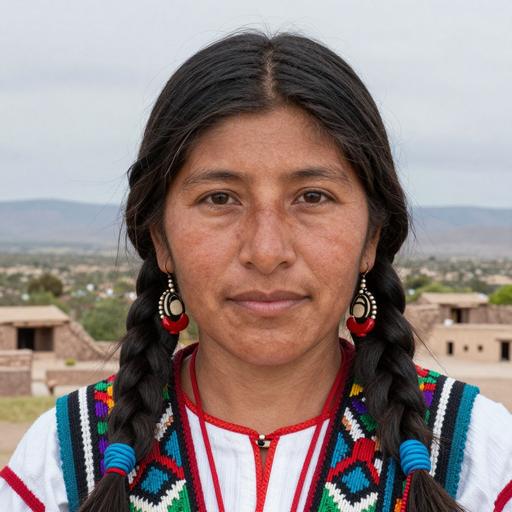
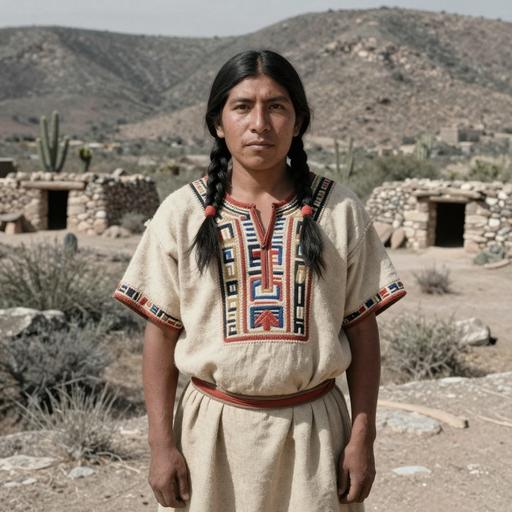
Porträts sind KI-generierte Illustrationen. Probenbezeichnungen und Zugangs-IDs identifizieren die Referenzdatensätze.

Porträt Probe Land Epoche Datum Kultur mtDNA Übereinstimmung
KI-generiertes illustratives Porträt von Tayopa individual, Tayopa Site #60 (Sonora, Sahuaripa), Mexico (500-1,400 CE)
Proben-ID: I17109
Mexico Mexico Tayopa 1000BP 500-1400 CE Tayopa C1c5 Direkt
KI-generiertes illustratives Porträt von Mogollon individual, Cueva DeLos Muertos Chiquitos (Rio Zape), Mexico (709-880 CE)
Proben-ID: I12571
Mexico Cueva de los Muertos Chiquitos 709-880 calCE (1220±15 BP, PSUAMS-12699) Loma San Gabriel C1c5 Direkt
MATERNAL LINEAGE · ANCIENT DNA

Ancient lineage evidence map

Follow parent clades toward this branch and explore where ancient carriers were found.

Loading ancient observations…

Markers are archaeological find locations. A dashed connector is an uncertain, proposed geographic transition between consecutive branches supported by multiple dated observations; it is not an exact travel route, birthplace or proof of direct descent. Parent-clade samples may belong to other descendant branches. Gaps remain where evidence is insufficient. Sample dates differ from haplogroup formation dates.

Referenzprofil

Trägerverteilungskarte

Geografische Verteilung von 2 antiken DNA-Proben (direkte und Subkladen-Träger von C1C5)

Direkter Träger
Zeitraumfilter
Alle Zeiträume
Alle Proben werden angezeigt
Referenzprofil

Zeitliche Verteilung

Verteilung der Träger über archäologische Epochen

Referenzprofil

Geografische Verteilung

Anzahlen nach erfasstem Probenland. Sie spiegeln die verfügbare Referenzauswahl wider, nicht Bevölkerungshäufigkeiten.

Referenzprofil

Verteilung Land × Epoche

Vergleichen Sie erfasste Probenanzahlen nach Ländern und archäologischen Epochen. Wählen Sie eine belegte Zelle, um eine Probe anzusehen.

Daten

Daten und Herkunft

Quellenangaben und Datenqualität

Zuletzt aktualisiert 2026-02-16
Konfidenzwert 50/100
Abdeckung Low

Datenquelle

Klassifikation, geschätzte Daten und geografischer Kontext spiegeln die erfassten Referenzdaten wider und können sich bei überarbeiteten Belegen ändern. Die Probenabdeckung ist ungleichmäßig; erfasste Orte und archäologische Zuordnungen begründen weder persönliche Herkunft noch kulturelle Identität.

Eine Haplogruppe beschreibt eine einzelne mütterliche oder väterliche Linie. Welcher Zweig sich vorhersagen lässt, hängt von den Markern in der DNA-Datei ab. So analysieren wir DNA