Zum Hauptinhalt springen
mtDNA · Mütterliche Linie

L3B

mtDNA Haplogroup L3B

Ein Referenzprofil für einen Abstammungszweig. Gemeinsame Haplogruppen begründen weder eine familiäre Beziehung noch eine kulturelle Identität.

Referenzprofil

Hintergrund des Zweigs

Historischer Kontext für den mtDNA-Abstammungszweig L3B

Origins and Evolution

mtDNA haplogroup L3B derives from the broader macro-haplogroup L3, which is a key African maternal lineage that also gave rise to the haplogroups involved in the out-of-Africa dispersals. While the parent clade L3 likely originated in eastern Africa roughly 50–80 kya, subclades such as L3B appear to have diversified later within sub-Saharan Africa. Based on phylogenetic position and coalescent patterns of related L3 subclades, a reasonable estimate for the time to most recent common ancestor (TMRCA) of L3B is in the order of ~20–30 kya (here given as ~25 kya), although precise dating requires more complete mitogenome sampling across understudied populations.

Because L3B sits on an intermediate node (often reported in phylogenies as L3B'F or equivalent intermediate designations), it functions as a connector between older L3 diversity and younger, more geographically structured descendant lineages. This intermediate status means L3B contains internal structure (subclades) that have been unevenly sampled and characterized, so many details remain provisional pending broader whole-mtDNA sequencing.

Subclades

As an intermediate node, L3B gives rise to descendant subclades that are variably reported in phylogenies. Some named sublineages (often labeled L3b1, L3b2, etc., or further downstream labels depending on the reference build) show localized patterns within West and Central Africa. Coverage of full mitogenomes has revealed structure within L3B, but many subclades remain undersampled and their defining mutations and geographic affinities require confirmation with additional high-quality sequences. Researchers commonly emphasize the need to sequence complete mitochondrial genomes from diverse West/Central African populations to resolve L3B internal branching and ages.

Geographical Distribution

Empirical population genetics studies and mitochondrial surveys indicate that L3B and its close relatives are most frequently observed in West and Central African populations, with lower frequencies reported in parts of eastern Africa and the African diaspora in the Americas and Caribbean due to historical forced migrations. Within Africa, the haplogroup appears in multiple ethnolinguistic groups across coastal and inland West Africa and in some Central African rainforest populations. Outside Africa, L3B lineages are present at low frequency among African-descended populations in the Americas — a pattern consistent with trans-Atlantic slave trade origins.

Historical and Cultural Significance

Although mitochondrial haplogroups do not map directly to archaeological cultures, patterns of L3B variation are informative for reconstructing past demographic processes in sub-Saharan Africa. For example:

  • Bantu expansion (Holocene): Given the geographic overlap with populations that participated in the Bantu-speaking expansions (beginning ~3–5 kya), some L3B subclades may have been carried during these demographic movements, producing broader distributions across central, eastern and southern Africa.
  • Later Stone Age and Holocene population dynamics: The antiquity of some L3B internal branches is consistent with deep Late Pleistocene–Holocene continuities in sub-Saharan maternal lineages, followed by population structure changes during the Holocene (e.g., the Green Sahara episodes, Neolithic transformations).
  • Historic era (Slave Trade): The presence of L3B lineages in Afro-descendant populations of the Americas and Caribbean reflects recent (last ~0.4 kya) forced migrations and establishes L3B as part of the maternal genetic legacy carried across the Atlantic.

Conclusion

mtDNA haplogroup L3B is an African maternal lineage that likely diversified in West/Central Africa after the initial L3 radiation. It is informative for studies of intra-African population structure, Holocene expansions (including possible involvement in Bantu-related movements), and the origins of African diaspora maternal lineages. However, L3B remains relatively understudied compared with some other L3 subclades; resolving its internal topology, precise age, and fine-scale distribution will require expanded whole-mtDNA sequencing across a wide range of West and Central African populations.

Wichtige Punkte

  • Origins and Evolution
  • Subclades
  • Geographical Distribution
  • Historical and Cultural Significance
  • Conclusion
Referenzprofil

Baum und Verwandtschaft

Phylogenetischer Kontext und Subkladen

Entwicklungsweg

Folgen Sie den erfassten übergeordneten Zweigen bis L3B. Die Daten sind Schätzungen und können sich ändern, wenn Referenzdaten überarbeitet werden.

Schritte Haplogruppe Altersschätzung Archäologische Epoche Vergangene Zeit Unmittelbare Nachkommen Getestete moderne Nachkommen Antike Verknüpfungen
1 L3B Aktuell ~25,000 years ago Paleolithic 25,000 Jahre 1 94 0
2 L3B'F - - - 2 357 0
3 L3 ~70,000 years ago Paleolithic 70,000 Jahre 7 30,162 6
4 L3'4 - - - 2 30,212 0
5 L3'4'6 - - - 2 30,216 0
6 L2'3'4'6 - - - 2 31,333 0
7 L2'3'4'5'6'7 - - - 2 31,349 0
8 L1'2'3'4'5'6'7 - - - 2 31,852 0
9 L ~160,000 years ago Paleolithic 160,000 Jahre 2 32,236 5

Geschwisterzweige (1)

Weitere Zweige derselben übergeordneten Haplogruppe

Referenzprofil

Verbreitung weltweit

Geografische Verbreitung und moderne Präsenz

Erfasster Ursprung

Sub-Saharan Africa (West/Central)

Moderne Verbreitung

The populations where mtDNA haplogroup L3B'F is found include:

  1. Yoruba (Nigeria) and other West Nigerian groups
  2. Akan and related groups in Ghana
  3. Igbo and other southeastern Nigerian populations
  4. Mende and Temne (Sierra Leone and neighbouring areas)
  5. Various Cameroonian and Central African rainforest populations
  6. African-descended populations in the Americas (African American, Afro-Caribbean)
  7. Scattered occurrences in East African samples (low frequency)
  8. Undersampled rural and hunter-gatherer groups across West/Central Africa (potentially)
Historischer Kontext

Ein Zweig durch die Zeit

Geschätzte Entstehung in einer breiten historischen Zeitleiste. Zeitmarken liefern Kontext und implizieren keine Verbindung zu bestimmten Kulturen.

  1. ~25k Jahre zurück

    Haplogruppe L3B

    Geschätzte Entstehung dieses mtDNA-Zweigs; Daten und Orte sind Referenzschätzungen.

    Dieser Zweig
  2. ~20k Jahre zurück

    Letztes glaziales Maximum

    Höhepunkt der letzten Eiszeit, isolierte Bevölkerungen

  3. ~10k Jahre zurück

    Neolithische Revolution

    Beginn der Landwirtschaft und feste Siedlungen

  4. ~5k Jahre zurück

    Bronzezeit

    Metallverarbeitung, Schrift und frühe Zivilisationen

  5. ~3k Jahre zurück

    Eisenzeit

    Eisenwerkzeuge und ausgedehnte Handelsnetze

  6. ~2.5k Jahre zurück

    Klassische Antike

    Blüte griechischer und römischer Kulturen

  7. Gegenwart

    Gegenwart

    Moderne Zeit

Referenzprofil

Archäologischer Kontext

Erfasste archäologische Zuordnungen für den mtDNA-Zweig L3B

Erfasste Zuordnungen

Diese Bezeichnungen beschreiben archäologische Kontexte erfasster Referenzproben mit Bezug zu L3B. Eine Zuordnung bedeutet nicht, dass alle Träger einer Kultur angehörten oder einer bestimmten Migrationsroute folgten.

Austria_Avar Bungule Corded Ware Elmenteitan Culture Guanche Italy_Sicily_MBA-oAfrica Jordanow-Michelsberg Culture Khovd Long-Term Mtwapa Saint Martin Slab Grave Culture St. Helena Colonial
Kulturzuordnungen basieren auf dem archäologischen Kontext antiker DNA-Proben und können regionale Verknüpfungen in bestimmten Zeiträumen widerspiegeln.
Referenzprofil

Probencatalog

13 Subkladen-Träger der Haplogruppe L3B (keine direkten Träger in der aktuellen Referenzauswahl)

10 angezeigt · 13 passende Proben

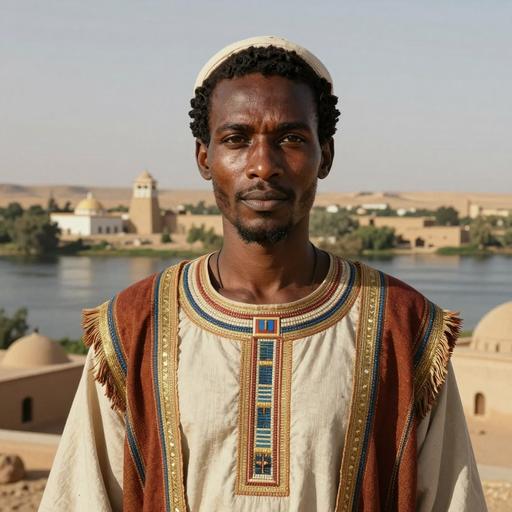
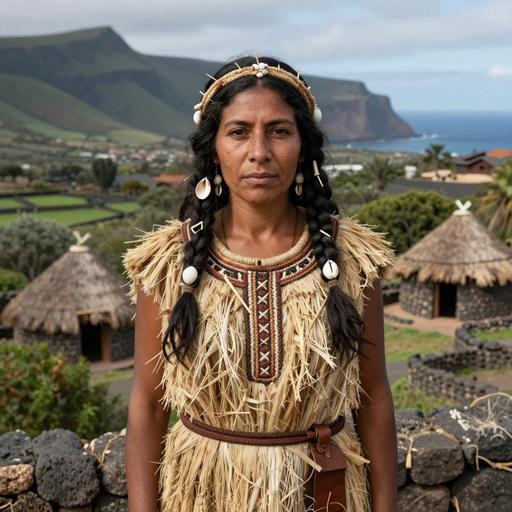
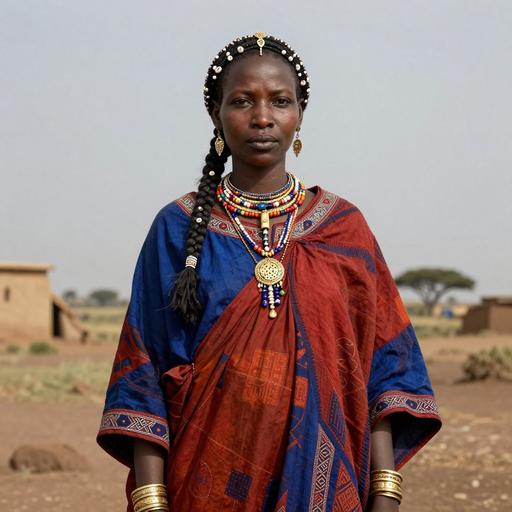
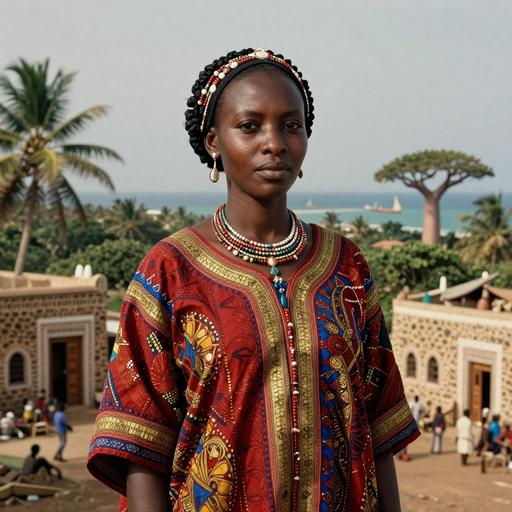
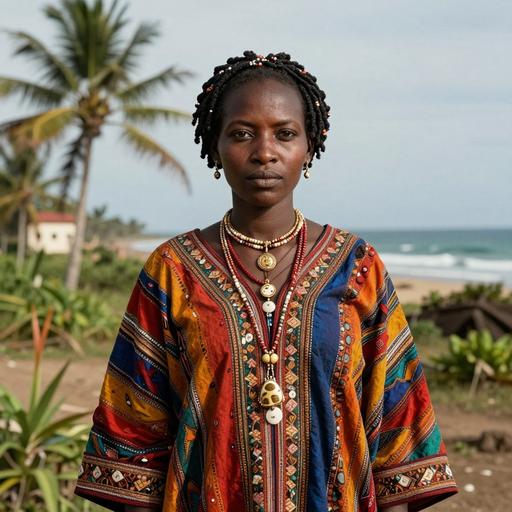
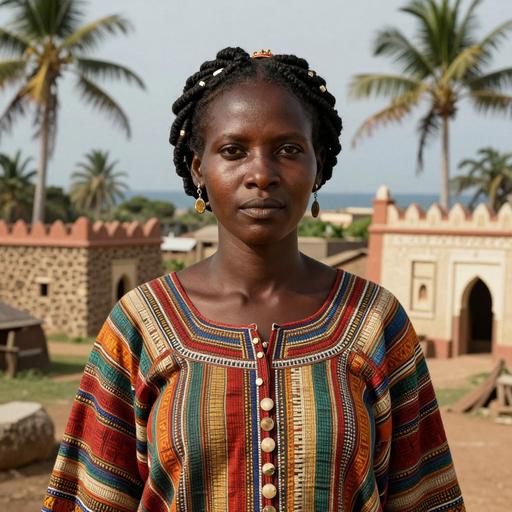
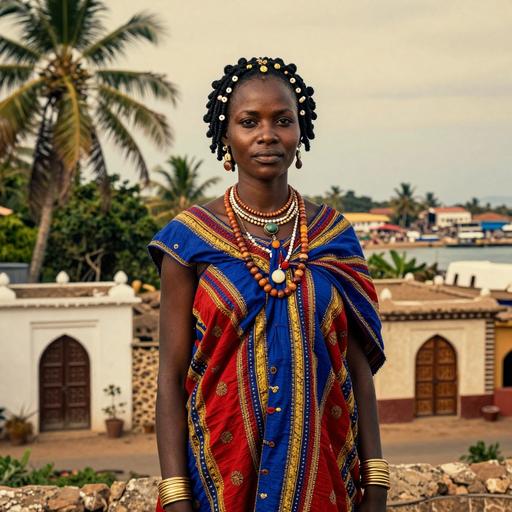
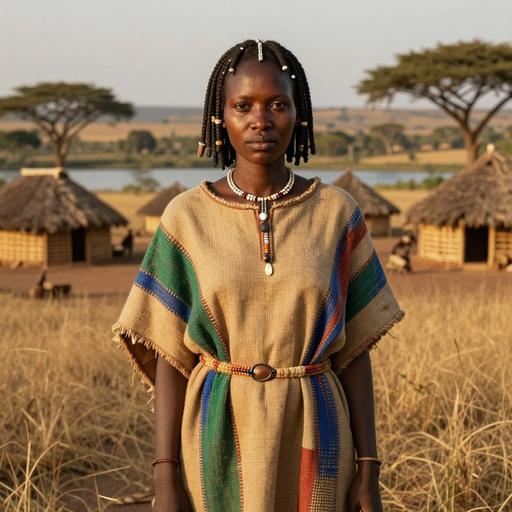
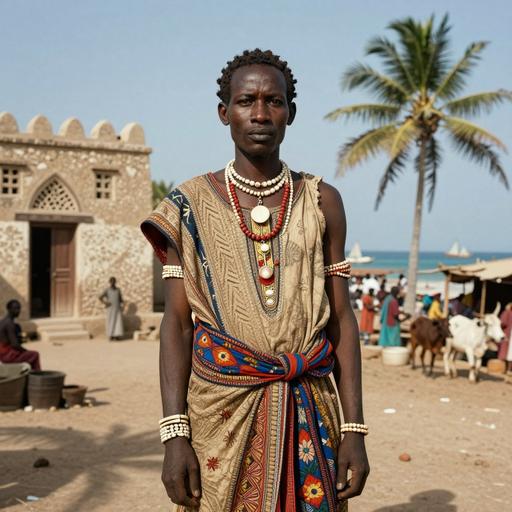
Porträts sind KI-generierte Illustrationen. Probenbezeichnungen und Zugangs-IDs identifizieren die Referenzdatensätze.

Porträt Probe Land Epoche Datum Kultur mtDNA Übereinstimmung
KI-generiertes illustratives Porträt von Nubian Civilization individual, Nubia. Kulubnarti. Cemetery R, Sudan (650-1,050 CE)
Proben-ID: I19138
Sudan Early Christian Era in Sudan 650 CE - 1050 CE Nubian Christian L3b1a2 Subklade
KI-generiertes illustratives Porträt von Berber individual, Gran Canaria, Canary Islands (884-994 CE)
Proben-ID: gun008
Canary Islands The Guanche People of the Canary Islands 884 CE - 994 CE Guanche L3b1a Subklade
KI-generiertes illustratives Porträt von Canarias Guanche individual, Gran Canaria, Canary Islands (884-994 BCE)
Proben-ID: gun008
Canary Islands The Guanche People of the Canary Islands 884 BCE - 994 BCE Guanche L3b1a Subklade
KI-generiertes illustratives Porträt von Medieval Swahili individual, Mtwapa (Kilifi), Kenya (1,250-1,650 CE)
Proben-ID: I17407
Kenya Swahili Culture of Mtwapa 1250-1650 CE Mtwapa L3b1a1a Subklade
KI-generiertes illustratives Porträt von Medieval Swahili individual, Mtwapa (Kilifi), Kenya (1,250-1,650 CE)
Proben-ID: I19384
Kenya Swahili Culture of Mtwapa 1350-1700 CE Mtwapa L3b1a1a Subklade
KI-generiertes illustratives Porträt von Medieval Swahili-o individual, Mtwapa (Kilifi), Kenya (1,250-1,650 CE)
Proben-ID: I19390
Kenya Swahili Culture of Mtwapa 1250-1650 CE Mtwapa L3b1a+@16124 Subklade
KI-generiertes illustratives Porträt von Medieval Swahili individual, Mtwapa (Kilifi), Kenya (1,250-1,650 CE)
Proben-ID: I19392
Kenya Swahili Culture of Mtwapa 1500-1700 CE Mtwapa L3b1a1 Subklade
KI-generiertes illustratives Porträt von Medieval Swahili individual, Mtwapa (Kilifi), Kenya (1,250-1,650 CE)
Proben-ID: I23551
Kenya Swahili Culture of Mtwapa 1250-1650 CE Mtwapa L3b1a1 Subklade
KI-generiertes illustratives Porträt von Medieval Swahili individual, Mtwapa (Kilifi), Kenya (1,350-1,550 CE)
Proben-ID: I13611
Kenya Swahili Culture of Mtwapa 1350-1550 CE Mtwapa L3b1a11 Subklade
KI-generiertes illustratives Porträt von LIA individual, Munsa, Uganda (1,400-1,600 CE)
Proben-ID: MUN001
Uganda Munsa Late Iron Age in Uganda 1400-1600 CE Munsa Culture L3b1a1 Subklade
MATERNAL LINEAGE · ANCIENT DNA

Ancient lineage evidence map

Follow parent clades toward this branch and explore where ancient carriers were found.

Loading ancient observations…

Markers are archaeological find locations. A dashed connector is an uncertain, proposed geographic transition between consecutive branches supported by multiple dated observations; it is not an exact travel route, birthplace or proof of direct descent. Parent-clade samples may belong to other descendant branches. Gaps remain where evidence is insufficient. Sample dates differ from haplogroup formation dates.

Referenzprofil

Trägerverteilungskarte

Geografische Verteilung von 13 antiken DNA-Proben (direkte und Subkladen-Träger von L3B)

Subkladen-Träger
Zeitraumfilter
Alle Zeiträume
Alle Proben werden angezeigt
Referenzprofil

Zeitliche Verteilung

Verteilung der Träger über archäologische Epochen

Referenzprofil

Geografische Verteilung

Anzahlen nach erfasstem Probenland. Sie spiegeln die verfügbare Referenzauswahl wider, nicht Bevölkerungshäufigkeiten.

Referenzprofil

Verteilung Land × Epoche

Vergleichen Sie erfasste Probenanzahlen nach Ländern und archäologischen Epochen. Wählen Sie eine belegte Zelle, um eine Probe anzusehen.

Daten

Daten und Herkunft

Quellenangaben und Datenqualität

Zuletzt aktualisiert 2026-06-14
Konfidenzwert 50/100
Abdeckung Low

Datenquelle

Klassifikation, geschätzte Daten und geografischer Kontext spiegeln die erfassten Referenzdaten wider und können sich bei überarbeiteten Belegen ändern. Die Probenabdeckung ist ungleichmäßig; erfasste Orte und archäologische Zuordnungen begründen weder persönliche Herkunft noch kulturelle Identität.