



Préparation du rapport
Chargement des informations et références disponibles
Preparing the available report content...
Your report will open automatically.
Échantillon public · Exemple de profil ADN
Origines des populations contemporaines
Explorez les similitudes génétiques de cet échantillon avec les populations de référence actuelles.
Basque 56,79 %
The Basque region within Europe is historically defined by its position within long-distance trade, migration, and cultural exchange networks. Across prehistory and recorded history, communities here developed distinctive lifeways shaped…
Baltic 19,34 %
The Baltic region within Europe is historically defined by its position within long-distance trade, migration, and cultural exchange networks. Across prehistory and recorded history, communities here developed distinctive lifeways shaped…
Sardinian 15,47 %
The Sardinian region within Europe is historically defined by its position within long-distance trade, migration, and cultural exchange networks. Across prehistory and recorded history, communities here developed distinctive lifeways…
Résultats par population
Please note that the highlighted areas on this map are simply a visual guide and should not be interpreted as exact or definitive ancestry borders.
Explorer les populations de référence
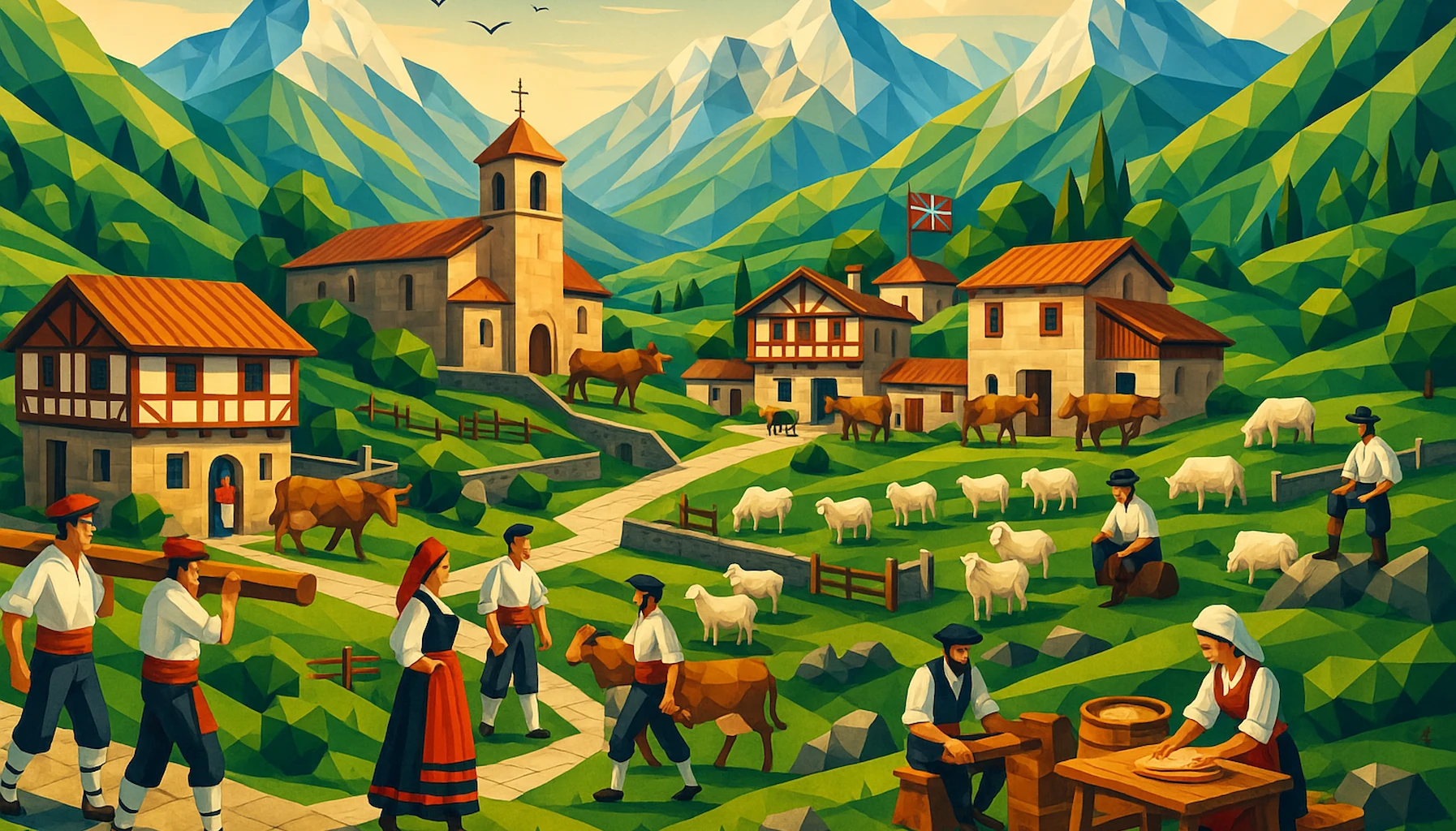
Basque
EuropeThe Basque region within Europe is historically defined by its position within long-distance trade,…
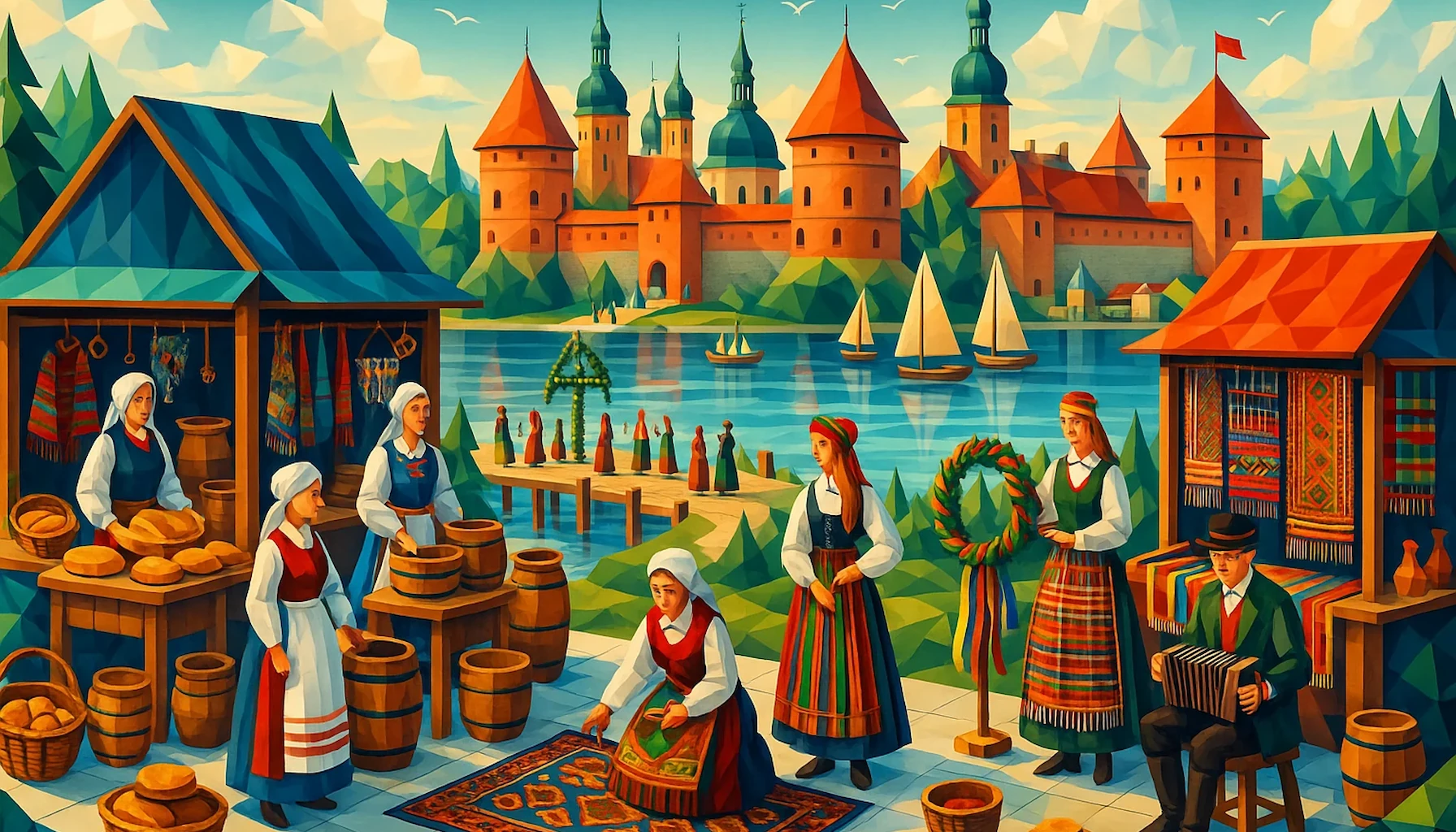
Baltic
EuropeThe Baltic region within Europe is historically defined by its position within long-distance trade,…
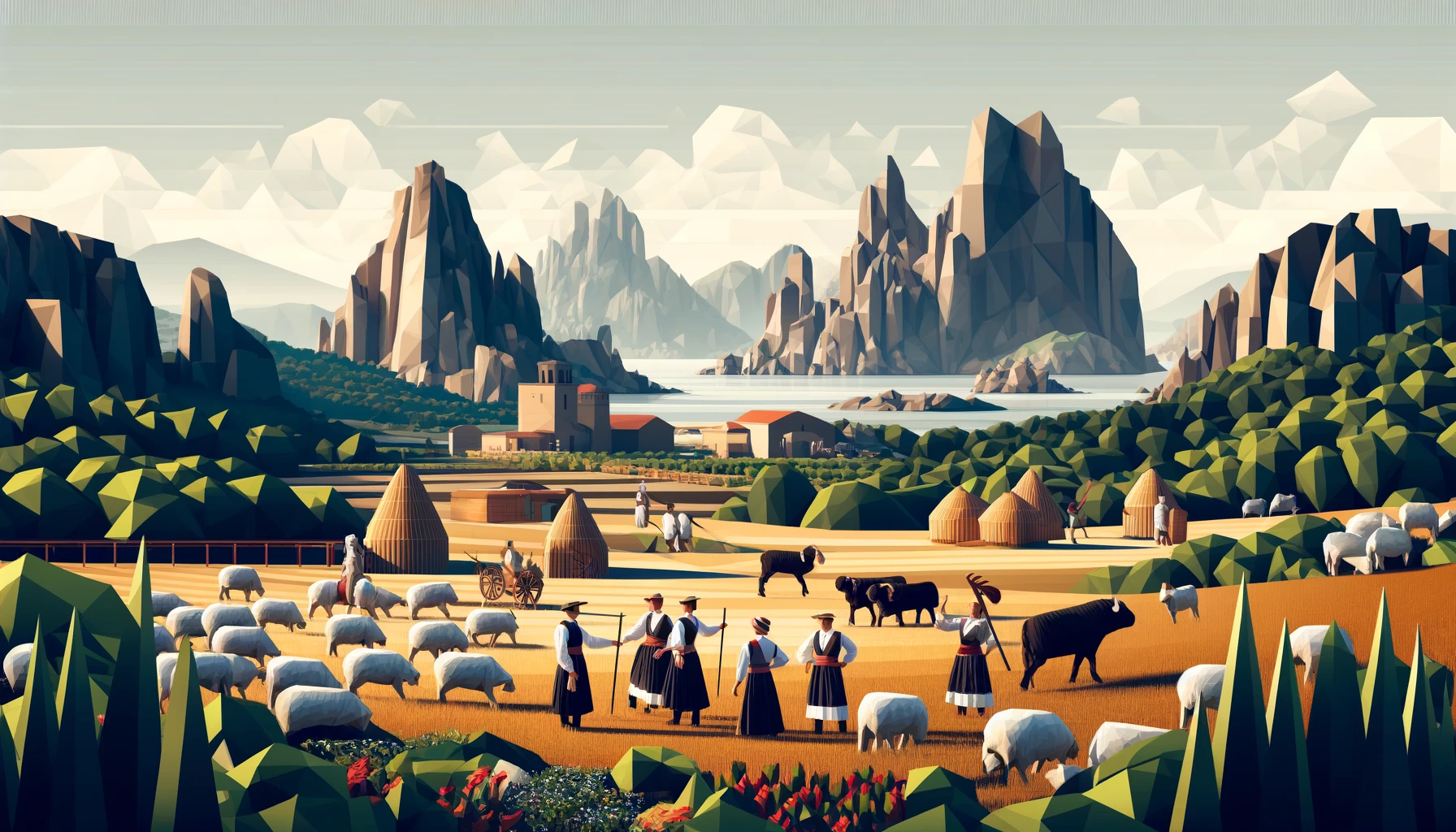
Sardinian
EuropeThe Sardinian region within Europe is historically defined by its position within long-distance…

Mesopotamian
AsiaThe Mesopotamian region within Asia is historically defined by its position within long-distance…
AI ASSISTANT by DNAGENICS
This AI analysis is limited to geographical regions and percentage distributions only. No additional data or personal information is included in this analysis. Results are an AI-generated interpretation of genetic similarity to reference populations, not proof of ancestry, ethnicity, or identity.
AI-generated interpretation of genetic similarity, not proof of ancestry. Informational only, not professional advice.
Read full notice
Before you continue: the analysis you are about to generate is produced by an AI model. AI output can be incomplete, inaccurate, or simply wrong. It describes statistical genetic similarity to reference populations and is not proof of ancestry, ethnicity, identity, or descent. It is provided for informational and educational purposes only, and is not medical, diagnostic, genealogical, legal, or other professional advice. Do not rely on it to make health, financial, legal, or family decisions. To the fullest extent permitted by applicable law, DNA Genics, S.L. accepts no liability for any loss or decision arising from your use of this AI output.
Try these questions:
Comprendre les résultats
Key concepts to interpret your genetic ancestry
Genetic Similarity
Percentages show how similar your DNA is to reference populations, not exact ancestry fractions from specific ancestors.
Modern Populations
Results show connections to present-day populations, reflecting recent ancestry and migrations from the last 1000 years.
Percentage Interpretation
Focus on larger percentages (>5%) for meaningful connections. Small percentages may represent noise or very distant connections.
Geographic Proximity
Populations close to each other often share genetic signals due to historical migrations.
Use AI Assistant
Get personalized interpretations of your results with our AI-powered analysis tool.
Contexte historique
Key historical events that shaped the contemporary populations in your ancestry
Crown of Castile
Urban charters and frontier defense drew Cantabrian, Asturian, and Castilian settlers to Basque towns, adding Iberian gene flow to lowlands and ports.
Pisan Influence and Control
Tuscan colonists and miners added Ligurian-Tuscan ancestry to coastal and mining towns. Impact was localized, with limited penetration into the interior.
Turkic (Oghuz/Seljuk/Turkmen) Migration and Settlement in Iraq
Successive waves of Turkic soldiers and pastoralists established ruling cadres and rural tribes, adding Central Asian/Turkic genetic signals especially in northern Iraq. Assimilation with Kurdish, Arab, and Assyrian communities diluted but preserved components.
Seljuk Empire in Iraq
Turkic Oghuz warriors and administrators settled in Iraq and the Jazira, seeding Turkic lineages and facilitating subsequent Turkmen tribal migrations.
"Francos" chartered immigration to Basque towns
Privileged immigrants increased town populations and introduced Occitan/Gascon ancestry into Basque urban gene pools.
Méthodes et références
Understanding the science behind your results
Contemporary Population Origins is our analysis that shows how your DNA connects to modern populations living today or in recent history. Unlike ancient DNA tests that look at archaeological samples from Bronze Age or earlier, this report focuses on the last 1000 years of human history.
The term "contemporary" means we're comparing your DNA to reference populations that exist now or existed in recent historical times. This helps you understand which modern ethnic groups and geographic regions share the most genetic similarity with you.
Modern ancestry analyzes your genetic similarity to present-day populations, while ancient ancestry compares your DNA to archaeological samples from thousands of years ago. Modern ancestry reflects more recent migrations and population movements, typically within the last 1000 years.
The percentages represent genetic similarity scores, not exact ancestry fractions. A 25% match to a population doesn't mean you have exactly one grandparent from that group, but rather that 25% of your genetic markers are similar to that population's typical patterns.
Look for patterns across regions and interpret small percentages with care.
Similar genetic patterns can appear across multiple regions. Small percentages are especially sensitive to which populations are included in the reference panel.
Genetic ancestry and cultural/family history don't always align perfectly. This is normal and expected due to:
- Random inheritance: You inherit roughly 50% from each parent, but specific segments vary.
- Historical migrations: Your DNA may carry signatures from migrations before recorded family history.
- Cultural vs genetic identity: Cultural identity is shaped by many non-genetic factors.
While our analysis is based on current genetic research, it's important to understand:
- Reference population coverage varies by region
- Small percentages (<3%) may not be statistically significant
- Results may change as databases improve
- Genetic ancestry ? cultural or ethnic identity
Methodology Overview
Statistical Methods
We employ admixture analysis, a well-established statistical approach that models your DNA as a mixture of contributions from different reference populations. The algorithm analyzes hundreds of thousands of genetic markers across your genome.
Reference Population Database
Our analysis uses a curated database of genetic profiles from populations worldwide, including modern samples from living individuals and recent historical samples where available.
Quality Metrics
Coverage, call rate, and the quality of reference matches affect how results should be interpreted.
Synthèse du rapport

Origines des populations contemporaines
Échantillon public · Exemple de profil ADN DEMO REPORTPrincipales populations de référence
AI Infographic
This sample report is view only. Creating an infographic uses AI image credits on a signed-in account.
Ce rapport compare votre ADN aux populations de référence actuelles. Explorez la carte et les estimations ensemble. Nos méthodes d’analyse