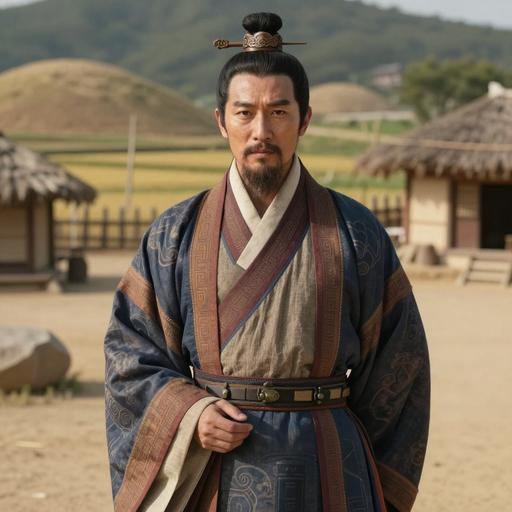
The Three Kingdoms period of Korea is a significant era in East Asian history, typically considered to span from 57 BCE to 668 CE. During this time, the Korean Peninsula was divided into three major kingdoms: Goguryeo, Baekje, and Silla. Each of these kingdoms exhibited unique cultural, political, and military characteristics that played crucial roles in the development of Korean culture and the eventual unification of the Korean Peninsula.
Goguryeo (37 BCE – 668 CE)
Goguryeo, the northernmost kingdom, was known for its military prowess and expansive territory, which at its height extended into parts of present-day China and Russia. The kingdom's strategic location allowed it to control important trade routes and foster significant cultural exchanges with neighboring regions. Founded by Jumong, Goguryeo maintained a strong warrior tradition, often engaging in conflicts with Chinese dynasties and other Korean states.
Culturally, Goguryeo was influenced by Chinese civilization but also maintained distinct traditions. The kingdom is celebrated for its advanced fortification systems, like the Goguryeo defense wall, and the elaborate tomb murals found in its royal burial sites. These murals offer insights into Goguryeo’s daily life, religious beliefs, and social structure.
Baekje (18 BCE – 660 CE)
Baekje was situated in the southwestern part of the Korean Peninsula. It was initially founded by Onjo, the offspring of Goguryeo royalty, and over time developed into a powerful maritime power, trading extensively with China and Japan. Baekje is credited with significant cultural and technological contributions to nearby countries, particularly Japan, including advancements in Buddhism, arts, and architecture.
Baekje’s capital cities, such as Wiryeseong and later Sabi, were cultural hubs. The kingdom is noted for its refined artistry, including intricate Buddhist sculptures and pottery. Baekje’s cultural achievements and artistic influence were profound, particularly its distinctive pagoda architecture and transmission of Buddhism to Japan, exemplified by artisans and scholars who migrated to Japan.
Silla (57 BCE – 935 CE)
Silla, located in the southeastern part of Korea, was notable for its rich gold culture and eventual role in the unification of the Korean Peninsula. Initially, it was the least influential of the three kingdoms but gradually expanded its influence through strategic alliances and military conquests. Under King Gwanggaeto and, later, King Munmu, Silla unified Korea after defeating Baekje and Goguryeo with the help of the Tang Dynasty from China.
Silla’s golden age is often associated with the height of Buddhist culture during the Unified Silla period. The kingdom’s capital, Gyeongju, became a major cultural and religious center. Architectural wonders like the Bulguksa Temple and Seokguram Grotto, both UNESCO World Heritage sites, exemplify the high level of Silla's architectural and artistic achievement.
Cultural and Religious Dynamics
The Three Kingdoms period was marked by remarkable cultural and religious developments. Confucianism and Buddhism were the dominant ideological influences, shaping the kingdoms' governmental structures and cultural priorities. Buddhism, in particular, played a significant role, as it was adopted by the royal families and supported the development of art, literature, and philosophy.
Burial mounds and tombs from this period, such as the Daeseong-dong Tombs in Gimhae, reflect a sophisticated understanding of afterlife beliefs and craftsmanship. These burial sites, attributed primarily to the Gaya Confederacy, a contemporary polity interacting with the Three Kingdoms, offer valuable insights into the era's funerary customs and social structures.
Legacy
The Three Kingdoms period laid the foundation for the cultural and political consolidation that followed. The unification under Silla led to increased stability and cultural flowering, influencing Korean culture for centuries. These kingdoms not only contributed to the formation of Korea's unique cultural identity but also played pivotal roles in the regional history of Northeast Asia. The era’s historical and cultural legacy continues to be celebrated in Korea today, contributing to national pride and cultural heritage.