Menu
Store
Blog
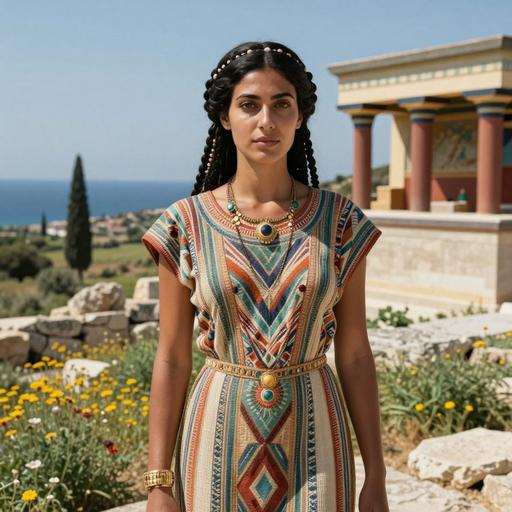
Portrait reconstruction of APO022
Ancient Individual

A woman buried in Greece in the Bronze Age era

APO022
1613 BCE - 1506 BCE
Female
Late Minoan Culture
Greece
Scroll to begin
Chapter I

Identity

The biological and cultural markers that define this ancient individual

Sample ID

APO022

Date Range

1613 BCE - 1506 BCE

Biological Sex

Female

mtDNA Haplogroup

H5'36

Cultural Period

Late Minoan Culture

Chapter II

Place

Where this individual was discovered

Country Greece
Locality Heraklion (Crete)
Coordinates 35.2395, 24.9883
Chapter III

Time

When this individual lived in the broader context of human history

APO022 1613 BCE - 1506 BCE
Chapter IV

Story

The narrative of this ancient life

The Late Minoan culture, part of the broader Minoan civilization of Crete, is generally dated from around 1600 to 1100 BCE. This era marked the zenith and eventual decline of Minoan society, recognized for its advanced and sophisticated characteristics. The Late Minoan period can be divided into several sub-phases: Late Minoan I (ca. 1600–1450 BCE), Late Minoan II (ca. 1450–1400 BCE), and Late Minoan III (ca. 1400–1100 BCE).

Sociopolitical Structure

During the Late Minoan period, the Minoans continued to be organized around a central palace economy, with major palatial centers such as Knossos, Phaistos, Malia, and Zakros playing a pivotal role. Each of these palaces served as administrative, economic, political, and religious hubs. Knossos, the most prominent, was likely a principal center from which a powerful elite class governed, coordinating agriculture, trade, and religious activities.

However, the structure became somewhat less centralized during the Late Minoan period. After the destruction around 1450 BCE, potentially due to natural disasters or Mycenaean influence, power may have been more localized as Mycenaean Greeks gained influence over the island.

Economy and Trade

The Late Minoan economy was complex and highly integrated with both internal agriculture and international trade. The Minoans engaged in extensive trade networks that stretched across the Aegean to Egypt, the Levant, and possibly as far west as Italy and the Iberian Peninsula. They exported goods like olive oil, wine, pottery, and metalwork, using Cretan-built ships.

Craftsmanship was highly sophisticated; Minoan artisans produced exquisite pottery characterized by naturalistic motifs, intricately carved seals, and advanced metallurgy. Marine style pottery, with its depictions of ocean life, is particularly emblematic of this period.

Religion and Culture

Religion continued to play a central role in Minoan life, deeply ingrained within both the palatial and rural contexts of Crete. The Late Minoan period saw religious rituals and cult practices conducted within palace complexes, open-air sanctuaries, and peak sanctuaries on mountain tops.

Art and iconography from this period suggest a deep reverence for nature and a continuation of worship of deities such as the Mother Goddess. Bull imagery and horns of consecration became particularly potent symbols, reflecting their significance in religious ceremonies and possibly bull-leaping rituals, as many frescoes depict.

Art and Architecture

Minoan architecture in this era is characterized by the use of ashlar masonry, with advanced structural designs that included multiple stories, extensive drainage systems, and light wells. The imposing palace complex at Knossos is a testament to their architectural ingenuity. Frescoes adorned many surfaces within these structures, showcasing vibrant depictions of marine life, religious rituals, sports, and everyday activities, demonstrating both the aesthetic priorities and technological skills of the Minoans.

The Decline

The decline of Late Minoan culture is a subject of considerable debate. Around 1450 BCE, many Minoan sites suffered destructive events, and evidence suggests a significant Mycenaean Greek presence on the island thereafter. It's theorized that a combination of factors contributed to the Minoan downfall, including natural disasters like earthquakes and possibly the volcanic eruption of Thera, alongside internal strife and external Mycenaean influence or invasion. By the end of the Late Minoan III period, Crete had become increasingly Mycenaean in character.

Legacy

Despite its decline, the Late Minoan culture influenced the subsequent Greek civilizations, contributing significantly to the cultural and artistic foundations of the Aegean world. The Minoans are remembered for their unique blend of artistic, architectural, and cultural achievements, which continue to fascinate historians and archaeologists today.

Chapter V

Context

Other ancient individuals connected to this sample

Sources

References

Scientific publications and genetic data

Scientific Publication

Ancient DNA reveals admixture history and endogamy in the prehistoric Aegean

Authors Skourtanioti E, Ringbauer H, Gnecchi Ruscone GA
Abstract

The Neolithic and Bronze Ages were highly transformative periods for the genetic history of Europe but for the Aegean-a region fundamental to Europe's prehistory-the biological dimensions of cultural transitions have been elucidated only to a limited extent so far. We have analysed newly generated genome-wide data from 102 ancient individuals from Crete, the Greek mainland and the Aegean Islands, spanning from the Neolithic to the Iron Age. We found that the early farmers from Crete shared the same ancestry as other contemporaneous Neolithic Aegeans. In contrast, the end of the Neolithic period and the following Early Bronze Age were marked by 'eastern' gene flow, which was predominantly of Anatolian origin in Crete. Confirming previous findings for additional Central/Eastern European ancestry in the Greek mainland by the Middle Bronze Age, we additionally show that such genetic signatures appeared in Crete gradually from the seventeenth to twelfth centuries BC, a period when the influence of the mainland over the island intensified. Biological and cultural connectedness within the Aegean is also supported by the finding of consanguineous endogamy practiced at high frequencies, unprecedented in the global ancient DNA record. Our results highlight the potential of archaeogenomic approaches in the Aegean for unravelling the interplay of genetic admixture, marital and other cultural practices.

Use code for 40% off Expires Mar 01