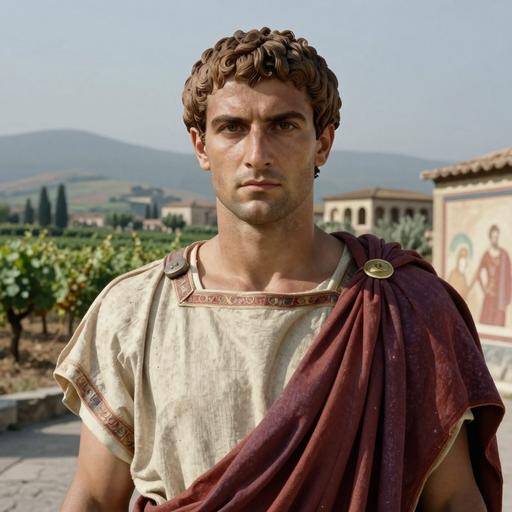
The Roman city of Pompeii offers an exceptional glimpse into the civilization of ancient Rome due to its sudden burial and remarkable preservation. Located near the modern city of Naples in the Campania region of Italy, Pompeii thrived during the early Roman Empire until it met a cataclysmic end in 79 AD, when Mount Vesuvius erupted catastrophically.
Urban Layout and Architecture
Pompeii was a bustling urban center, with an orthogonal street plan that reflected Roman engineering prowess. The city was divided into regions, blocks, and lots, which facilitated precise urban governance and land use. It featured impressive public buildings, such as forums, basilicas, temples, theaters, and baths, all showcasing Roman architectural styles and innovations like the use of concrete, arches, and vaults. Notable examples include the Temple of Apollo, the Forum Baths, and the Grand Theater, which underscore the importance of religion, governance, and leisure, respectively.
Residential architecture varied significantly, ranging from opulent villas of the elite, adorned with elaborate frescoes, mosaics, and gardens, to modest domiciles of the working populace. The renowned Villa of the Mysteries and the House of the Vettii exemplify the luxury and artistic tastes of Rome’s affluent class.
Economy and Society
Pompeii was a vibrant economic hub, benefitting from fertile volcanic soil and strategic location. Agriculture, particularly wine and olive oil production, was a cornerstone of Pompeii’s economy, supported by extensive networks of trade and commerce. The city's markets (macella) and countless shops (tabernae) illustrate the diversity of goods and services available, from foodstuffs to textiles and luxury items. Workshops for pottery, metalwork, and garum production further highlight Pompeii's economic dynamism.
Socially, Pompeii was a microcosm of Roman society, characterized by a complex hierarchy. At the apex were the local elite and patrons, who wielded authority and influence, followed by a class of freedmen and women who played critical roles in commerce and civic life. Below them were slaves, whose labor sustained much of the economic activity but who also had pathways to manumission and integration into Roman society.
Culture and Daily Life
Pompeii thrived as a cultural center with a keen appreciation for arts, theater, and entertainment. Public spaces and private homes were adorned with stunning frescoes, intricate mosaics, and statues reflecting both local and exotic influences. The themes ranged from mythological and historical to domestic and everyday scenes, providing rich insights into Pompeian life and values.
Recreational activities played an essential role in social cohesion and cultural expression. Amphitheaters staged gladiatorial games, while theaters hosted plays and musical performances. The extensive network of baths underscored the social and hygiene practices integral to Roman life, serving as communal spaces for relaxation and conversation.
Religion and Beliefs
Religious diversity flourished in Pompeii, featuring temples and shrines dedicated to traditional Roman deities like Jupiter, Venus, and Apollo, alongside imported cults such as those of Isis and Dionysus. Household and personal spirituality were equally important, with domestic altars (lararia) common in homes. Public festivals and sacrifices punctuated the communal religious calendar, fostering a shared cultural identity.
Catastrophic Event and Legacy
The eruption of Mount Vesuvius in 79 AD abruptly halted life in Pompeii, burying the city under pumice and ash. This tragic event, however, preserved the city remarkably well, capturing a snapshot of Roman urban life frozen in time. The rediscovery of Pompeii in the 18th century provided an invaluable archaeological trove, offering unparalleled insights into the daily lives, architecture, and society of the Roman Empire.
Today, Pompeii stands as a UNESCO World Heritage Site and a crucial source of historical and cultural knowledge, drawing millions of visitors and scholars seeking to connect with and understand the intricate tapestry of ancient Roman life.