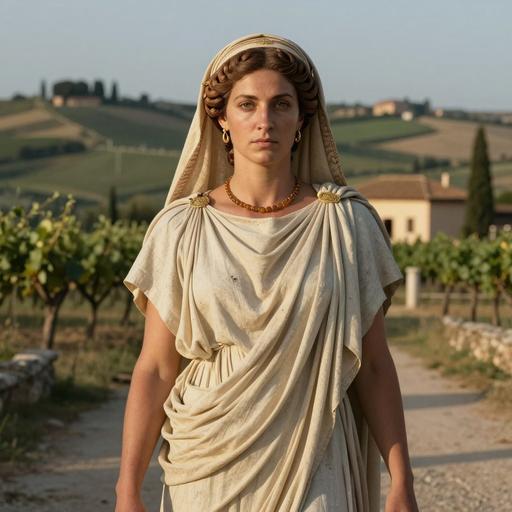
The Roman Imperial Period is a significant era in history, spanning from 27 BCE, when Augustus became the first Roman Emperor, to the fall of the Western Roman Empire in 476 CE. This period represents the transformation of Rome from a republic, with elected leaders and more power vested in the Senate, to an autocratic regime led by emperors who held considerable authority. It marks a time of vast territorial expansion, cultural flourishing, economic growth, and momentous changes in religious practices.
Political Structure
During the Imperial Period, power was centralized under the emperor, who held titles such as \Princeps" (first citizen) and later "Dominus" (lord and master). The Senate, while still an important institution, saw its influence wane dramatically as emperors wielded executive control over the military, judiciary, and religious institutions. The expansion of the bureaucratic system led to a more efficient administration of the vast territories the Romans controlled.
The Empire was divided into provinces, each governed by officials appointed either by the Senate or the emperor himself, depending on their status as senatorial or imperial provinces. This system ensured loyalty to the emperor and efficient governance of diverse peoples.
Military Might
The Roman military was at the heart of the Empire's expansion and cohesion. The legions, composed of Roman citizens, were the backbone of the army, known for their discipline, organization, and innovative tactics. Auxiliary troops, made up of non-citizens, supported these legions and could earn citizenship through service. The Roman Navy controlled the Mediterranean, suppressing piracy and facilitating trade.
Economic Prosperity
The Imperial Period saw unprecedented economic prosperity. The Pax Romana, or Roman Peace, established a long period of relative stability and security, which facilitated commerce and trade across Europe, North Africa, and into Asia. Road networks, such as the famous Roman roads, and sea routes made the movement of goods, people, and ideas efficient.
Cities across the empire were centers of commerce and culture, featuring forums, marketplaces, and monumental architecture, supported by a common currency and a shared system of laws and language. The Roman economy was diverse, incorporating agriculture, mining, manufacturing, and trade.
Cultural Flourishing
The Imperial Period was a golden age of Roman literature, art, and architecture. This era produced renowned writers and poets such as Virgil, Ovid, and Seneca. Latin literature flourished, following and adapting the traditions of Greek predecessors.
Architecture and engineering also saw great advances with the construction of iconic structures such as the Colosseum, aqueducts, and the Pantheon. Infrastructure projects like roads, baths, and bridges showcased Rome's ingenuity and contributed to the Empire’s cohesion.
Religion and Society
Roman religion transitioned significantly during this period. While polytheistic worship and the imperial cult dominated initially, the rise of Christianity became one of the era's defining features. Beginning as a persecuted sect, Christianity gained acceptance and prominence, culminating in the Edict of Milan in 313 CE under Emperor Constantine, which granted religious tolerance, and finally becoming the state religion under Theodosius I.
Society in the Roman Empire was hierarchical, with a clear distinction between classes. The patricians and equestrians held most of the power, while the plebeians and slaves formed the broader base of society. Social mobility was possible, albeit limited.
Decline and Fall
The Imperial Period's waning years were marked by internal strife, economic troubles, and external pressures from Germanic tribes and other groups. The Crisis of the Third Century, a period of military anarchy and economic instability, weakened the empire significantly. Though temporarily stabilized under the Diocletian and Constantine reorganizations, the Western Roman Empire eventually succumbed to invasions and internal decay, culminating in 476 CE with the deposition of the last emperor, Romulus Augustulus.
Legacy
The legacy of the Roman Imperial Period is profound. Roman law forms the foundation of many Western legal systems. Latin influenced the development of Romance languages, and Roman art and architecture inspired Renaissance and neoclassical movements. The spread of Christianity laid the groundwork for medieval European culture and institutions.
The Roman Imperial Period was an era of contradictions: of great achievements and harsh realities, of imperial grandeur and eventual decay, leaving an enduring imprint on the world’s history and culture."