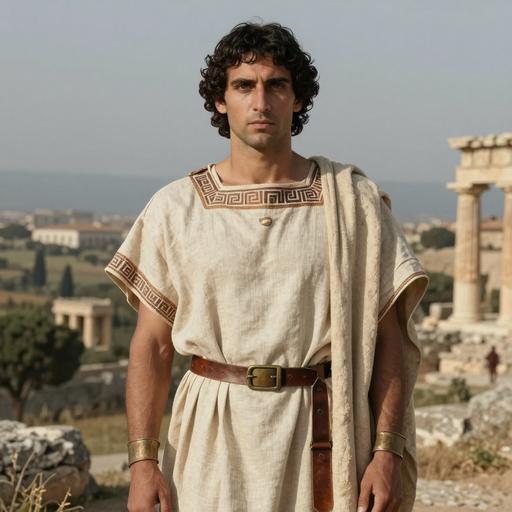
The Sicilian Greek culture, particularly that of Himera, is a fascinating subset of the expansive Greek influence throughout the Mediterranean during the archaic and classical periods (circa 750–300 BCE). Himera, located on the northern coast of Sicily, was one of the many city-states founded by Greek settlers and exemplified the merging of Greek and local elements to create a unique cultural identity.
Founding and Development
Establishment and Early Inhabitants: Himera was founded around 648 BCE by Greek settlers from Zancle (modern-day Messina) and Euboeans. The city quickly became a melting pot of different cultures, notably contributed to by indigenous Sicilian tribes like the Sicani, the Elymians, and later, Phoenicians. These interactions enriched Himeran culture, weaving a complex tapestry of traditions.
Strategic Position and Influence: Located at the mouth of the river Himera (now known as Imera Settentrionale), Himera occupied a strategic position, serving as a vital coastal city for trade between the Greek world and indigenous Sicilian peoples. This position helped it become a thriving commercial hub, facilitating trade and cultural exchange.
Architecture and Urban Planning
City Layout and Structures: Himera's urban planning reflects Greek architectural sophistication, featuring a grid-plan layout—a hallmark of Greek city planning. The city housed numerous public buildings, including temples, marketplaces (agoras), and theaters, exemplifying typical Greek styles such as Doric architecture.
Religious and Public Buildings: The Temple of Victory, for instance, was erected to commemorate the Greek victory over the Carthaginians in 480 BCE. It is an exquisite example of Doric architecture and illustrates the Greek influence on religious and political life in Sicily.
Society and Culture
Social Structure: Like many Greek states, Himera's society was likely organized into classes, including citizens, non-citizen inhabitants such as metics (resident foreigners), and slaves. As with other Greek colonies, citizenship was highly valued, playing a crucial role in governance and communal activities.
Cultural Life: Himera became renowned for its cultural contributions, including the arts, philosophy, and literature. The city was the birthplace of the poet Stesichorus, whose choral lyrics were widely celebrated. The amalgamation of Greek and local traditions fostered a fertile ground for cultural and artistic innovation.
Religion and Festivals: Greek religion significantly influenced Himeran spiritual life, with a pantheon of gods and dedicated festivities. The blending of indigenous and Greek deities was common, showcasing syncretism. Religious festivals were integral, not only for worship but also for community bonding.
Political Landscape
Governance and Conflicts: Himera, like many Greek city-states, navigated a turbulent political landscape amid Persian, Carthaginian, and Greek interests. It initially operated with a form of Greek democracy or oligarchy, though historical records indicate shifting powers and alignments.
Significant Events: One of the most significant historical events was the Battle of Himera in 480 BCE, where Greek forces, led by the tyrant Gelon of Syracuse, decisively defeated the Carthaginians. This victory was pivotal, halting Carthaginian expansion in Sicily for several decades.
Economy and Trade
Trade Networks: Himera's economy thrived on agriculture, ceramics, and metallurgical workshops, exporting goods throughout the Mediterranean. The fertile plains around the city supported grain cultivation, while the coast facilitated fishing and maritime trade.
Economic Innovations: Coinage from Himera, struck in silver and gold, circulated widely, indicating a prosperous economy. The presence of diverse currency also emphasizes the city's extensive trade networks.
Decline and Legacy
Conquest and Decline: The decline of Himera can be attributed to Carthaginian reprisals after their initial defeat. In 409 BCE, Himera was razed by a Carthaginian force led by Hannibal Mago, marking a dramatic end to its autonomy and prosperity. Survivors were taken as slaves, and the city was eventually abandoned.
Archaeological Importance: Today, archaeological excavations at Himera provide vital insights into ancient urban life, showcasing artifacts, architectural remnants, and necropolises that underscore the blend of Greek and indigenous cultures.
Conclusion
The Sicilian Greek (Himeran) culture was a dynamic and vibrant civilization that flourished under the confluence of Greek colonization and indigenous influences. The city's strategic location, economic prowess, and cultural achievements made it a beacon of Hellenic civilization in Sicily. Despite its eventual destruction, Himera's legacy endures, offering a glimpse into the complexities of cultural interaction during antiquity.