Menu
Store
Blog
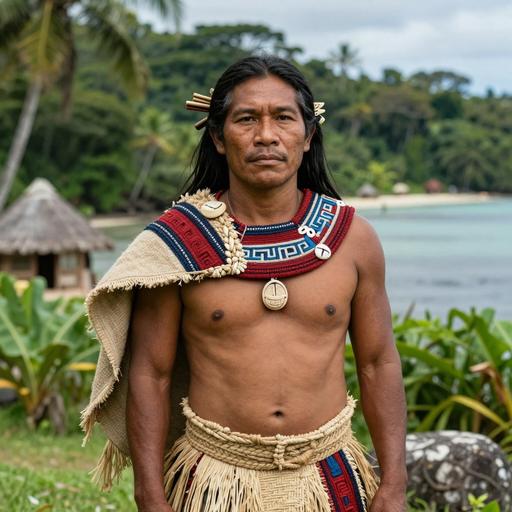
Portrait reconstruction of I25188
Ancient Individual

A man buried in Guam in the Latte Period era

I25188
1000 CE - 1668 CE
Male
Late Latte Culture of Guam
Guam
Scroll to begin
Chapter I

Identity

The biological and cultural markers that define this ancient individual

Sample ID

I25188

Date Range

1000 CE - 1668 CE

Biological Sex

Male

mtDNA Haplogroup

E2a

Y-DNA Haplogroup

Not available

Cultural Period

Late Latte Culture of Guam

Chapter II

Place

Where this individual was discovered

Country Guam
Locality Haputo
Chapter III

Time

When this individual lived in the broader context of human history

I25188 1000 CE - 1668 CE
Chapter IV

Story

The narrative of this ancient life

The Late Latte Culture refers to a period in the history of the Chamorro people of the Mariana Islands, specifically Guam, which is characterized by the construction and use of latte stones. These megalithic structures stand as significant cultural symbols and are unique to the Marianas, playing a crucial role in the island's archaeological and cultural heritage from approximately 900 to 1700 AD.

Origins and Development

The Latte Culture arose from the blending of earlier traditions with new influences brought by migrating Austronesian peoples. These early settlers arrived in the Marianas over 3,500 years ago, but the distinct Late Latte period began around the 9th century AD, as evidenced by changes in settlement patterns, subsistence strategies, and material culture.

Latte Stones

The most distinctive feature of this culture is the latte stone, which consists of a base pillar (haligi) and a capstone (tasa). Ranging from small household-sized structures to large communal or public edifices, these stones served as the foundations for important buildings. Their construction demonstrates a high level of social organization and engineering prowess. The pillars were often quarried from limestone and coral, then transported, sometimes over long distances, to their construction sites.

Sociopolitical Structure

During the Late Latte period, Chamorro society was stratified, with a clear hierarchy that consisted of rulers (matua), a middle class (atcha’ot), and lower class (manachang). Latte stones primarily supported structures that were used by the matua, indicating their social significance and role as a status symbol. Chiefs derived power from their large extended family groups and controlled significant resources and the distribution of food, particularly rice, which was cultivated in terraced fields.

Economy and Diet

Subsistence during the Late Latte period was based on a mixed economy of agriculture, fishing, and gathering. The Chamorro cultivated crops such as rice, taro, and breadfruit, supplemented by fishing and the collection of shellfish. Their diet was rich and diverse, comprising terrestrial, marine, and cultivated resources. Exchange with nearby islands and extensive maritime skills highlight their expertise in navigation and widespread trade networks.

Art and Craftsmanship

Art and craftsmanship flourished during this period. The Chamorro skillfully crafted pottery, intricately decorated with red slip and punctate designs. They also produced tools, ornaments, and weapons using materials such as bone, shell, and stone. The latte stones themselves are considered monumental art, admired for their majestic scale and precision.

Religion and Spirituality

Late Latte Culture embedded the spiritual beliefs of the Chamorro in both daily life and monumental architecture. Ancestor worship played a vital role, with spirits (taotaomonas) believed to inhabit natural environments and the latte stone structures. Rituals and offerings were commonly practiced for protection, prosperity, and success in various endeavors.

European Contact and Legacy

The arrival of Europeans in the Marianas, notably with the 16th-century voyages of Ferdinand Magellan and later Spanish colonization, brought profound changes and challenges to Chamorro society. Christianity and Spanish colonial administration slowly altered societal structures, yet latte stones remain as enduring cultural icons. Throughout centuries of change, the Chamorro people maintained many of their traditions and today are revitalizing elements of Late Latte Culture as a source of cultural pride and identity.

Contemporary Relevance

Today, the Late Latte Culture endures in the heritage consciousness of Guam and the Mariana Islands, influencing art, architecture, and cultural festivals. These iconic stones serve not only as tourist attractions but also as powerful symbols of Chamorro resilience and identity. Efforts to preserve latte sites continue, ensuring that future generations understand and appreciate this remarkable cultural heritage.

Chapter V

Context

Other ancient individuals connected to this sample

Sources

References

Scientific publications and genetic data

Scientific Publication

Ancient DNA reveals five streams of migration into Micronesia and matrilocality in early Pacific seafarers

Authors Liu YC, Hunter-Anderson R, Cheronet O
Abstract

Micronesia began to be peopled earlier than other parts of Remote Oceania, but the origins of its inhabitants remain unclear. We generated genome-wide data from 164 ancient and 112 modern individuals. Analysis reveals five migratory streams into Micronesia. Three are East Asian related, one is Polynesian, and a fifth is a Papuan source related to mainland New Guineans that is different from the New Britain-related Papuan source for southwest Pacific populations but is similarly derived from male migrants ~2500 to 2000 years ago. People of the Mariana Archipelago may derive all of their precolonial ancestry from East Asian sources, making them the only Remote Oceanians without Papuan ancestry. Female-inherited mitochondrial DNA was highly differentiated across early Remote Oceanian communities but homogeneous within, implying matrilocal practices whereby women almost never raised their children in communities different from the ones in which they grew up.

Use code for 40% off Expires Mar 01