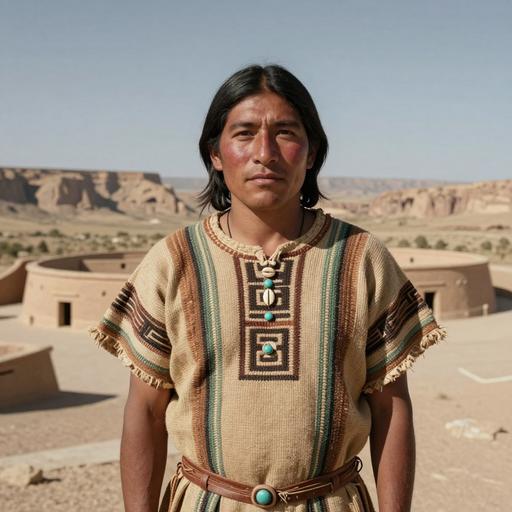
The Chaco Culture represents one of the most significant and complex pre-Columbian societies in North America, primarily existing between approximately 850 and 1250 CE in what is now the northwestern region of New Mexico, USA. This civilization is considered a central hub of the Ancestral Puebloans, often referred to as the Anasazi, a term less favored today due to its origins outside of their own languages.
Geography and Environment:
Chaco Canyon, the heart of the Chaco Culture, is situated in a desert valley set amidst a backdrop of cliffs and mesas. The environment is characterized by its arid conditions, extreme seasonal and daily temperature variations, and limited natural resources, particularly water. Despite these challenges, the Chacoans developed a sophisticated society capable of thriving in such a harsh landscape.
Architecture and Engineering:
One of the most defining features of the Chaco Culture is its monumental architecture. The canyon is dotted with massive stone buildings known as \great houses," the most famous of which include Pueblo Bonito, Chetro Ketl, and Casa Rinconada. These multi-storied structures were constructed using sandstone, timber, and adobe mortar, showcasing advanced masonry techniques and significant architectural planning. Pueblo Bonito alone consisted of over 600 rooms and may have housed several hundred inhabitants.
The Chacoans engineered an extensive network of roads radiating outward from the canyon, some of which extended for miles and connected Chaco to other pueblo communities throughout the region. These roads were meticulously constructed, often perfectly straight regardless of the terrain, indicating their importance for trade, communication, or ceremonial purposes.
Social Organization and Culture:
The social organization of the Chacoans is a subject of ongoing research, but it is widely believed that Chaco Canyon served as a cultural and administrative center. The population likely comprised various kinship groups or clans from the surrounding region who maintained ties through cultural and economic exchanges.
Ceremonial life was central to Chacoan society, and the great kivas—large, circular, subterranean structures—played a pivotal role in their spiritual and community activities. These kivas likely hosted ceremonies related to the cosmos, agriculture, and community governance.
The Chacoans were also astronomers. Evidence suggests that they aligned some of their structures with solar, lunar, and cardinal points, indicating a sophisticated understanding of celestial events. Structures like the Sun Dagger at Fajada Butte mark solstices and equinoxes through light and shadow interactions.
Economy and Trade:
Chaco Canyon was an economic hub, engaging in extensive trade networks that spanned the American Southwest and beyond. Archaeological findings have revealed artifacts from distant regions, such as turquoise, copper bells, marine shells, and even parrot feathers from Mesoamerica, illustrating a vibrant exchange of goods and cultural influences.
Despite the scarcity of local resources, the Chacoans developed innovative agricultural techniques to sustain their population. They built check dams, reservoirs, and other water-control systems to manage the erratic rainfall and ensure a stable food supply.
Decline and Legacy:
Around 1150 CE, signs of decline began to surface in Chaco Canyon. Environmental stressors such as prolonged droughts and resource depletion, combined with potential social and political upheavals, likely contributed to its eventual abandonment. However, Chacoan influence persisted, as its descendants migrated and established other significant cultural centers throughout the Southwest, including Mesa Verde and the Rio Grande pueblos.
Today, the legacy of the Chaco Culture is honored and remembered by the modern Pueblo peoples, who view Chaco as an ancestral homeland and a spiritual center. The site itself is preserved as the Chaco Culture National Historical Park and is recognized as a UNESCO World Heritage Site, providing crucial insights into the sophisticated societies that once thrived in the pre-Columbian era of North America."