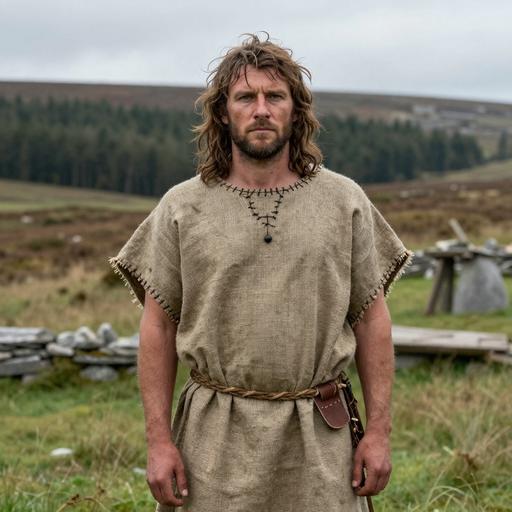
The Middle Neolithic era in Ireland, approximately 3500–2500 BCE, marks a significant period in the prehistoric timeline of the island, although it precedes the arrival of the Celts, who are traditionally associated with the Iron Age some millennia later. However, understanding this era involves examining the broader context of Neolithic (New Stone Age) culture that profoundly shaped Ireland's prehistoric landscape.
Introduction
The Middle Neolithic period in Ireland represents a continuation and expansion of societal developments that began with the advent of agriculture. This era saw the emergence of more complex communities, advancements in farming, significant architectural achievements, and a deepening spiritual and ritualistic culture. This period laid foundational aspects that evolved into the rich cultural tapestry of ancient Ireland.
Agriculture and Economy
Farming techniques developed and became more sophisticated during the Middle Neolithic. People primarily engaged in mixed farming, cultivating cereal crops such as wheat and barley, and domesticating animals including cattle, sheep, goats, and pigs. The impact of agriculture is evident in the archaeological record, with arable farming leading to a more sedentary lifestyle compared to the previous Mesolithic hunter-gatherer existence.
Settlements
During this time, small, scattered communities began to develop more permanent settlements. These communities typically consisted of timber houses with thatched roofs, and occasionally stone structures. The post-and-plank constructed buildings were usually rectangular or oval and composed of wattle and daub, reflecting a deeper commitment to land and longer-term habitation.
Megalithic Monuments
One of the most distinguishing features of the Middle Neolithic era in Ireland is the construction of megalithic monuments. These structures, including dolmens, passage tombs, and court cairns, suggest a highly organized society with a strong spiritual and ritualistic focus. Notable examples include:
- Newgrange: Part of the Brú na Bóinne UNESCO World Heritage Site, this passage tomb is renowned for its winter solstice alignment and intricate carvings.
- Knowth and Dowth: Lesser-known tombs in the same complex as Newgrange, reflecting sophisticated construction and celestial alignments.
- Carrowmore and Carrowkeel: Large megalithic cemeteries in County Sligo, indicative of widespread cultural practices.
These structures are complex engineering feats, illustrating advanced knowledge of architecture, astronomy, and mathematics, and likely served both as burial sites and ceremonial centers.
Art and Symbolism
Neolithic Ireland is rich with artistic expression, from petroglyphs on stones to decorative motifs on pottery. Spirals, lozenges, and other geometric patterns adorn many megaliths and artifacts, potentially holding symbolic or ritualistic significance. The artwork suggests a profound connection with nature and celestial cycles, reflecting an advanced level of abstraction and communication.
Social Structure and Religion
The construction of enormous communal tombs demonstrates significant social organization, possibly involving cooperative labor and centralized leadership or priesthood. The society may have had complex rituals and belief systems, with evidence suggesting reverence for ancestors and perhaps a proto-religion focusing on nature deities or spirits. The inclusion of grave goods in burial sites, such as intricately crafted tools and pottery, indicates beliefs in an afterlife or continued existence beyond death.
Technological and Tool Advancements
The Middle Neolithic saw progress in tool-making techniques, with polished stone axes being prolific across Ireland, reflecting improved craftsmanship. Flint and stone tools continued to evolve, affecting both daily life and the economy by increasing efficiency in farming and construction.
Trade and Interaction
Evidence suggests that the Neolithic people of Ireland were not isolated. There is evidence of trade and cultural exchange within Ireland and potentially with other regions across the Irish Sea, including Britain and continental Europe. Obsidian, marine shells, and certain stone types not native to Ireland indicate the establishment of trade networks.
Conclusion
The Middle Neolithic period in Ireland was a time of transformation, influencing the land and its people profoundly. Despite being distinct from Celtic culture, which arrived later, this period laid essential foundations for the development of spiritual, social, and technological practices that persisted and evolved in later cultural phases. The Neolithic era is a testament to the ingenuity and adaptability of early peoples in Ireland, reflecting a legacy that would echo through subsequent ages.