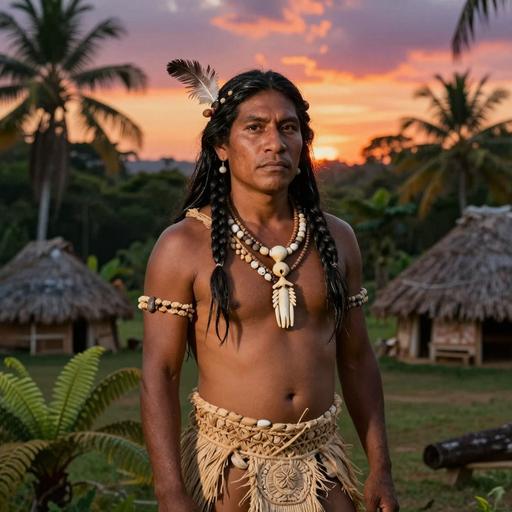
The Paso del Indio site in Puerto Rico is one of the most significant archaeological sites for understanding the Ceramic Period and the Taíno culture on the island. The Taíno were the indigenous people of the Caribbean, and their ancestors have been residing in what is now Puerto Rico for thousands of years. The Ceramic Period marks a crucial era in the development of complex societies and cultural practices in the region, underscored by the advent and elaboration of ceramic technology.
Historical Context
The Ceramic Period in Puerto Rico is generally divided into several phases, starting around 500 BCE and lasting until the time of European contact in the late 15th century. This period is characterized by the widespread use of ceramics for both functional and ceremonial purposes, as well as developments in agriculture, social organization, and trade networks.
The Paso del Indio site, located in the north-central part of Puerto Rico, represents a critical archaeological location for understanding the early and transitional phases of the Ceramic Period. Excavations at this site have provided invaluable insights into the lifestyle, societal structure, and cultural practices of the Taíno and their ancestors.
Ceramic Technology and Styles
Ceramic production was a highly developed craft among the Taíno. The pottery discovered at Paso del Indio includes a variety of forms and decorative styles, reflecting both utilitarian and ritualistic uses. Common vessel forms include bowls, jars, and griddles (or \burén," used for cooking), often adorned with intricate designs.
The ceramics from Paso del Indio exhibit both local innovation and influence from other regions in the Caribbean, demonstrating the dynamic interactions between different Taíno communities. The pottery is noted for its geometric and anthropomorphic motifs, which likely held symbolic meanings related to Taíno cosmology and social identity.
Social and Cultural Practices
The community at Paso del Indio, like other Taíno settlements, was structured in a hierarchical system with a cacique (chief) at the top, supported by a class of nitaínos (nobility). This societal organization facilitated the management of agricultural production, distribution of goods, and religious activities.
Worship and spiritual life were central to Taíno culture, with a rich pantheon of gods and spirits. Ceramics played a role in both daily life and religious practices, including the cohoba ceremony—where individuals inhaled a hallucinogenic powder to communicate with the divine.
Subsistence and Economy
The people of Paso del Indio practiced a mixed economy based on agriculture, fishing, and hunting. The cultivation of crops such as cassava, corn, and sweet potatoes formed the backbone of their diet. The fertile lands of Puerto Rico provided ample resources, enabling the Taíno to develop sedentary communities with surplus production that supported complex societal systems.
Evidence from Paso del Indio suggests that the site functioned as a significant hub in trade networks. The exchange of goods—such as stone tools, ceramics, and food products—linked different Taíno groups across the Caribbean, fostering both economic and cultural interactions.
Archaeological Significance
The Paso del Indio site offers an extraordinary window into the life of the Taíno during the Ceramic Period. Excavations have unearthed numerous artifacts, along with features such as hearths, burial sites, and midden deposits. These findings provide critical information about the diet, social structures, and ritual practices of the community.
Moreover, Paso del Indio helps researchers understand the broader patterns of migration, settlement, and cultural development in the Caribbean, documenting the complex interplay of environmental adaptations and social innovations that characterized Taíno life.
In summary, the Ceramic Period Paso del Indio site in Puerto Rico reveals a vibrant society marked by advanced ceramic technology, sophisticated social structures, and rich cultural and spiritual traditions. It stands as a testament to the ingenuity and resilience of the Taíno people before the disruption brought by European contact."