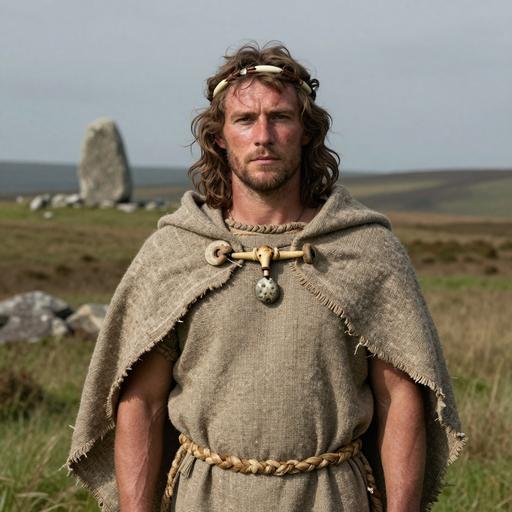
The Early to Middle Neolithic period in Ireland, dating from approximately 4000 to 2500 BCE, marks a significant transformation in the ways people lived and organized their societies. During this era, the transition from a predominantly hunter-gatherer lifestyle to an agricultural-based society began, profoundly impacting the cultural landscape. Although Celtic culture, as we traditionally know it, emerged much later in Irish history, there are some insights into the cultural evolutions leading toward it.
Settlements and Architecture
The emergence of permanent settlements characterizes the Early to Middle Neolithic in Ireland. Small farming communities began to establish themselves, building robust structures using locally available materials. These constructions often included rectangular timber houses, indicating a shift towards a settled lifestyle. Over time, these communities expanded, incorporating increasingly sophisticated architecture, evident in the construction of megalithic tombs such as passage graves, court cairns, and portal dolmens. These monumental structures, especially those like Newgrange, reveal advanced engineering skills and a deep spiritual connection with the cosmos, as many are aligned with solar and lunar phenomena.
Economy and Subsistence
Agriculture became the bedrock of Neolithic economic life in Ireland. Communities grew crops such as barley, wheat, and legumes and domesticated animals including cattle, sheep, and goats. This reliance on farming cultivated a shift from foraging to food production, supporting larger, more stationary populations. The development of polished stone tools improved efficiency in both farming and building activities. Although agriculture was central, people still hunted and gathered wild resources, suggesting a mixed economy that ensured a diverse diet.
Society and Organization
The establishment of stable communities likely led to more complex social structures. The construction of large communal tombs and ritual sites is indicative of organized work forces and possibly hierarchical social orders with spiritual or communal leaders. These structures highlight the importance of ancestry and collective memory in Neolithic society, suggesting that kinship and lineage were central to social identity.
Art and Symbolism
Art from this period often appears on megalithic tombs and other stone structures, with intricate carvings and motifs that are believed to have spiritual or symbolic meanings. The spiral motifs and geometric patterns found at sites like Newgrange suggest a sophisticated sense of aesthetics and possibly a symbolic language related to religious or cosmological beliefs. Such art often suggests rituals or spiritual life tied closely to nature and the cycle of the seasons.
Religion and Ritual
The Neolithic era in Ireland was marked by a profound spiritual or religious element, as evidenced by the alignment of many megalithic tombs with celestial bodies. The construction of elaborate tombs and ceremonial sites indicates a belief in an afterlife and possibly the importance of ancestor worship. Rituals likely played a significant role in societal cohesion and the cultural life of communities, tied closely to the land and the changing seasons.
Trade and Interaction
There is evidence to suggest that the Early to Middle Neolithic communities in Ireland were not completely isolated. Items such as polished stone axes crafted from materials not locally available indicate some form of trade or interaction with neighboring regions across the Irish Sea, possibly the western parts of Britain. These interactions might have facilitated cultural exchange, influencing the development of technology and artistic styles.
In summary, the Early to Middle Neolithic period in Ireland was a transformative era marked by the advent of agriculture, the development of permanent settlements, and the creation of monumental architecture. The advances in societal organization, artistic expression, and spiritual life during this time laid an important foundation for the complex cultures that would follow, paving the way for what would eventually evolve into the vibrant Celtic traditions and societies.