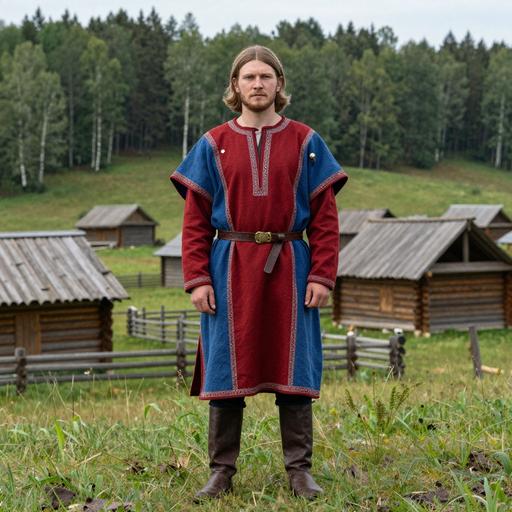
The Medieval Sheksovo culture is an intriguing and lesser-known period in the expansive tapestry of Russian history, reflecting the complex melding of influences that characterized the early medieval period in Eastern Europe. This culture primarily flourished in the region that is now part of central Russia, over the terrain where the Volga and Oka rivers converge. During its peak, roughly between the 9th and 13th centuries, the Sheksovo culture stood at the crossroads of various Slavic, Finno-Ugric, and Scandinavian influences, deeply intertwining with the monumental historical events unfolding across the European mainland.
Geographic and Environmental Context
The geographical heart of the Sheksovo culture lay in a landscape characterized by dense forests, fertile soil, and extensive waterways. The Volga and Oka rivers facilitated trade and communication, serving as key arteries connecting the region to both northern Rus' cities like Novgorod and southern destinations like Tsargrad (Constantinople). The river systems supported not only economic activities but also cultural exchange and contact with traders, craftsmen, and explorers from different ethnic backgrounds, contributing significantly to the richness of Sheksovo's material culture.
Social Structure and Daily Life
Societal organization within the Sheksovo culture echoed the broader dynamics of medieval Eastern Europe, where hierarchical structures were defined by a blend of tribal traditions and emergent feudal systems. At the apex of the social order were the chieftains and local nobles, who owned large swathes of land, commanded warrior retinues, and maintained control over peasant populations. Peasants, often bound to the land, constituted the majority of the population, engaging in agriculture, animal husbandry, and forestry to sustain their communities.
Daily life emphasized subsistence through farming, with rye, barley, oats, and other cereals forming dietary staples, supplemented by fishing and hunting given the proximate forest and riverine resources. The craftsmanship was also a significant facet of Sheksovo life, with woodwork, pottery, and textiles serving as both functional and artistic expressions of cultural identity. The presence of metalworking, highlighted by weaponry and jewelry, indicates knowledge of metallurgy and trade of raw materials.
Religious and Cultural Practices
Religious life in the Sheksovo culture was marked by a fascinating syncretism. Pre-Christian pagan beliefs, characterized by animism and reverence for natural elements, coexisted with the growing influence of Eastern Orthodox Christianity, which had been spreading from the Byzantine Empire. Pagan rituals were observed in tandem with Christian rites, overseen by a spiritual elite adept in maintaining the delicate balance between the two.
Cultural practices were often expressed through music, oral traditions, and ceremonial activities. Storytelling, through epic tales and folklore, played a critical role in preserving history and imparting moral teachings. Bardic performances and communal festivals punctuated the yearly calendar, ensuring a vibrant and cohesive community life.
Influence and Legacy
The legacy of the Sheksovo culture is subtle but enduring in the fabric of Russian history. Over time, the culture was subsumed into the expanding dominion of the Kievan Rus' and later the Grand Duchy of Moscow. However, its contributions are discernible in Russian folklore, artisanal techniques, and certain linguistic elements. The blending of Slavic, Finno-Ugric, and Norse elements within the Sheksovo culture laid the foundation for the rich multiculturalism that has characterized Russian civilization throughout the centuries.
Archaeological Insights
Archaeological excavations in the Sheksovo region have yielded fascinating insights into the material culture of this era. Burial mounds, settlement remains, and artifact caches offer a window into the daily lives and societal structure of the Sheksovo people. Burial practices, including both cremation and inhumation with grave goods, reveal beliefs in an afterlife and the social status of the interred. Pottery shards, ornate jewelry, and household tools further illustrate the sophistication of Sheksovo craftsmanship and trade networks.
In conclusion, the Medieval Sheksovo culture embodies a unique synthesis of diverse cultural and historical currents during a formative period in Russian history. Its integration of pagan traditions with burgeoning Christian influences, alongside its strategic geographical positioning, highlights the dynamic interplay between continuity and change that defines the medieval tapestry of Eastern Europe.