Menu
Store
Blog
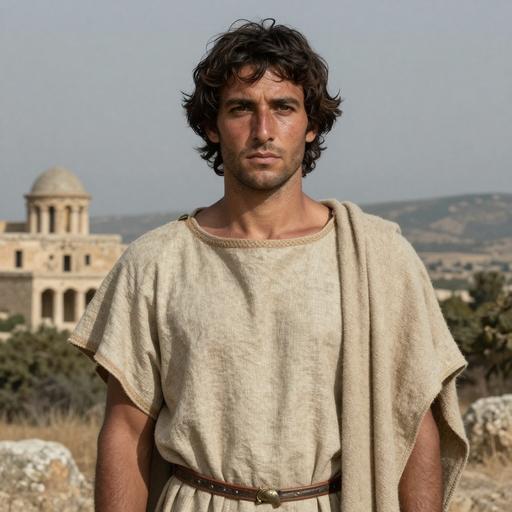
Portrait reconstruction of TIR008
Ancient Individual

A man buried in Greece in the Iron Age era

TIR008
991 BCE - 835 BCE
Male
Tiryns Iron Age Culture
Greece
Scroll to begin
Chapter I

Identity

The biological and cultural markers that define this ancient individual

Sample ID

TIR008

Date Range

991 BCE - 835 BCE

Biological Sex

Male

mtDNA Haplogroup

Not available

Y-DNA Haplogroup

R-M269

Cultural Period

Tiryns Iron Age Culture

Chapter II

Place

Where this individual was discovered

Country Greece
Locality Tiryns (Argolid)
Coordinates 37.5995, 22.7996
Chapter III

Time

When this individual lived in the broader context of human history

TIR008 991 BCE - 835 BCE
Chapter IV

Story

The narrative of this ancient life

The Tiryns Iron Age culture, a significant Proto-Greek civilization, emerged as a dominant cultural force in the Late Bronze Age and Early Iron Age periods, approximately between 1150 and 700 BCE. Centered around Tiryns, a site in the northeastern Peloponnese region of Greece, this culture is noteworthy for its role in the broader tapestry of ancient Greek development, bridging the gap between the Mycenaean civilization and the blossoming of Classical Greece.

Geographical Context

Tiryns was strategically located on a plain near the coast of the Argolis region, providing it access to maritime routes while also being connected to the hinterlands of the Peloponnese. This position facilitated both trade and cultural exchange, allowing Tiryns to become a hub of economic and political activity.

Sociopolitical Structure

The sociopolitical organization of Tiryns during the Iron Age was characterized by the presence of local chieftains or kings who wielded considerable power. These leaders were likely supported by a council of elites, forming a hierarchical structure that oversaw community affairs, including trade, defense, and religious practices.

Architectural and Engineering Achievements

Tiryns is renowned for its imposing Cyclopean walls, constructed from massive limestone boulders. These fortifications served both defensive and symbolic roles, showcasing the engineering prowess and the socio-political power of the elites. The architecture of Tiryns also included a grandiose megaron—a rectangular hall that served as the focal point for both domestic and ceremonial activities.

The buildings in Tiryns from this period reflected an evolution towards more complex urban planning, with an acropolis housing the elite's quarters and lower terraces that accommodated storage and living spaces for the populace.

Economy and Trade

The economy of Tiryns was predominantly agrarian, with communities engaged in agriculture, animal husbandry, and fishing. However, Tiryns was also a bustling center of trade, largely due to its geographical positioning. It facilitated exchanges of goods such as pottery, textiles, and metalwork between the Aegean and the broader Mediterranean regions. The Tiryns elite would have played a crucial role in controlling and regulating trade, enhancing their own wealth and power.

Cultural and Artistic Developments

Art from the Tiryns Iron Age culture reflects a blend of Mycenaean traditions and new influences. The pottery, often decorated with geometric patterns, points to the proto-geometrics style that preceded the more complex Geometric art of the later Greek Dark Ages. This suggests a continuity and evolution of artistic traditions through this transitional period.

In terms of metallurgy, iron gradually became the preferred material over bronze, initially for utilitarian goods and later for weaponry and art. This transition marked a significant technological and cultural shift, influencing various aspects of life and providing advantages in agriculture and warfare.

Language and Writing

The inhabitants of Tiryns during this period spoke a Proto-Greek dialect, part of the broader Indo-European language family. While Linear B script, used by the Mycenaeans, had fallen out of use following the collapse of their civilization, the oral traditions maintained and transmitted through epic poetry (like the Homeric epics) preserved linguistic continuity. This oral culture played a pivotal role in chronicling the achievements and lore of earlier times, eventually influencing the written Greek language.

Religion and Mythology

Religious practices in Tiryns continued the worship of earlier Mycenaean deities while integrating emerging Proto-Greek elements. Rituals likely took place in domestic shrines or dedicated areas within the megaron. The pantheon of gods and mythological narratives developed during this period laid the foundational framework for later Classical Greek religion.

Decline and Legacy

The decline of Tiryns as a preeminent cultural center began around 700 BCE, coinciding with broader shifts in the Greek world, including the rise of the polis (city-state) structure. However, the cultural and technological advances developed or preserved by the Tiryns Iron Age culture had a lasting impact on the Greek world. The continuity of artistic traditions, linguistic evolution, and religious practices from Tiryns into Classical Greece underscores its importance as a cultural bridge between the Mycenaean world and the emergence of the Classical Greek civilization.

In conclusion, the Tiryns Iron Age culture represents a pivotal epoch in Proto-Greek history. It reflects a period marked by significant transformation and continuity that shaped the trajectory of Greek history, contributing to the complex socio-cultural evolution that characterized ancient Greece.

Chapter V

Context

Other ancient individuals connected to this sample

Sources

References

Scientific publications and genetic data

Scientific Publication

Ancient DNA reveals admixture history and endogamy in the prehistoric Aegean

Authors Skourtanioti E, Ringbauer H, Gnecchi Ruscone GA
Abstract

The Neolithic and Bronze Ages were highly transformative periods for the genetic history of Europe but for the Aegean-a region fundamental to Europe's prehistory-the biological dimensions of cultural transitions have been elucidated only to a limited extent so far. We have analysed newly generated genome-wide data from 102 ancient individuals from Crete, the Greek mainland and the Aegean Islands, spanning from the Neolithic to the Iron Age. We found that the early farmers from Crete shared the same ancestry as other contemporaneous Neolithic Aegeans. In contrast, the end of the Neolithic period and the following Early Bronze Age were marked by 'eastern' gene flow, which was predominantly of Anatolian origin in Crete. Confirming previous findings for additional Central/Eastern European ancestry in the Greek mainland by the Middle Bronze Age, we additionally show that such genetic signatures appeared in Crete gradually from the seventeenth to twelfth centuries BC, a period when the influence of the mainland over the island intensified. Biological and cultural connectedness within the Aegean is also supported by the finding of consanguineous endogamy practiced at high frequencies, unprecedented in the global ancient DNA record. Our results highlight the potential of archaeogenomic approaches in the Aegean for unravelling the interplay of genetic admixture, marital and other cultural practices.

Use code for 40% off Expires Mar 01