
Menu
Store
Blog
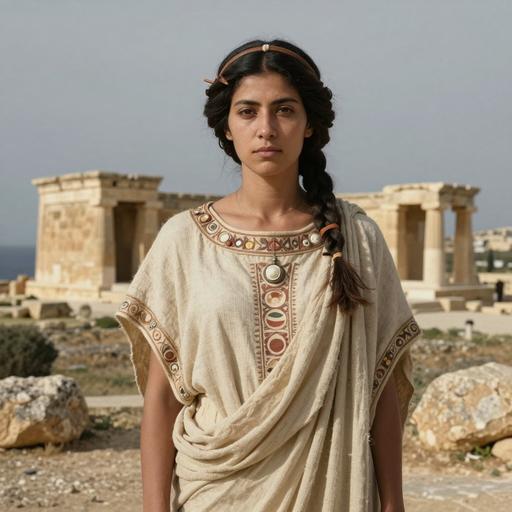
Portrait reconstruction of Xaghra6
Ancient Individual

A woman buried in Malta in the Neolithic era

Xaghra6
2900 BCE - 2650 BCE
Female
Maltese Temple Culture (Xagħra)
Malta
Scroll to begin
Chapter I

Identity

The biological and cultural markers that define this ancient individual

Sample ID

Xaghra6

Date Range

2900 BCE - 2650 BCE

Biological Sex

Female

mtDNA Haplogroup

Not available

Cultural Period

Maltese Temple Culture (Xagħra)

Chapter II

Place

Where this individual was discovered

Country Malta
Locality Xaghra Circle (Gozo)
Coordinates 36.0465, 14.2649
Chapter III

Time

When this individual lived in the broader context of human history

Xaghra6 2900 BCE - 2650 BCE
Chapter IV

Story

The narrative of this ancient life

The Maltese Temple Culture, spanning from approximately 4000 to 2500 BCE, represents a significant prehistoric era on the Maltese archipelago in the central Mediterranean. Among its most remarkable sites is the Xagħra Stone Circle, known regionally as the Brochtorff Circle, on the island of Gozo. This culture is celebrated for its advanced architectural, artistic, and ceremonial achievements, which provide crucial insights into the Neolithic period.

Geographic and Environmental Context

Situated in the central Mediterranean, Malta and Gozo's strategic location fostered a unique blend of influences and relative isolation that allowed the Maltese Temple Culture to develop distinct characteristics. The islands' limestone composition enabled early settlers to fashion the durable megalithic structures for which they are renowned. The climate, characterized by hot, dry summers and mild, wet winters, influenced agricultural practices and daily life.

Architectural Achievements

The hallmark of the Maltese Temple Culture is its remarkable megalithic architecture. The Xagħra Stone Circle, one of several temple complexes, exemplifies the complexity and sophistication of these constructions. Temple structures typically feature a trefoil or clover-leaf shape, consisting of semi-circular apses linked by a central passageway. The temples were meticulously constructed using large limestone blocks, some of which weigh several tons, showcasing the builders' advanced understanding of engineering and stone masonry.

At the Xagħra site, excavations have revealed evidence of both above-ground structures and subterranean elements. The megalithic temples are believed to have served both religious and communal functions, evidenced by altars, oracle holes, and intricate carved decorations, which suggest ceremonial uses.

Religious and Ceremonial Practices

The Maltese Temple Culture is characterized by its rich religious life, as reflected in the architectural layout and artifacts. The temples likely served as focal points for worship, rituals, and communal gatherings. The discovery of numerous statues and figurines, particularly of corpulent female figures, suggests a goddess-centric religion with themes of fertility and nature worship.

The Xagħra Stone Circle itself, while part of the broader temple tradition, also served as a necropolis. Excavations have uncovered human remains, along with grave goods, pottery, and personal ornaments, indicating elaborate funerary practices. These finds point to a society that placed significant emphasis on ancestor worship and the afterlife.

Artistic Contributions

Artifacts from the Temple period include intricate pottery, stone tools, and ornate carvings. The pottery is often decorated with spiral motifs and geometric patterns, highlighting the society's artistic flair. Perhaps the most striking artistic contributions are the sculptures, including the famed \Fat Ladies" or "Venus" figurines, which indicate a celebration of the human form and possibly represent deities or key figures in the culture's religious practices.

Social and Economic Life

The economy of the Maltese Temple Culture was primarily agrarian, supplemented by hunting, fishing, and trading. The fertile soil and favorable climate allowed for the cultivation of crops such as wheat and barley, while domesticated animals like sheep, goats, and pigs provided meat, milk, and wool. The presence of imported materials, such as obsidian and flint, indicates that the Maltese engaged in trade networks with neighboring regions, enhancing their economic stability and cultural exchange.

Socially, the Maltese Temple Culture likely had a complex societal structure, as suggested by the scale of architectural projects and the diversity of grave goods. Leadership roles may have been tied to religious authority, given the emphasis on temple construction and ritual activities.

Decline and Legacy

Around 2500 BCE, the Maltese Temple Culture began to decline, possibly due to climate change, resource depletion, or social upheaval. This decline coincided with the arrival of the Bronze Age, which brought new technologies and cultural influences.

Despite its eventual decline, the legacy of the Maltese Temple Culture remains profound. The architectural and artistic achievements of this period continue to attract scholars and tourists alike, offering a glimpse into the sophisticated society that once thrived on this small archipelago. The Malta Temples, including the Xagħra Stone Circle, have been recognized as UNESCO World Heritage Sites, cementing their status as vital historical and cultural landmarks.

In summary, the Maltese Temple Culture, as exemplified by the Xagħra site, represents an extraordinary chapter in human history, marked by its innovative architecture, rich spiritual life, and complex social structures. It offers invaluable reflections on the diversity and ingenuity of prehistoric societies in the Mediterranean."

Chapter V

Context

Other ancient individuals connected to this sample

Sources

References

Scientific publications and genetic data

Scientific Publication

Ancient Maltese genomes and the genetic geography of Neolithic Europe

Authors Ariano B, Mattiangeli V, Breslin EM
Abstract

Archaeological consideration of maritime connectivity has ranged from a biogeographical perspective that considers the sea as a barrier to a view of seaways as ancient highways that facilitate exchange. Our results illustrate the former. We report three Late Neolithic human genomes from the Mediterranean island of Malta that are markedly enriched for runs of homozygosity, indicating inbreeding in their ancestry and an effective population size of only hundreds, a striking illustration of maritime isolation in this agricultural society. In the Late Neolithic, communities across mainland Europe experienced a resurgence of hunter-gatherer ancestry, pointing toward the persistence of different ancestral strands that subsequently admixed. This is absent in the Maltese genomes, giving a further indication of their genomic insularity. Imputation of genome-wide genotypes in our new and 258 published ancient individuals allowed shared identity-by-descent segment analysis, giving a fine-grained genetic geography of Neolithic Europe. This highlights the differentiating effects of seafaring Mediterranean expansion and also island colonization, including that of Ireland, Britain, and Orkney. These maritime effects contrast profoundly with a lack of migratory barriers in the establishment of Central European farming populations from Anatolia and the Balkans.

Use code for 40% off Expires Mar 01