Menu
Store
Blog
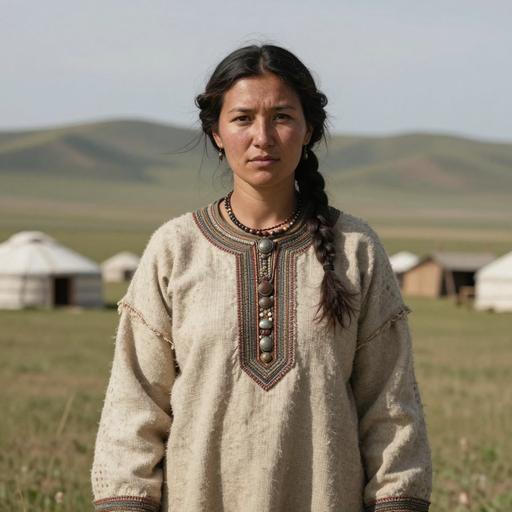
Portrait reconstruction of Ze6b
Ancient Individual

A woman buried in Kazakhstan in the Iron Age era

Ze6b
900 BCE - 600 BCE
Female
Iron Age 2 Zevakino-Chilikta, Kazakhstan
Kazakhstan
Scroll to begin
Chapter I

Identity

The biological and cultural markers that define this ancient individual

Sample ID

Ze6b

Date Range

900 BCE - 600 BCE

Biological Sex

Female

mtDNA Haplogroup

C4

Cultural Period

Iron Age 2 Zevakino-Chilikta, Kazakhstan

Chapter II

Place

Where this individual was discovered

Country Kazakhstan
Locality Zevakino. East Kazakhstan
Coordinates 50.2000, 81.8167
Chapter III

Time

When this individual lived in the broader context of human history

Ze6b 900 BCE - 600 BCE
Chapter IV

Story

The narrative of this ancient life

The Iron Age 2 Zevakino-Chilikta culture represents a fascinating and intricate period of steppe nomadic life in what is now modern-day Kazakhstan. This culture flourished roughly between the 7th and 3rd centuries BCE, corresponding to the broader era known as the Scythian period across the Eurasian steppes. The Zevakino-Chilikta Iron Age culture is characterized by its distinctive adaptations to the vast, varied landscapes of Kazakhstan, marked by a semi-arid climate, open grasslands, and rugged mountain ranges.

Geography and Environment

The Zevakino-Chilikta culture emerged in the eastern part of Kazakhstan, an area distinguished by a combination of fertile valleys and challenging upland terrains. The region provided essential resources for pastoral nomadism, with its expansive pastures ideal for grazing domesticated animals like horses and sheep. The Irtysh River and its tributaries offered fresh water, while the mineral-rich soils contributed to the development of iron metallurgy, which was more advanced during this period than previously.

Social Organization and Economy

The social structure of the Zevakino-Chilikta people was deeply rooted in nomadic pastoralism, a necessity given the geographical and climatic conditions of the steppe. Their society was likely organized into clans or tribes, each led by chieftains or warrior leaders. Wealth and social status might have been tied significantly to the size of one's herd and ability to command or protect trade routes across the steppes.

The economy of the Zevakino-Chilikta culture was diverse and opportunistic. Livestock formed the backbone of their economy, providing meat, milk, hides, and wool for both sustenance and trade. Simultaneously, they developed agricultural practices, albeit limited due to the nature of the terrain, which supplemented their diet with some grains.

Mobility and Lifestyle

One of the hallmark characteristics of this culture was its mobility. The people of Zevakino-Chilikta were skilled horsemen, a trait common among steppe nomads, enabling them to move rapidly across vast distances. Horses were crucial not only as a means of transport but also as assets of warfare and indicators of social status.

The dwellings of the Zevakino-Chilikta people were likely temporary structures, such as yurts, which could be easily assembled and disassembled. These portable homes enabled them to follow grazing patterns and migrate with the seasons, ensuring efficient usage of the land and resources available to them.

Material Culture and Crafts

The material culture of the Zevakino-Chilikta was rich and diverse, illustrating a blend of local and foreign influences acquired through trade or conquest. Ironworking became a significant component of their technological advancements, leading to better farming tools and weapons. Artifacts recovered from archaeological sites include finely crafted metalwork, such as swords, daggers, and jewelry, showcasing intricate designs and skilled metallurgy.

Pottery, although more simplistic compared to their metalwork, provides evidence of aesthetic values and practical considerations. The pottery was often hand-made, occasionally decorated with geometric patterns, emphasizing functionality and portability.

Art and Symbolism

Art played a significant role in the Zevakino-Chilikta culture, primarily manifested through their metalwork and rock carvings. Animal motifs were prevalent, echoing the Scythian art style that spread across the Eurasian steppes during this time. These motifs emphasized the centrality of animals, particularly horses and the reindeer, in their worldview and daily life.

Their art is thought to convey aspects of spirituality and identity, possibly reflecting a belief system centered on nature and shamanistic practices. Burial sites, which have provided a treasure trove of artifacts, suggest complex funerary rites and a belief in an afterlife, underscored by the opulence and care evident in their construction and offerings.

Interaction and Influence

The Zevakino-Chilikta culture did not exist in isolation but was part of a broader network of steppe civilizations. The extensive trade routes connecting the East to the West during the early Iron Age enabled the exchange of goods, ideas, and technologies. Contact with other nomadic groups, sedentary agricultural societies, and established empires like the Persians and later the Greeks, infused their culture with new elements and influenced their socio-political structures.

Conclusion

The Iron Age 2 Zevakino-Chilikta culture encapsulates a vibrant, complex society adept at navigating the challenges and opportunities of the steppe environment. Through their skilled horsemanship, innovative metalwork, and artistic expression, they contributed to the rich tapestry of steppe nomadic life, marking an era of significant cultural and technological advancements that echoed across the Eurasian continent. Understanding this culture offers invaluable insights into the dynamics of nomadic societies and their profound impact on the course of human history in the region.

Chapter V

Context

Other ancient individuals connected to this sample

Sources

References

Scientific publications and genetic data

Scientific Publication

Ancestry and demography and descendants of Iron Age nomads of the Eurasian Steppe

Authors Unterländer M, Palstra F, Lazaridis I
Abstract

During the 1st millennium before the Common Era (BCE), nomadic tribes associated with the Iron Age Scythian culture spread over the Eurasian Steppe, covering a territory of more than 3,500 km in breadth. To understand the demographic processes behind the spread of the Scythian culture, we analysed genomic data from eight individuals and a mitochondrial dataset of 96 individuals originating in eastern and western parts of the Eurasian Steppe. Genomic inference reveals that Scythians in the east and the west of the steppe zone can best be described as a mixture of Yamnaya-related ancestry and an East Asian component. Demographic modelling suggests independent origins for eastern and western groups with ongoing gene-flow between them, plausibly explaining the striking uniformity of their material culture. We also find evidence that significant gene-flow from east to west Eurasia must have occurred early during the Iron Age.

Use code for 40% off Expires Feb 27