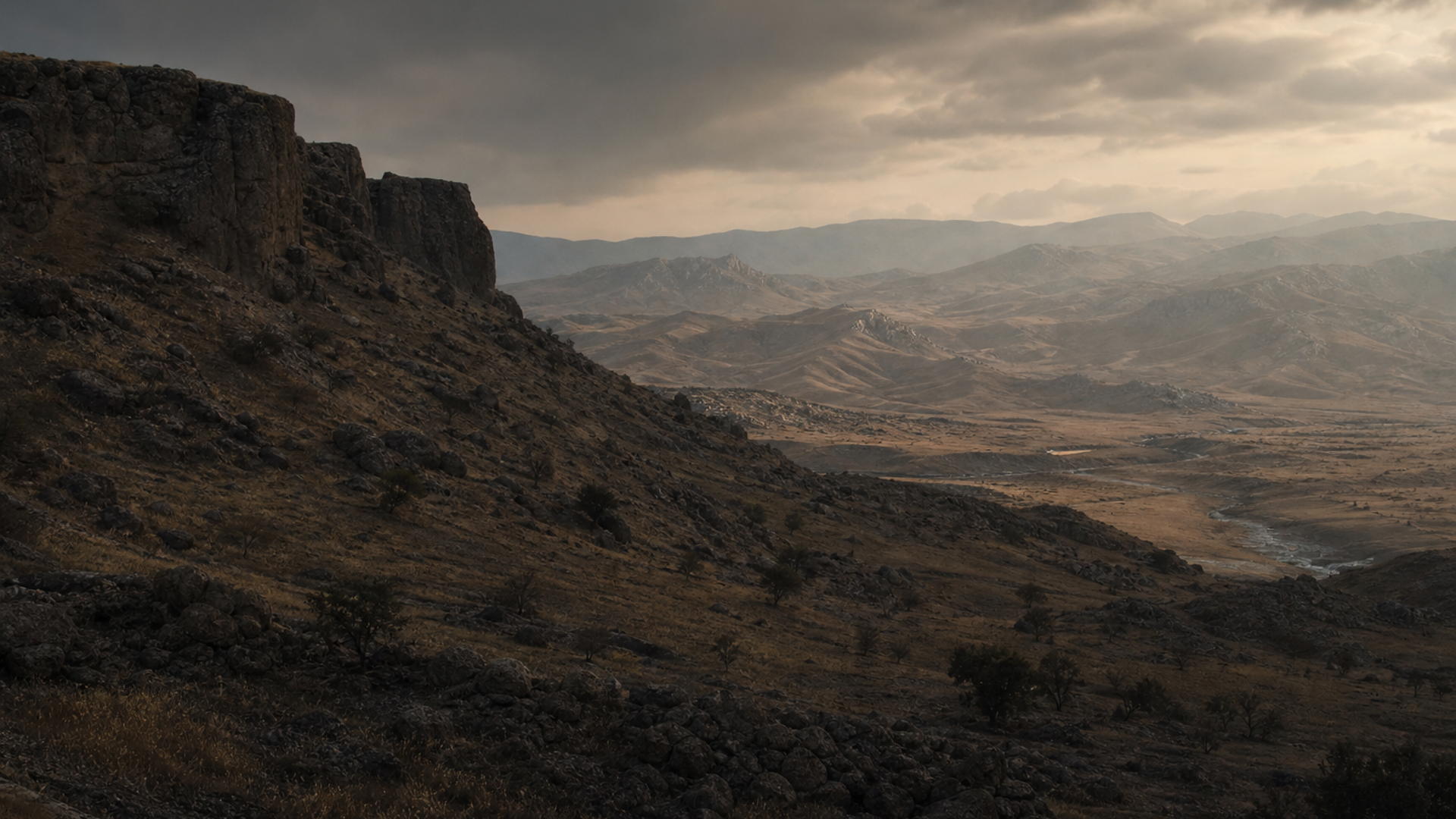
Stone walls, packed-earth streets and domestic assemblages speak to lives lived between agriculture and craft. At Kuriki Höyük, small-house architecture and storage pits imply cereal cultivation and household herding, while Çavuştepe’s massive fortifications and storerooms signal organized state control and military preparedness characteristic of eastern Anatolian polities. Gordion’s monumental tombs and craft workshops point to an urban center with elite patronage, long-distance exchange, and specialized artisans.
Archaeobotanical and zooarchaeological data from contemporary Iron Age Anatolia indicate diets based on wheat, barley and pulses, supplemented by sheep, goats and cattle. Metalworking and textile production left abundant traces in workshop debris. Funerary practices vary: some burials are modest inhumations, others richly furnished, reflecting social differentiation. Genetics adds another layer: the maternal diversity suggests women carried long-standing local lineages even as material culture changed. Because Y-DNA is inconsistently recovered in this set, inferences about patrilocality, marital residence or male mobility remain tentative — archaeological signals of migration must be weighed against the maternal continuity seen in mtDNA.