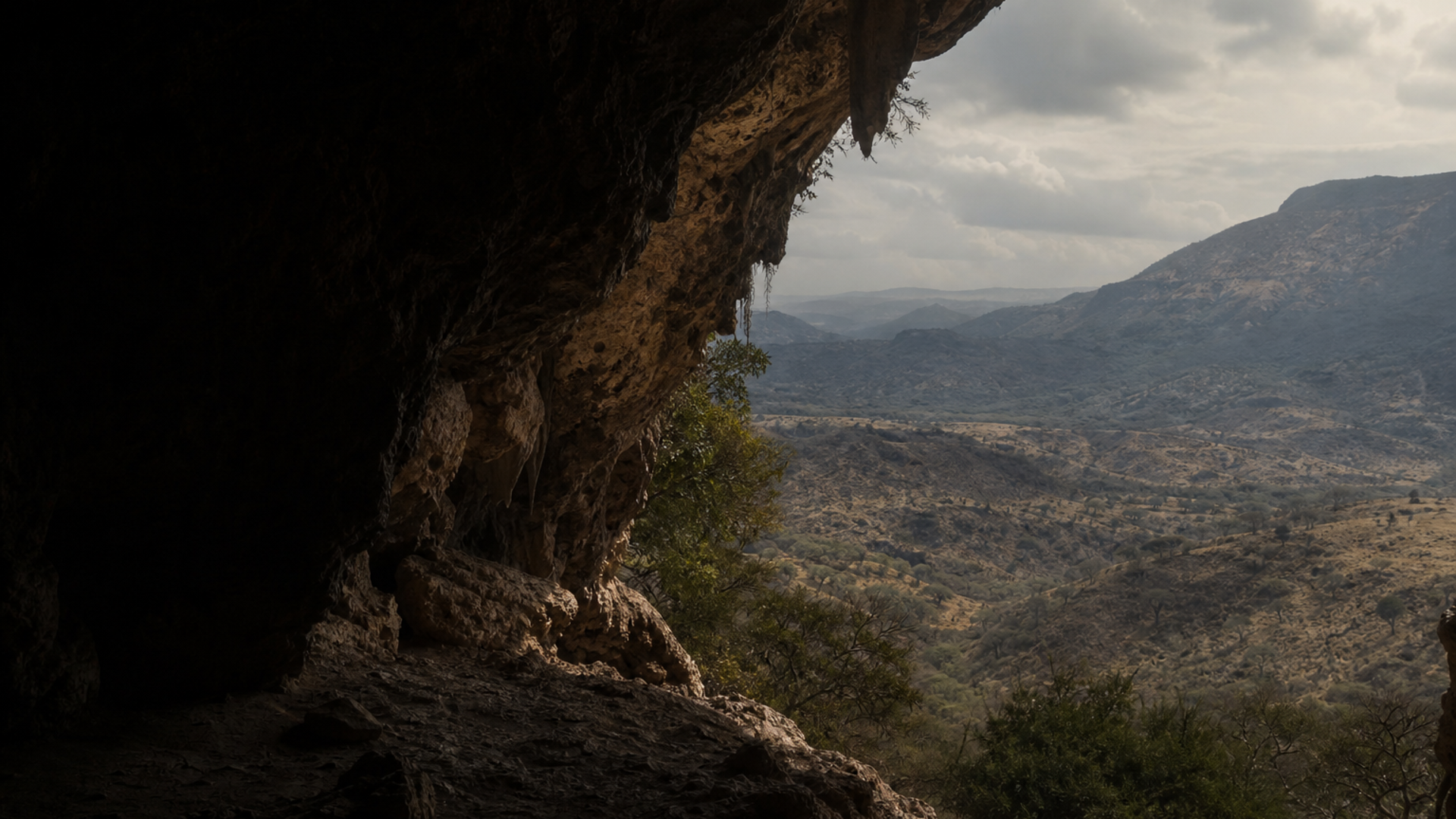
Archaeological contexts at Gishimangeda evoke a life adapted to the variable landscapes of prehistoric Tanzania. Caves often served as funerary or habitation spaces, concentrating material culture and offering protection. Material remains in comparable sites across the region show a blend of mobile herding, seasonal foraging, and nascent cultivation — a flexible economy tuned to shifting rainfall and grazing cycles.
Social life likely revolved around kin groups and small communities whose movements and exchange networks tied highland and lowland zones. Beads, pottery styles, and faunal remains in nearby sites point to craft specialization and the centrality of animal husbandry to status, diet, and mobility. The genetic profile from Gishimangeda—predominantly African lineages with occasional external maternal signatures—fits a picture of largely local populations that were nevertheless part of wider exchange networks linking East Africa with the Horn and beyond.
Archaeological data indicates variation in mortuary practice and material wealth, reflecting social differentiation even within small groups. However, direct inference about social structure at Gishimangeda is limited by the small sample size and fragmentary context.