Saltar para o conteúdo principal
Cultura de destaque

Echoes of Gishimangeda

Genetic whispers from a Tanzanian cave linking pastoral lifeways and deep African lineages

776 BCE - 368 CE
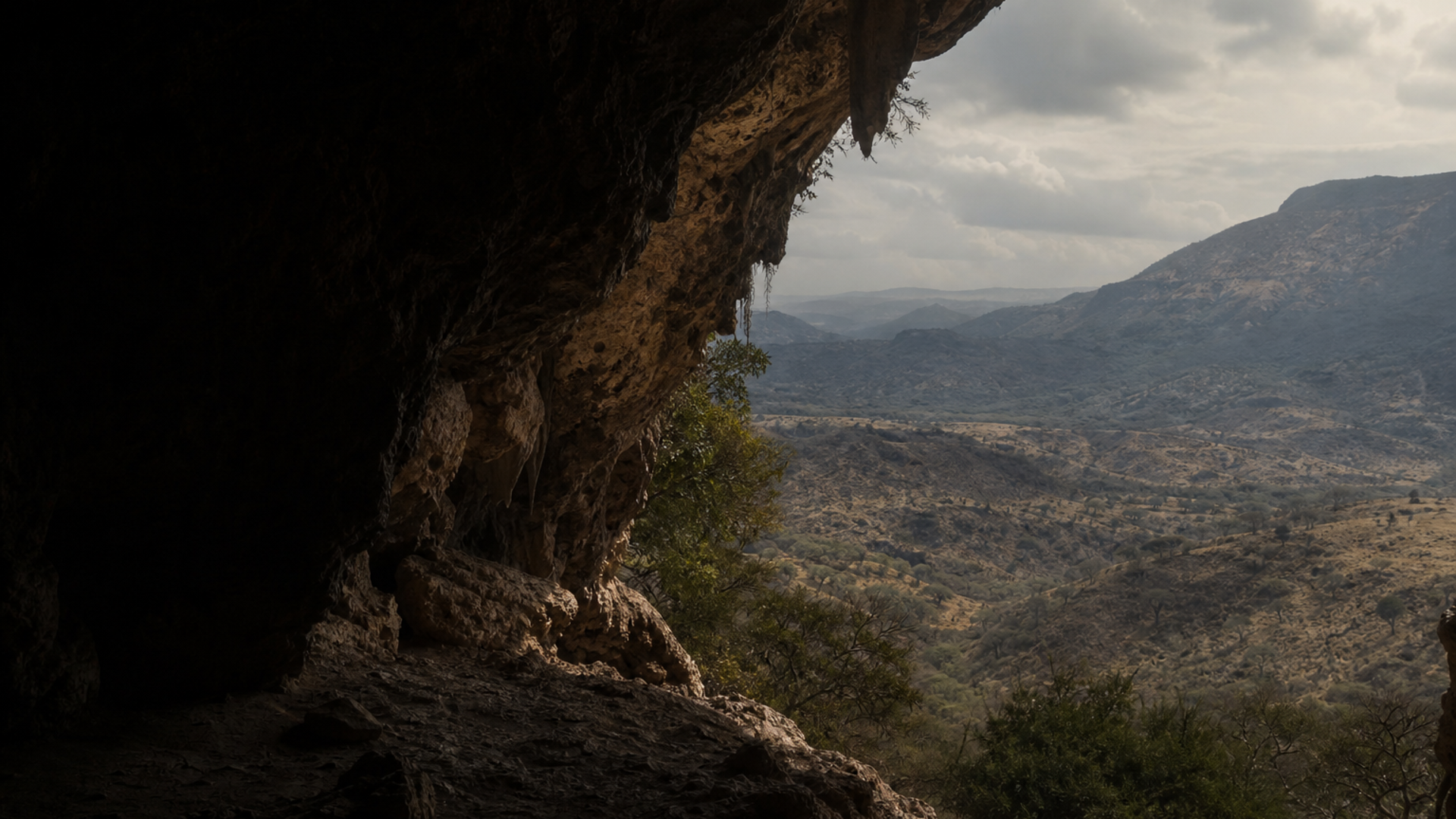
Gishimangeda Cave, Tanzania

A História

Ancient DNA from Gishimangeda Cave (776 BCE–368 CE) reveals predominantly African maternal and paternal lineages with traces of West-Eurasian maternal haplogroups. Limited samples suggest continuity and episodic contact in prehistoric Tanzania; conclusions remain preliminary.

Time Period

776 BCE–368 CE

Region

Gishimangeda Cave, Tanzania

Common Y-DNA

E (3 of 7)

Common mtDNA

L (4), T2a (1), HV (1), L0a (1)

Cronologia

2500 BCE

Emergence of pastoral economies in East Africa

Pastoralism spreads across parts of East Africa, creating mobile lifeways and exchange networks that later intersect with communities at Gishimangeda.

Origins & Emergence

Archaeological data from Gishimangeda Cave in central Tanzania frames a portrait of people living between 776 BCE and 368 CE. Excavations have recovered human remains alongside regional prehistoric material culture; stratigraphy and radiocarbon dates place these individuals in a long prehistoric sequence of East African ecological and social change.

Genetically, the small series of seven individuals carries a clear signal of sub-Saharan ancestry: Y-chromosome lineage E appears in multiple males, while mitochondrial L lineages dominate the maternal pool. Scattered occurrences of T2a and HV — haplogroups more commonly associated with West Eurasia or northeastern Africa in other contexts — hint at episodic maternal connections beyond the immediate region.

Limited evidence suggests these people participated in the mosaic of foraging, cultivation and early herding known from the broader Pastoral Neolithic of East Africa. Archaeology indicates mobility and resource flexibility as hallmark strategies in this era. Because the sample count is low, these genetic signals should be read as preliminary windows into population history rather than definitive portraits.

  • Human remains dated to 776 BCE–368 CE from Gishimangeda Cave
  • Dominant uniparental markers are African: Y E and mtDNA L
  • Presence of T2a/HV suggests occasional long-distance maternal links

Daily Life & Society

Archaeological contexts at Gishimangeda evoke a life adapted to the variable landscapes of prehistoric Tanzania. Caves often served as funerary or habitation spaces, concentrating material culture and offering protection. Material remains in comparable sites across the region show a blend of mobile herding, seasonal foraging, and nascent cultivation — a flexible economy tuned to shifting rainfall and grazing cycles.

Social life likely revolved around kin groups and small communities whose movements and exchange networks tied highland and lowland zones. Beads, pottery styles, and faunal remains in nearby sites point to craft specialization and the centrality of animal husbandry to status, diet, and mobility. The genetic profile from Gishimangeda—predominantly African lineages with occasional external maternal signatures—fits a picture of largely local populations that were nevertheless part of wider exchange networks linking East Africa with the Horn and beyond.

Archaeological data indicates variation in mortuary practice and material wealth, reflecting social differentiation even within small groups. However, direct inference about social structure at Gishimangeda is limited by the small sample size and fragmentary context.

  • Flexible economies combining herding, foraging, and localized cultivation
  • Cave contexts suggest communal or mortuary functions with material exchange

Genetic Profile

The seven genomic samples from Gishimangeda Cave present a concise but informative uniparental snapshot. Three males carry Y-haplogroup E, a lineage widespread across sub-Saharan Africa and commonly associated with long-term regional continuity. On the maternal side, four individuals have mtDNA haplogroups within macro-haplogroup L — the predominant maternal lineage across Africa — while single occurrences of T2a and HV appear alongside L0a.

The presence of T2a and HV in this small assemblage may mark limited maternal gene flow from northeastern Africa or the wider Afroeurasian corridor, phenomena documented in other East African ancient DNA studies. Yet uniparental markers capture only isolated lines of ancestry; they do not by themselves describe the full autosomal genetic landscape. Archaeological patterns of exchange and mobility provide a plausible mechanism for rare maternal inputs without wholesale population replacement.

Because the dataset comprises fewer than ten individuals, statistical power is low. These results are best treated as provisional signals that should guide further sampling rather than as final statements. Future whole-genome data from the same region would clarify admixture patterns, timing of gene flow, and relationships to contemporary Tanzanian populations.

  • Y E (3/7) and mtDNA L (4/7) indicate strong sub-Saharan continuity
  • Single T2a and HV mtDNA suggest limited maternal influx from beyond East Africa

Legacy & Modern Connections

The genetic signatures from Gishimangeda Cave resonate with patterns seen across modern East African populations: pervasive African paternal and maternal lineages alongside episodic signals of external contact. Such a mosaic reflects millennia of local continuity punctuated by movement and exchange along routes that linked the interior to coastal and Horn-of-Africa networks.

For contemporary Tanzanian communities, these ancient individuals offer a deep-time anchor for regional ancestry, but one must avoid overgeneralizing from seven samples. Archaeological continuity in settlement and subsistence practices, combined with the uniparental data, supports a narrative of long-term local habitation with occasional gene flow. Continued multidisciplinary work — more ancient genomes, isotopic dietary studies, and careful excavation — will refine how these echoes became the living genetic landscape of modern East Africa.

  • Signals align with modern East African genetic continuity and episodic contact
  • Small sample size means links to present-day populations remain provisional

Assistente de IA

Assistente de IA por DNAGENICS

Desbloquear esta função
Pregunta sobre la cultura Echoes of Gishimangeda. El asistente con IA puede explicar hallazgos genéticos, contexto histórico, pruebas arqueológicas y conexiones modernas, con sus límites de interpretación.
Exemplo de análise com IA

La cultura Echoes of Gishimangeda representa un capítulo de la historia humana...

A análise genética permite estudar semelhanças com populações anteriores e possíveis adaptações. As amostras de DNA antigo fornecem informações para investigar padrões migratórios e relações entre populações, com limites que dependem do estudo e do contexto arqueológico.

Esta é uma antevisão da análise com IA. Aceder ao assistente completo para explorar informações sobre:

  • Composição e similaridade genética
  • Padrões migratórios e origens
  • Vida cotidiana e práticas culturais
  • Contexto genético moderno