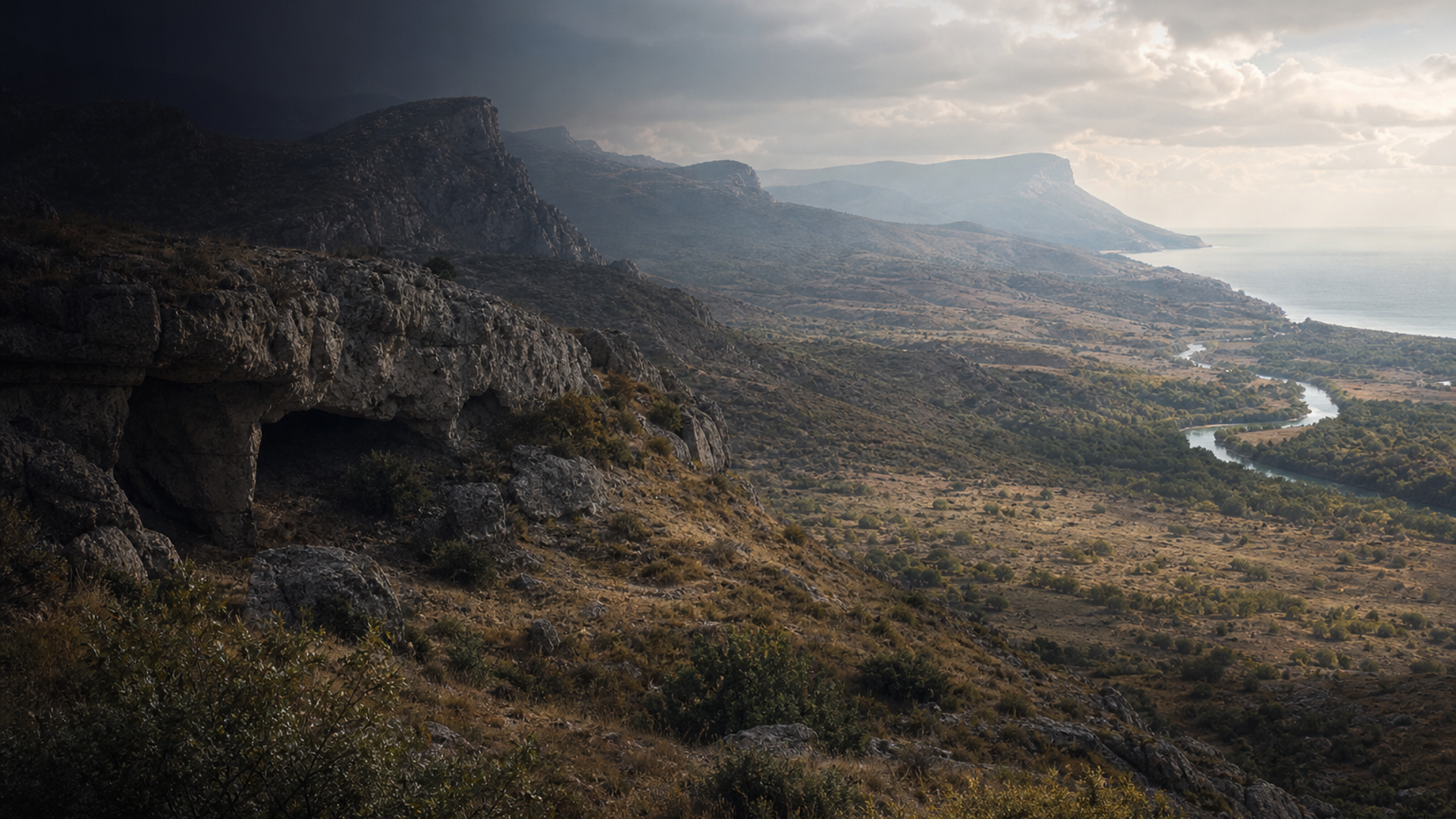
Imagine dawn mist lifting from a rocky inlet as small groups launch into the sea or strip the shoreline for shellfish; inland, hunters track deer and wild boar through oak and cork forests. Archaeological data indicates that Mesolithic lifeways in Spain were diverse and deeply tied to local environments. Coastal sites like Ḥou Amieva preserve evidence for marine foraging and repeated seasonal camps, while sites in the Valencian interior such as Casa Corona reflect a mixed terrestrial economy.
Material culture was lean and functional: chipped stone microliths, bone tools, simple hearth structures and ephemeral storage features. Social groups were likely small and kin‑based, with high mobility and flexible territorial use. Burial evidence in Iberia for this period is sparse but when present often occurs in caves or rock shelters, underscoring the symbolic importance of these landscapes. Artistic expression in the Mesolithic is less monumental than Paleolithic parietal art, but portable art and personal ornamentation appear intermittently, suggesting networks of social connection across the peninsula.
Skeletal and isotopic data remain limited for this specific sample set; therefore reconstructions of diet, mobility and social structure should be treated as provisional. The portraits we can draw are atmospheric and evidence‑based, but far from complete.