Mesolithic Spain: Echoes from the Caves

Download PDF creates a visual, rasterized copy. Use Print for selectable text and better assistive-technology support.

Skip to main content
Civilization Spotlight

Mesolithic Spain: Echoes from the Caves

Four ancient genomes (6849–5054 BCE) illuminate Iberian Mesolithic lifeways and ancestry

6849 CE - 5054 BCE
Iberian Peninsula (Spain)

The Story

Archaeogenetic and archaeological evidence from four Mesolithic individuals in Spain (6849–5054 BCE) links cave occupations at Ḥou Amieva and Casa Corona to wider Western Hunter‑Gatherer lineages. Results are intriguing but preliminary given the small sample size.

Time Period

6849–5054 BCE (Mesolithic)

Region

Iberian Peninsula (Spain)

Common Y-DNA

S (1), L (1) — tentative

Common mtDNA

U (4)

Timeline

6849 BCE

Earliest dated Spain_Mesolithic sample (Ḥou Amieva)

The oldest sampled individual in this set dates to c. 6849 BCE from the coastal site Ḥou Amieva (Llanes), offering a direct Mesolithic genomic snapshot.

Origins & Emergence

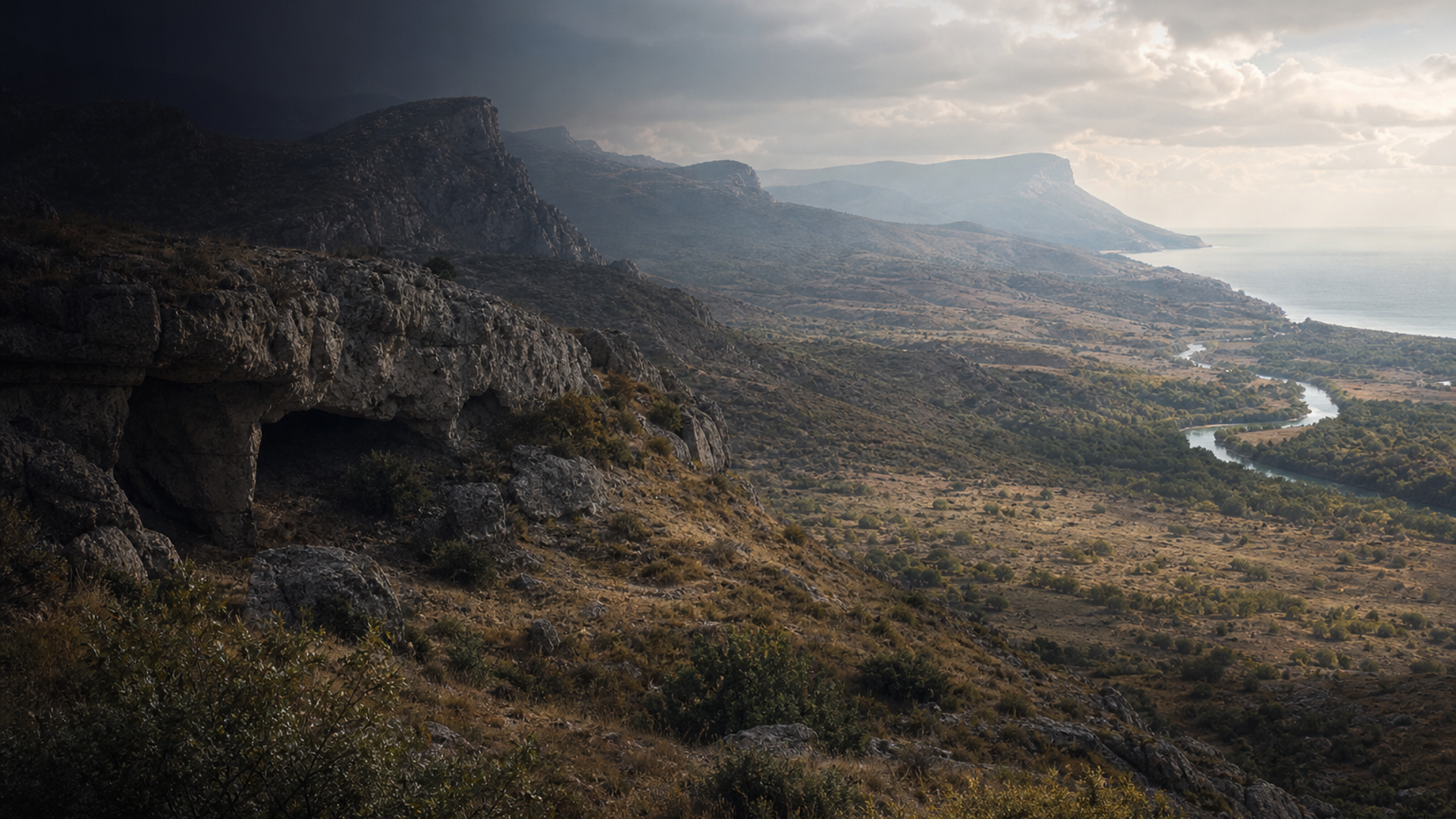
Across the ragged coastline and interior valleys of prehistoric Iberia, small bands of hunter‑gatherers carved a life between sea and mountain. The Spain_Mesolithic samples span roughly 6849–5054 BCE and come from two evocative locales: Ḥou Amieva near Llanes on the northern coast and Casa Corona in the Villena area of Alicante. Archaeological data indicates repeated cave and shelter occupations in this era, where seasonal fishing, shellfish collecting and inland hunting left traces of hearths, flint microliths and middens.

These individuals lived within what archaeologists term the Iberian Mesolithic Culture — a mosaic of coastal and interior adaptations rather than a single uniform society. Climatic amelioration after the Younger Dryas fostered rich coastal resources and expanded woodlands inland, creating diverse ecological niches. Limited evidence suggests mobility patterns that tracked seasonal resources: marine exploitation on the Cantabrian coast and mixed hunting–foraging strategies in eastern interior sites.

Because the genetic sample set is only four individuals, claims about population structure or migrations must be cautious. Nevertheless, when paired with stratified archaeological contexts at Ḥou Amieva and Casa Corona, these genomes provide a direct human voice from Iberia’s mid‑Holocene shores and caves — a cinematic fragment of life before farming reshaped the continent.

  • Samples date between 6849–5054 BCE from Ḥou Amieva and Casa Corona
  • Occupation of coastal caves and interior shelters with seasonal resource use
  • Part of the broader Iberian Mesolithic mosaic; interpretations remain cautious

Daily Life & Society

Imagine dawn mist lifting from a rocky inlet as small groups launch into the sea or strip the shoreline for shellfish; inland, hunters track deer and wild boar through oak and cork forests. Archaeological data indicates that Mesolithic lifeways in Spain were diverse and deeply tied to local environments. Coastal sites like Ḥou Amieva preserve evidence for marine foraging and repeated seasonal camps, while sites in the Valencian interior such as Casa Corona reflect a mixed terrestrial economy.

Material culture was lean and functional: chipped stone microliths, bone tools, simple hearth structures and ephemeral storage features. Social groups were likely small and kin‑based, with high mobility and flexible territorial use. Burial evidence in Iberia for this period is sparse but when present often occurs in caves or rock shelters, underscoring the symbolic importance of these landscapes. Artistic expression in the Mesolithic is less monumental than Paleolithic parietal art, but portable art and personal ornamentation appear intermittently, suggesting networks of social connection across the peninsula.

Skeletal and isotopic data remain limited for this specific sample set; therefore reconstructions of diet, mobility and social structure should be treated as provisional. The portraits we can draw are atmospheric and evidence‑based, but far from complete.

  • Coastal and interior resource use: marine foraging and mixed hunting
  • Small, mobile, kin‑based groups with cave/shelter occupations

Genetic Profile

The genetic signal from these four Spain_Mesolithic individuals is a rare, direct window into Mesolithic Iberian ancestry. All four samples carry mitochondrial haplogroup U — a lineage strongly associated with European hunter‑gatherer populations (often categorized under the Western Hunter‑Gatherer cluster). This matrilineal continuity aligns the individuals with a broad continental pattern: Mesolithic Europe was dominated by mtDNA U lineages, reflecting deep Paleolithic roots and regional continuity.

Y‑chromosome assignments are more ambiguous in this dataset. Two different haplogroups are reported (S and L), each represented once. Both S and L are uncommon in well‑sampled European Mesolithic contexts; their presence here should be treated with caution. Low sample count (n=4), potential low coverage, and challenges in haplogroup resolution for ancient male Y‑DNA can produce surprising assignments. Archaeogeneticists typically flag such results as provisional until higher coverage sequences or additional male samples corroborate them.

Beyond haplogroups, these genomes help calibrate the genetic landscape of pre‑Neolithic Iberia: the mtDNA U signal corroborates archaeological expectations of WHG‑related ancestry, while the ambiguous Y‑lineages highlight how sparse sampling can create apparent anomalies. Overall, the data are intriguing but preliminary; broader sampling is required to resolve paternal lineages and finer population structure.

  • All four individuals carry mtDNA U, consistent with Western Hunter‑Gatherer ancestry
  • Y‑DNA assignments (S, L) are unexpected and tentative given low sample count

Legacy & Modern Connections

These Mesolithic genomes contribute to a layered story of Iberian prehistory. Matrilineal markers (mtDNA U) tie Spain’s Mesolithic inhabitants to a continent‑wide hunter‑gatherer heritage that predates the arrival of farming. However, the Neolithic transition and later Bronze Age movements substantially reshaped Iberia’s genetic makeup, so direct one‑to‑one continuity with modern populations is limited.

Archaeologically and genetically, the Spain_Mesolithic individuals serve as essential benchmarks: they anchor models of ancestry, migration and interaction before agriculture spread. The small sample size means that any connections to modern haplogroup frequencies or regional traits must be drawn carefully. Future discoveries and broader ancient DNA sampling across Iberia will refine how these early voices fit into the long, dramatic tale of Mediterranean and Atlantic Europe.

  • mtDNA U links Mesolithic Iberians to broader European hunter‑gatherer ancestry
  • Substantial later population changes mean modern continuity is partial and complex

AI Assistant

AI Assistant by DNAGENICS

Unlock this feature
Ask questions about the Mesolithic Spain: Echoes from the Caves culture. Our AI assistant can explain genetic findings, historical context, archaeological evidence, and modern connections.
Sample AI Analysis

The Mesolithic Spain: Echoes from the Caves culture represents a fascinating chapter in human history...

Genetic analysis reveals connections to earlier populations while showing evidence of unique adaptations and cultural innovations. The ancient DNA samples provide insights into migration patterns, social structures, and the biological relationships between ancient populations.

This is a preview of the AI analysis. Unlock the full AI Assistant to explore detailed insights about:

  • Genetic composition and ancestry
  • Migration patterns and origins
  • Daily life and cultural practices
  • Modern genetic legacy
Use code for 30% off • Expires Nov 14




