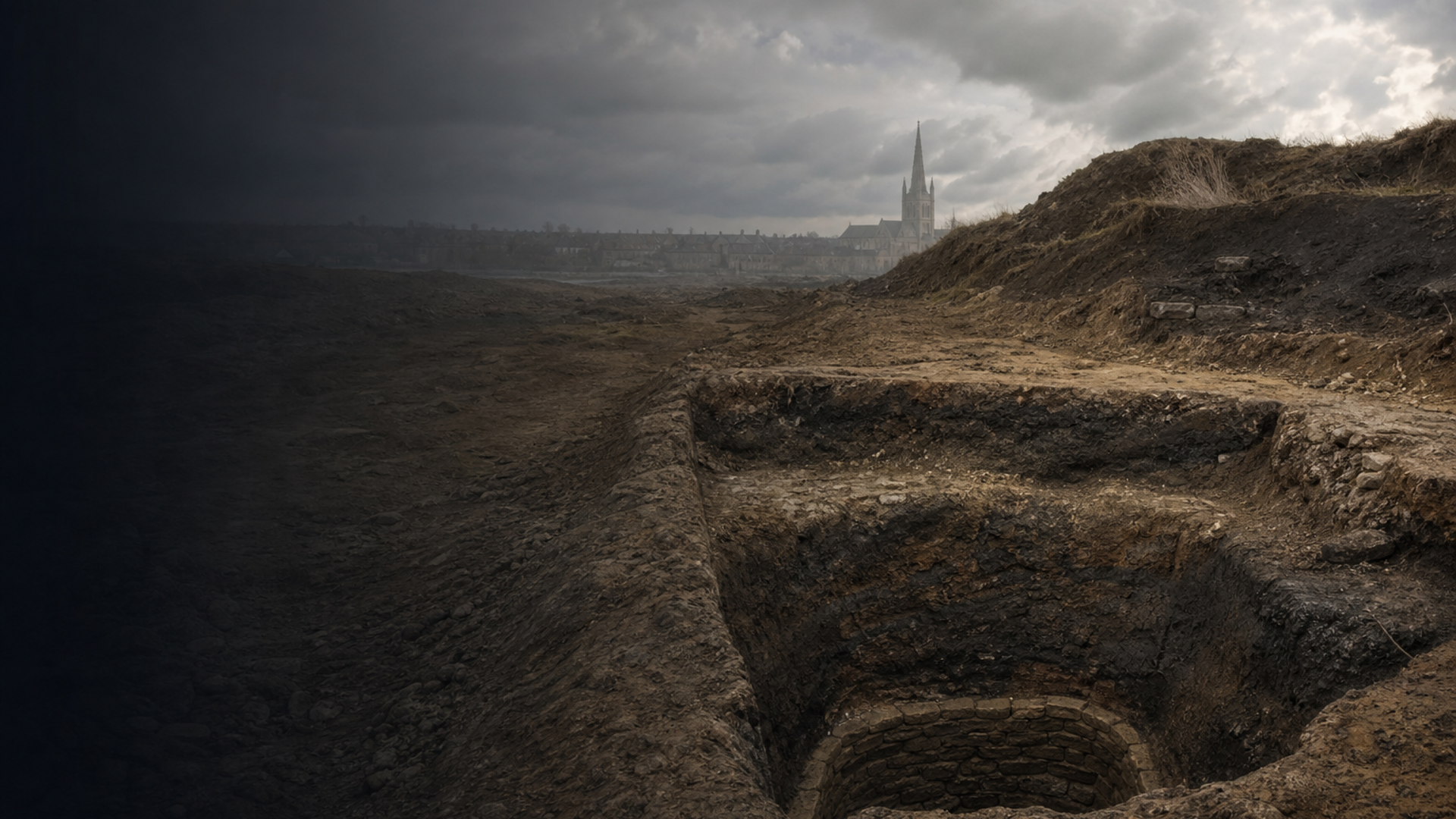
Archaeological landscapes of medieval Norwich describe a bustling port and market town where merchants, artisans, and clerics intersected. Documentary sources for medieval English Jewish communities record roles in moneylending, trade, and household services—occupations that left uneven material signatures in the urban record. The well shaft context suggests accidental or secondary deposition rather than formal burial practice; wells and pits in medieval towns were often used as refuse, emergency burial, or deliberate concealment during crisis.
Cinematic images emerge from the fragments: narrow lanes, stone houses, market stalls, and the constant movement of goods and people. Archaeobotanical and artefactual evidence from Norwich more broadly indicates diet based on cereals, legumes, fish, and imported luxury goods for those connected to trade networks. Yet caution is essential: the well assemblage itself offers limited direct evidence of belief, ritual, or specific occupations. Bone preservation can hint at health stresses and diet, but disentangling cultural identity from urban taphonomy requires integrating documentary records, larger cemetery samples, and further DNA sampling.
Given the small sample size, any narrative of daily life drawn from these six individuals must remain provisional. Archaeology provides texture—the urban noise and material detail—while genetics offers lines of ancestry; together they create a layered portrait that invites, but does not yet confirm, specific life histories.