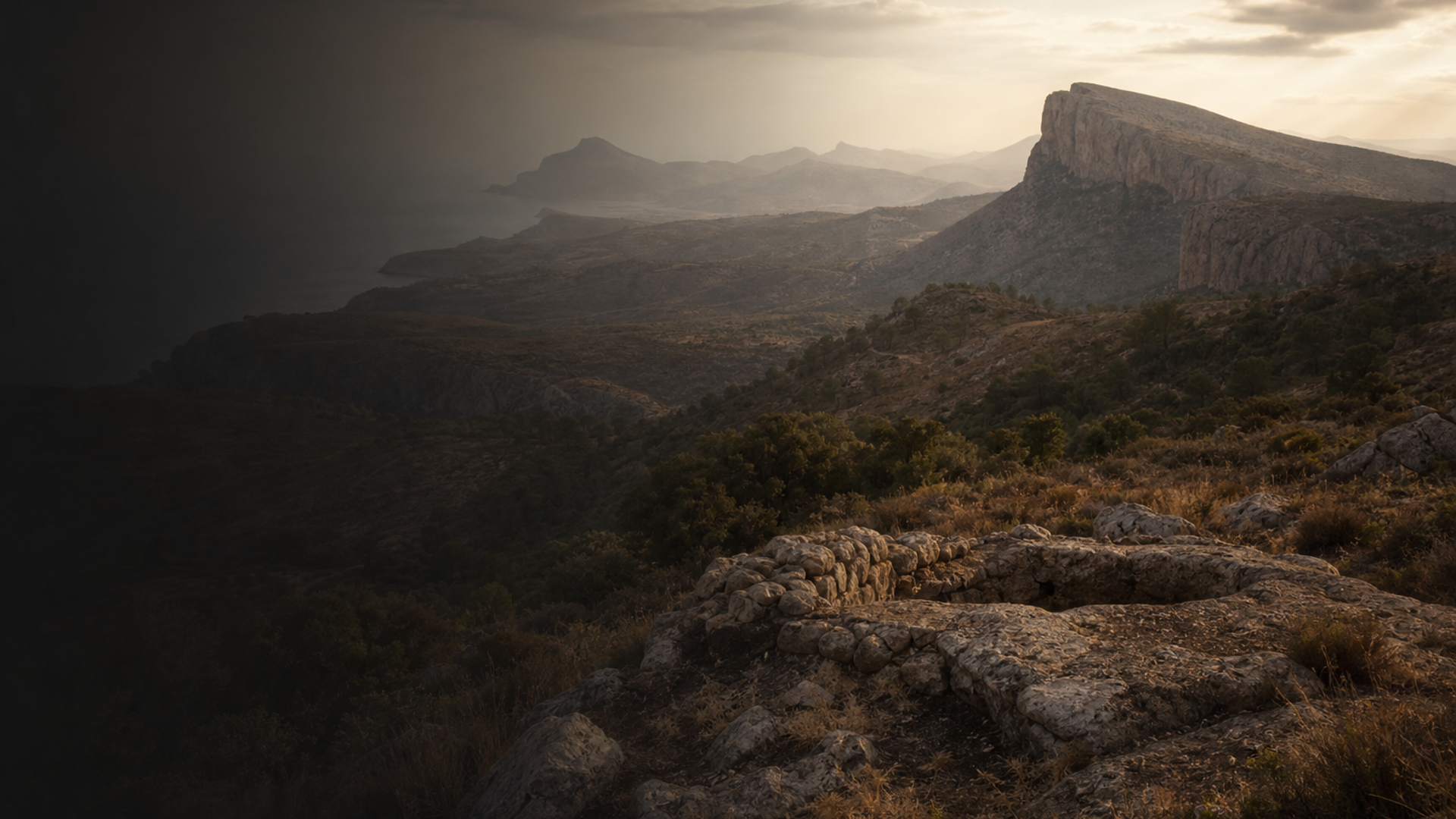
Archaeological contexts in southeast Iberia reveal communities balancing farming, herding, and burgeoning metallurgical craft. Settlement traces around Villena and Aspe suggest defended hilltop occupations and lowland fields — landscapes shaped by seasonal work and long-distance exchange routes. Pottery styles, bronze artifacts, and structured deposits indicate households engaged with wider Bronze Age networks along the Mediterranean coast.
Grain storage, animal husbandry, and small-scale craft workshops would have structured daily rhythms. Social differentiation is visible in burial offerings and settlement architecture in the broader region; however, linking specific social roles to these six individuals is not possible without more contextual data. Osteological indicators in regional assemblages hint at varied workloads and diet, consistent with mixed farming economies and access to marine and terrestrial resources.
In short, the human scene was one of practical ingenuity — fields, forges, and coastal trade punctuated by seasonal ritual and communal memory — but direct ties between these behaviors and the sequenced individuals remain cautious and inferential.