Zum Hauptinhalt springen
mtDNA · Mütterliche Linie

ND1B1

mtDNA Haplogroup ND1B1

Ein Referenzprofil für einen Abstammungszweig. Gemeinsame Haplogruppen begründen weder eine familiäre Beziehung noch eine kulturelle Identität.

Referenzprofil

Hintergrund des Zweigs

Historischer Kontext für den mtDNA-Abstammungszweig ND1B1

Origins and Evolution

mtDNA haplogroup ND1B1 descends from the broader ND1B branch and is best interpreted as part of the East–Northeast Asian maternal phylogeography that formed during the Late Pleistocene. Based on phylogenetic position within ND1 and the inferred coalescence time of its parent branch, ND1B1 most likely arose around ~28 kya in northeastern Eurasia or adjacent East Asian coastal regions. Its emergence falls into a period of regional population structure when humans occupying Siberia, the Russian Far East, and northern Japan were differentiating into lineages that later contributed to the genetic makeup of Holocene hunter–gatherer groups.

Genetic continuity in some areas and local founder effects have preserved ND1B1 and downstream variants through the Last Glacial Maximum into the early Holocene. A small number of ancient DNA hits (six in the referenced database) place ND1B1 directly into archaeological contexts in northeastern Eurasia, supporting a Paleolithic to early Holocene persistence rather than a purely recent introduction.

Subclades (if applicable)

As a downstream clade of ND1B, ND1B1 itself appears to have internal variation, with locally enriched sublineages in coastal forager and island populations (notably northern Japan and adjacent coastal Siberia). Downstream variants show patchy distribution consistent with:

  • Coastal forager specialization: certain ND1B1 sub-lineages are overrepresented in seafaring and littoral archaeological samples, suggesting maritime foraging and localized founder events.
  • Island persistence: distinct ND1B1-derived haplotypes occur among Ainu and Jomon-descended groups, consistent with long-term isolation and genetic drift.

Ongoing mitogenome sequencing continues to refine subclade structure; many named downstream haplotypes will be resolved as sample sizes and complete mitochondrial genomes increase for northeastern Eurasian and ancient samples.

Geographical Distribution

Today ND1B1 is most frequently observed in Northeast Asian and Siberian groups, with moderate presence among mainland East Asian populations and low-frequency detections beyond this core area. Typical geographic patterns include:

  • High or moderate frequencies in Siberian Tungusic, Mongolic, and some Yakut populations.
  • Detectable presence among Han Chinese, Koreans, and Japanese at low-to-moderate frequencies, often represented by different local subvariants.
  • Enrichment in northern Japan among Ainu and in ancient Jomon-associated samples, where specific ND1B1 lineages document long-term maternal continuity.
  • Scattered, low-frequency occurrences in Central Asia, the Tibetan/Himalayan region, and parts of Southeast Asia that are best explained by Holocene east–west contacts, recent gene flow, or founder effects.

Sampling bias (geography and resolution of mitogenomes) affects apparent frequencies; increased ancient and modern mitogenome coverage helps clarify true distributions.

Historical and Cultural Significance

ND1B1 is useful for reconstructing several aspects of northeastern Eurasian prehistory:

  • Paleolithic continuity: its presence in Late Pleistocene and early Holocene contexts supports genetic continuity in parts of Siberia and the Russian Far East.
  • Jomon and Ainu connections: enrichment of ND1B1 downstream variants among the Ainu and in Jomon-associated remains links these populations to broader Paleolithic Northeast Asian maternal variation and underscores regional persistence on northern Japanese islands.
  • Coastal foraging and maritime dispersals: associations of some ND1B1 sublineages with coastal archaeological contexts point to the role of littoral resource use and small-scale marine-oriented dispersals in shaping mitochondrial diversity.
  • Markers of east–west contact: low-level ND1B1 detections in Central Asia and the Tibetan Plateau reflect Holocene mobility and contacts between eastern and central Eurasian populations rather than primary colonization events.

Caveats: because mtDNA tracks a single maternal lineage, ND1B1 should be interpreted alongside genome-wide and Y-chromosome data to reconstruct demographic processes fully.

Conclusion

mtDNA haplogroup ND1B1 is a diagnostically northeastern Eurasian maternal lineage that originated in the Late Pleistocene and persisted into the Holocene, with particular relevance to understanding the peopling and regional continuity of Siberia, Northeast Asia, and northern Japan. While not numerically dominant across broad East Asia, its patterned enrichment in specific forager and island populations (and presence in ancient remains) makes it a valuable marker for tracing Paleolithic–Holocene demographic structure and coastal forager histories. Continued ancient mitogenome sampling and high-resolution phylogenetic work will further refine its subclade topology and migratory implications.

Wichtige Punkte

  • Origins and Evolution
  • Subclades (if applicable)
  • Geographical Distribution
  • Historical and Cultural Significance
  • Conclusion
Referenzprofil

Baum und Verwandtschaft

Phylogenetischer Kontext und Subkladen

Entwicklungsweg

Folgen Sie den erfassten übergeordneten Zweigen bis ND1B1. Die Daten sind Schätzungen und können sich ändern, wenn Referenzdaten überarbeitet werden.

Schritte Haplogruppe Altersschätzung Archäologische Epoche Vergangene Zeit Unmittelbare Nachkommen Getestete moderne Nachkommen Antike Verknüpfungen
1 ND1B1 Aktuell ~28,000 years ago Paleolithic 28,000 Jahre 1 0 0
2 ND1B ~28,000 years ago Paleolithic 28,000 Jahre 2 0 0
3 ND1 ~42,000 years ago Paleolithic 42,000 Jahre 2 0 0
4 ND ~45,000 years ago Paleolithic 45,000 Jahre 1 0 12
5 N ~60,000 years ago Paleolithic 60,000 Jahre 16 26,150 13
6 L3 ~70,000 years ago Paleolithic 70,000 Jahre 7 30,162 6
7 L3'4 - - - 2 30,212 0
8 L3'4'6 - - - 2 30,216 0
9 L2'3'4'6 - - - 2 31,333 0
10 L2'3'4'5'6'7 - - - 2 31,349 0
11 L1'2'3'4'5'6'7 - - - 2 31,852 0
12 L ~160,000 years ago Paleolithic 160,000 Jahre 2 32,236 5

Geschwisterzweige (1)

Weitere Zweige derselben übergeordneten Haplogruppe

Referenzprofil

Verbreitung weltweit

Geografische Verbreitung und moderne Präsenz

Erfasster Ursprung

East / Northeast Asia

Moderne Verbreitung

The populations where mtDNA haplogroup ND1B1 is found include:

  1. East Asian populations (Han Chinese, Japanese, Koreans)
  2. Northeast Asian and Siberian groups (Yakut, Evenks, various Tungusic and Mongolic peoples)
  3. Ainu and Jomon-descended populations of northern Japan
  4. Indigenous peoples of Arctic and subarctic regions (where related D/ND1 lineages occur)
  5. Tibetan and Himalayan populations (low to moderate, localized occurrences)
  6. Central Asian minorities (low frequencies reflecting east–west contact)
  7. Coastal East Asian forager/seafaring groups (enrichment of specific downstream variants)
  8. Ancient Paleolithic and early Holocene remains from Siberia and northeastern Eurasia (archaeogenetic contexts)
  9. Small, localized occurrences in parts of Southeast Asia (downstream dispersals or genetic drift)
  10. Sporadic / low-frequency detections in broader East Eurasian datasets (reflecting historic gene flow and sampling variance)
Historischer Kontext

Ein Zweig durch die Zeit

Geschätzte Entstehung in einer breiten historischen Zeitleiste. Zeitmarken liefern Kontext und implizieren keine Verbindung zu bestimmten Kulturen.

  1. ~28k Jahre zurück

    Haplogruppe ND1B1

    Geschätzte Entstehung dieses mtDNA-Zweigs; Daten und Orte sind Referenzschätzungen.

    Dieser Zweig
  2. ~20k Jahre zurück

    Letztes glaziales Maximum

    Höhepunkt der letzten Eiszeit, isolierte Bevölkerungen

  3. ~10k Jahre zurück

    Neolithische Revolution

    Beginn der Landwirtschaft und feste Siedlungen

  4. ~5k Jahre zurück

    Bronzezeit

    Metallverarbeitung, Schrift und frühe Zivilisationen

  5. ~3k Jahre zurück

    Eisenzeit

    Eisenwerkzeuge und ausgedehnte Handelsnetze

  6. ~2.5k Jahre zurück

    Klassische Antike

    Blüte griechischer und römischer Kulturen

  7. Gegenwart

    Gegenwart

    Moderne Zeit

Referenzprofil

Archäologischer Kontext

Erfasste archäologische Zuordnungen für den mtDNA-Zweig ND1B1

Erfasste Zuordnungen

Diese Bezeichnungen beschreiben archäologische Kontexte erfasster Referenzproben mit Bezug zu ND1B1. Eine Zuordnung bedeutet nicht, dass alle Träger einer Kultur angehörten oder einer bestimmten Migrationsroute folgten.

Altai Neanderthal Chagyrskaya Les Cottes Mezmaiskaya Paleolithic Cultures Peștera cu Oase Vindija
Kulturzuordnungen basieren auf dem archäologischen Kontext antiker DNA-Proben und können regionale Verknüpfungen in bestimmten Zeiträumen widerspiegeln.
Referenzprofil

Probencatalog

7 Subkladen-Träger der Haplogruppe ND1B1 (keine direkten Träger in der aktuellen Referenzauswahl)

7 angezeigt · 7 passende Proben

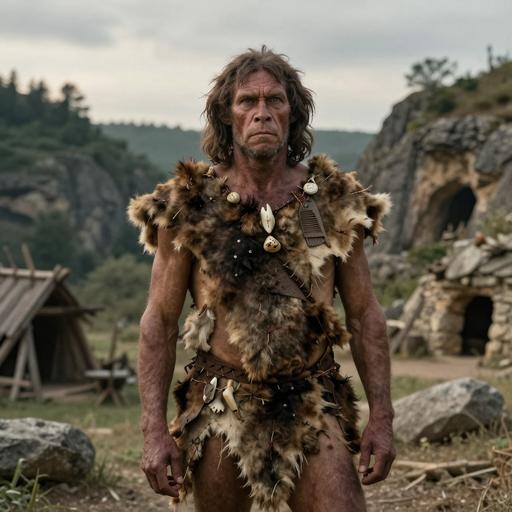
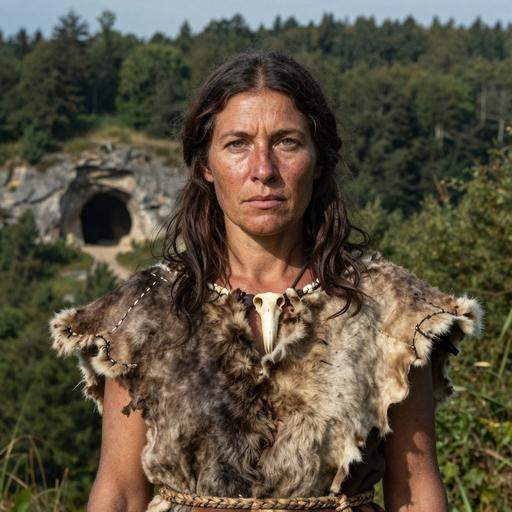
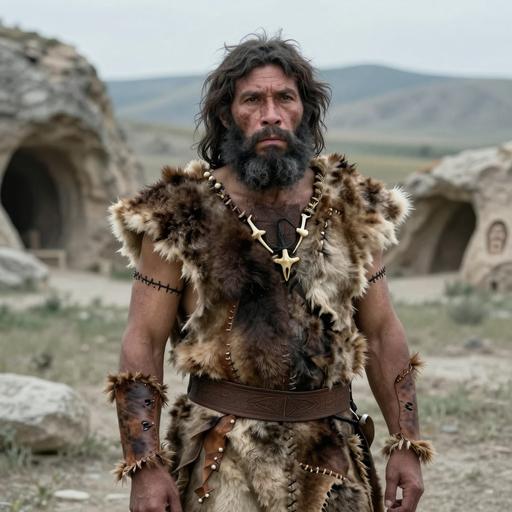
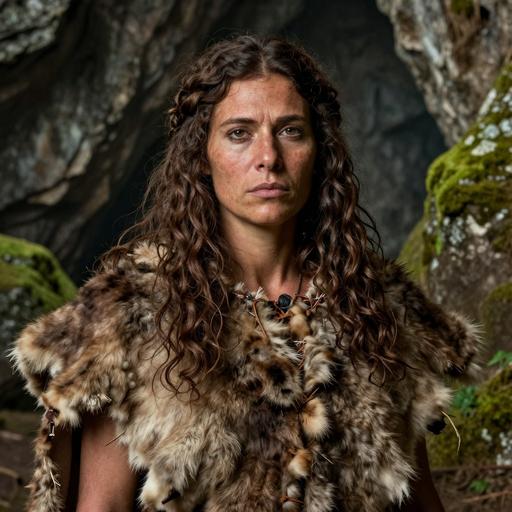
Porträts sind KI-generierte Illustrationen. Probenbezeichnungen und Zugangs-IDs identifizieren die Referenzdatensätze.

Porträt Probe Land Epoche Datum Kultur mtDNA Übereinstimmung
KI-generiertes illustratives Porträt von Neanderthal individual, Spy Cave, Belgium (39,431-38,495 BCE)
Proben-ID: Spy_final
Belgium Spy Neanderthal, Belgium 39431 BCE - 38495 BCE Spy Culture ND1b1a1b2* Subklade
KI-generiertes illustratives Porträt von Neanderthal individual, Spy Cave, Belgium (39,431-38,495 BCE)
Proben-ID: Spy_final
Belgium Neanderthals 39431 BCE - 38495 BCE ND1b1a1b2* Subklade
KI-generiertes illustratives Porträt von Neanderthal individual, Goyet Cave, Belgium (40,782-40,217 BCE)
Proben-ID: Goyet_final
Belgium Goyet Cave Neanderthal 40782 BCE - 40217 BCE Goyet Culture ND1b1a1b2a Subklade
KI-generiertes illustratives Porträt von Neanderthal individual, Goyet Cave, Belgium (40,782-40,217 BCE)
Proben-ID: Goyet_final
Belgium Neanderthals 40782 BCE - 40217 BCE ND1b1a1b2a Subklade
KI-generiertes illustratives Porträt von Neanderthal individual, Mezmaiskaya, Russia (43,015-40,206 BCE)
Proben-ID: Mezmaiskaya2_final
Russia Mezmaiskaya 2 Neanderthal 43015 BCE - 40206 BCE Mezmaiskaya ND1b1a* Subklade
KI-generiertes illustratives Porträt von Neanderthal individual, Mezmaiskaya, Russia (43,015-40,206 BCE)
Proben-ID: Mezmaiskaya2_final
Russia Neanderthals 43015 BCE - 40206 BCE ND1b1a* Subklade
KI-generiertes illustratives Porträt von Neanderthal individual, Vindija Cave, Croatia (43,500-45,300 BCE)
Proben-ID: Vindija
Croatia Vindija Neanderthal, Croatia 43500 BCE - 45300 BCE Vindija ND1b1a1b1 Subklade
MATERNAL LINEAGE · ANCIENT DNA

Ancient lineage evidence map

Follow parent clades toward this branch and explore where ancient carriers were found.

Loading ancient observations…

Markers are archaeological find locations. A dashed connector is an uncertain, proposed geographic transition between consecutive branches supported by multiple dated observations; it is not an exact travel route, birthplace or proof of direct descent. Parent-clade samples may belong to other descendant branches. Gaps remain where evidence is insufficient. Sample dates differ from haplogroup formation dates.

Referenzprofil

Trägerverteilungskarte

Geografische Verteilung von 7 antiken DNA-Proben (direkte und Subkladen-Träger von ND1B1)

Subkladen-Träger
Zeitraumfilter
Alle Zeiträume
Alle Proben werden angezeigt
Referenzprofil

Zeitliche Verteilung

Verteilung der Träger über archäologische Epochen

Referenzprofil

Geografische Verteilung

Anzahlen nach erfasstem Probenland. Sie spiegeln die verfügbare Referenzauswahl wider, nicht Bevölkerungshäufigkeiten.

Referenzprofil

Verteilung Land × Epoche

Vergleichen Sie erfasste Probenanzahlen nach Ländern und archäologischen Epochen. Wählen Sie eine belegte Zelle, um eine Probe anzusehen.

Daten

Daten und Herkunft

Quellenangaben und Datenqualität

Zuletzt aktualisiert 2026-02-16
Konfidenzwert 50/100
Abdeckung Low

Datenquelle

Klassifikation, geschätzte Daten und geografischer Kontext spiegeln die erfassten Referenzdaten wider und können sich bei überarbeiteten Belegen ändern. Die Probenabdeckung ist ungleichmäßig; erfasste Orte und archäologische Zuordnungen begründen weder persönliche Herkunft noch kulturelle Identität.