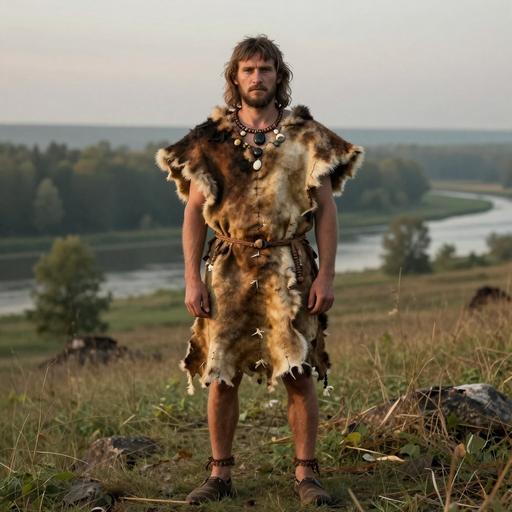
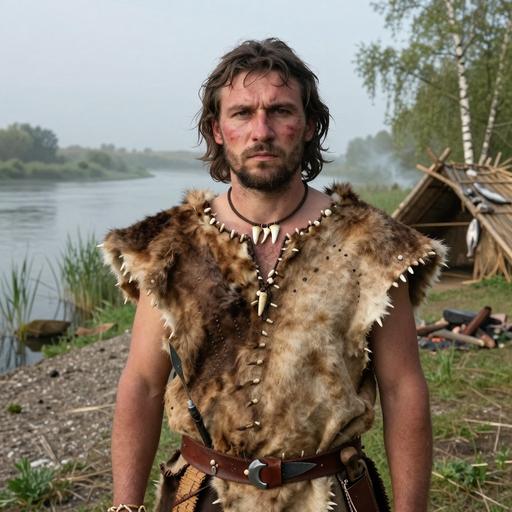
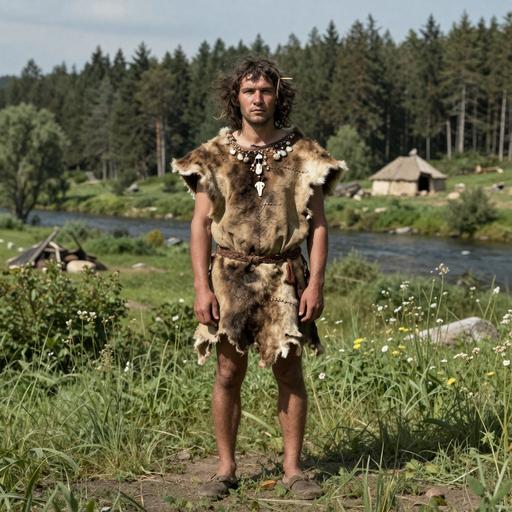
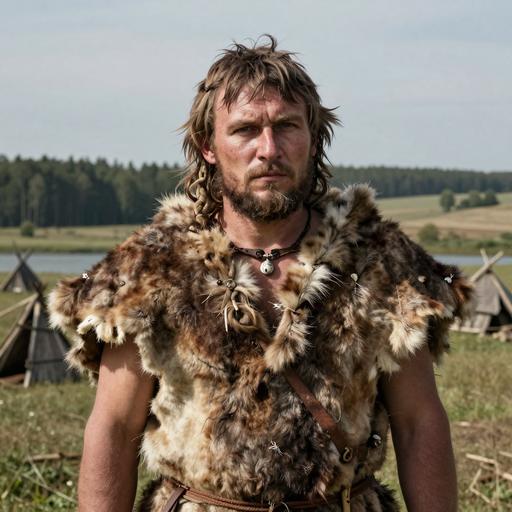
Echoes of Eastern Hunter‑Gatherers

下载的 PDF 是图像副本。如需可选中文本及更好的辅助技术支持,请使用打印功能。

Echoes of Eastern Hunter‑Gatherers

揭开一个失落的文明

正在加载考古记录……

正在收集古代记录

跳转到主内容
Echoes of Eastern Hunter‑Gatherers
文明焦点

Echoes of Eastern Hunter‑Gatherers

Mesolithic peoples of the East European Plain revealed by archaeology and ancient DNA

10509 CE - 4251 BCE
Ukraine, Russia (East European Plain)
20 Ancient Samples
滚动开始
Chapter I

剧情

了解 Echoes of Eastern Hunter‑Gatherers 文化

Archaeological and genomic evidence from 28 individuals (10509–4251 BCE) illuminates the lifeways and genetic profile of Eastern European Hunter‑Gatherers across Ukraine and Russia, highlighting riverine mobility, maternal U lineages, and a predominantly EHG ancestry component.

Time Period

10509–4251 BCE

Region

Ukraine, Russia (East European Plain)

Common Y-DNA

I (6), R (6), Q (4), R1b (1), F (1)

Common mtDNA

U (14), K1 (2), T (2), H (2), U4b (1)

Chapter II

时间线

这种文化历史上的关键时刻

10509 BCE

Earliest sampled individuals

Human remains dated to ca. 10,509 BCE document early post‑glacial occupation of the East European Plain.

4251 BCE

Late Mesolithic transitions

By ca. 4,251 BCE archaeological and genetic patterns begin to show increased regional variability and contacts with Neolithic traditions.

Chapter III

Origins & Emergence

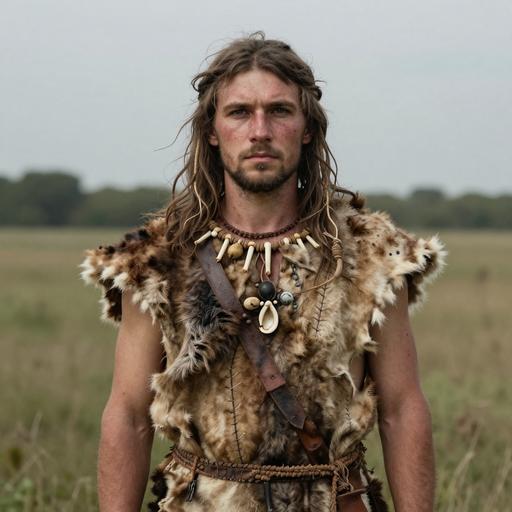
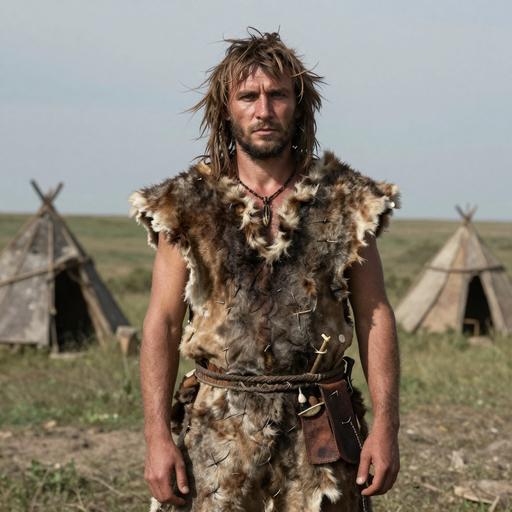
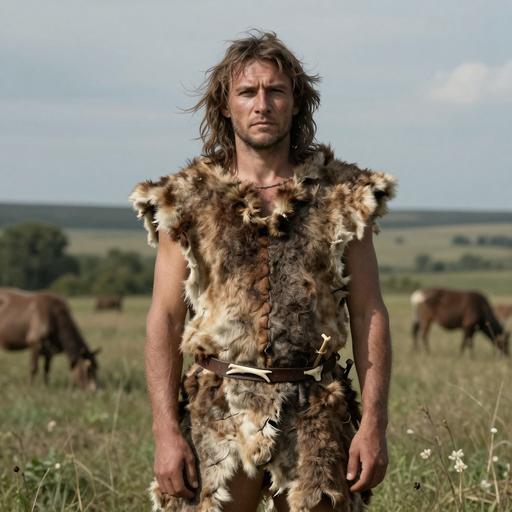
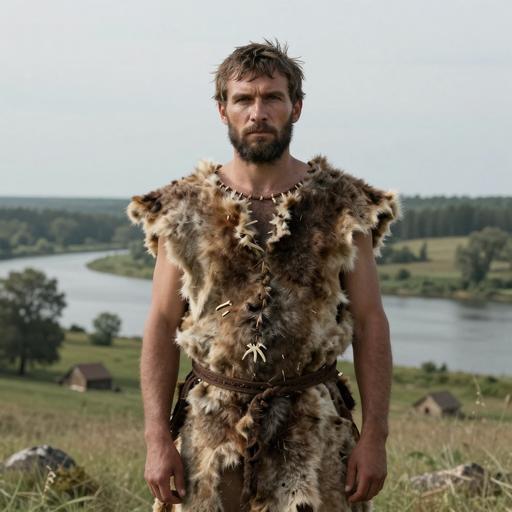
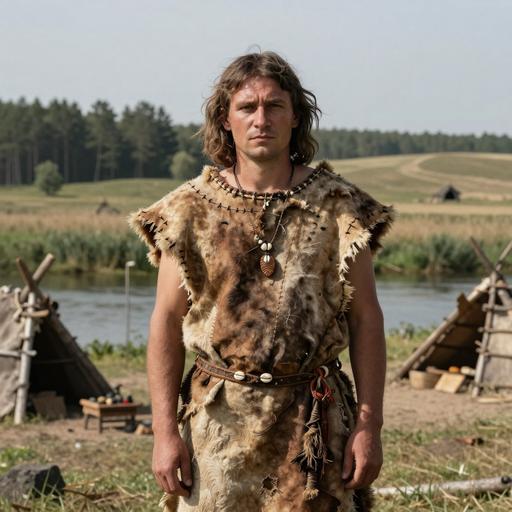
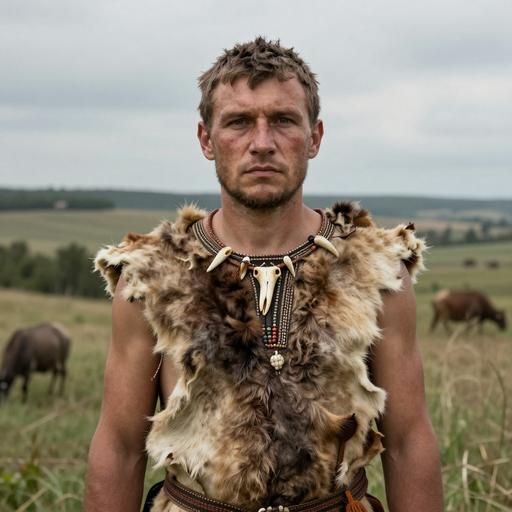
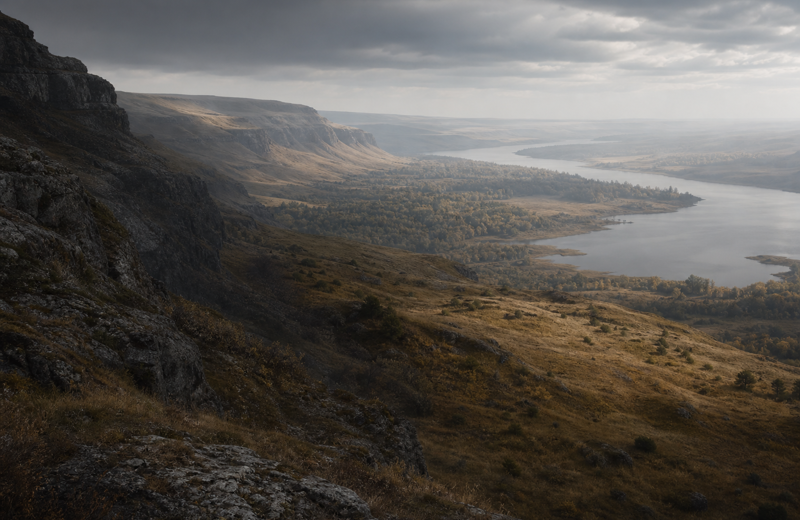
When the ice retreated and forests and rivers reclaimed the plain, small bands of hunter‑gatherers pushed back into the East European landscape. Archaeological data from sites such as Dereivka I, Vasil'evka, Vasylivka-1 and -3, Karavaikha 1, and Berendeyevo (Yaroslavl) document repeated occupation from the early Holocene through the late Mesolithic (ca. 10,509–4,251 BCE). Material assemblages preserved in these riverine and floodplain contexts point to a long-standing adaptation to steppe‑forest margins: microlithic toolkits, bone implements, and locality‑specific raw material use.

Genetic sampling of 28 individuals spanning this interval suggests a population that fits broadly within the Eastern European Hunter‑Gatherer (EHG) genetic horizon. This genomic signal implies deep continuity on the East European Plain while also leaving room for contacts with neighboring groups to the north and east. Archaeological affinities with the Mesolithic Veretye traditions in parts of the Vologda region and later overlaps with Neolithic Volosovo‑Lyalovo material hint at cultural continuities and gradual local change rather than abrupt replacement.

Limited evidence constrains fine‑scale models: localized site sequences and sparse preservation mean that regional patterns are still being refined, and interpretations should be seen as provisional pending further excavation and genomic sampling.

  • Post‑glacial recolonization of East European Plain (ca. 10,500 BCE onward)
  • Key sites: Dereivka I, Vasil'evka, Vasylivka, Karavaikha 1, Berendeyevo
  • Archaeology and aDNA indicate an EHG‑aligned population with local continuity
Chapter IV

Daily Life & Society

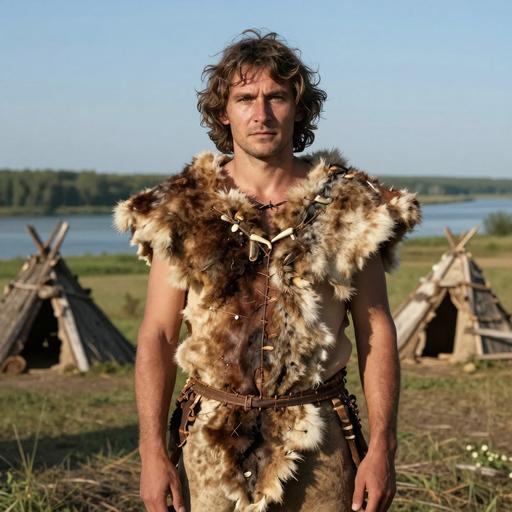
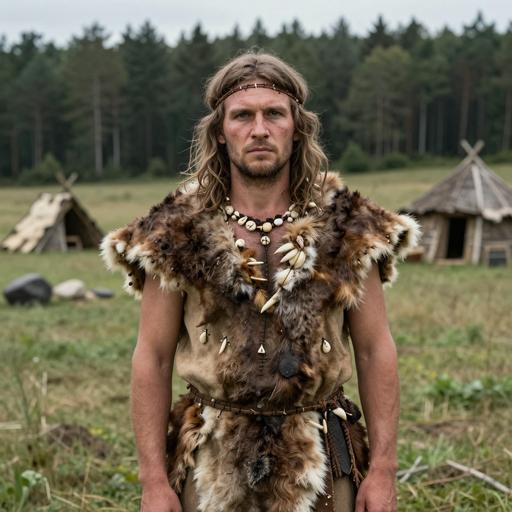
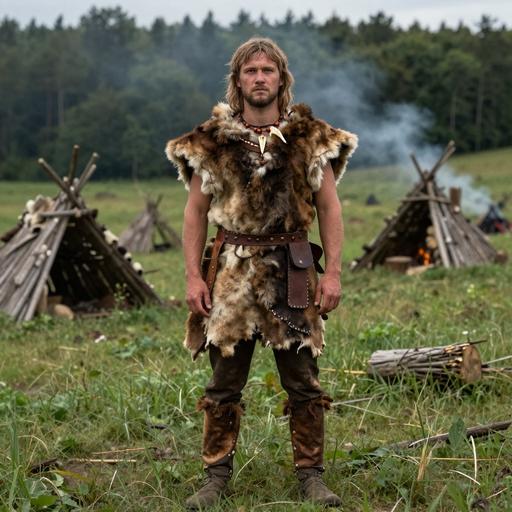
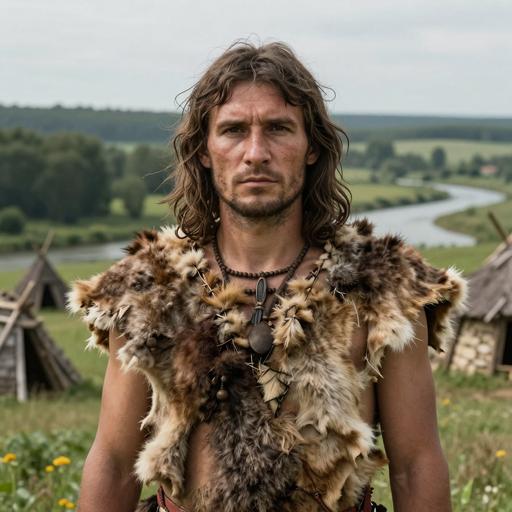
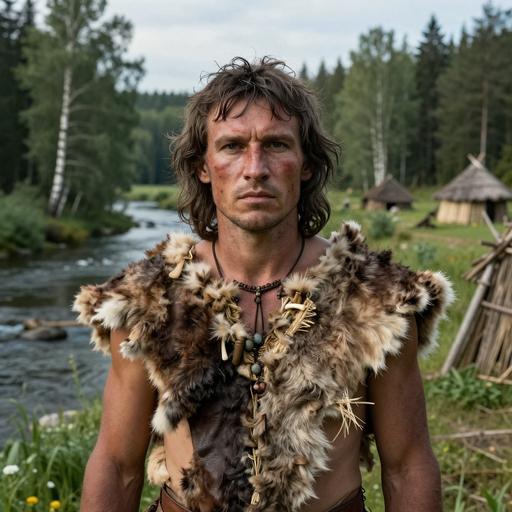
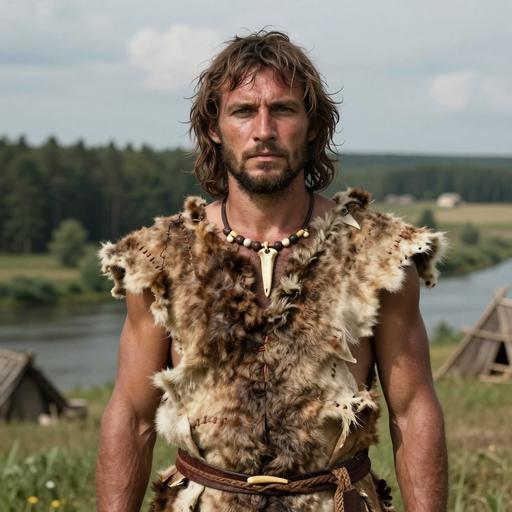
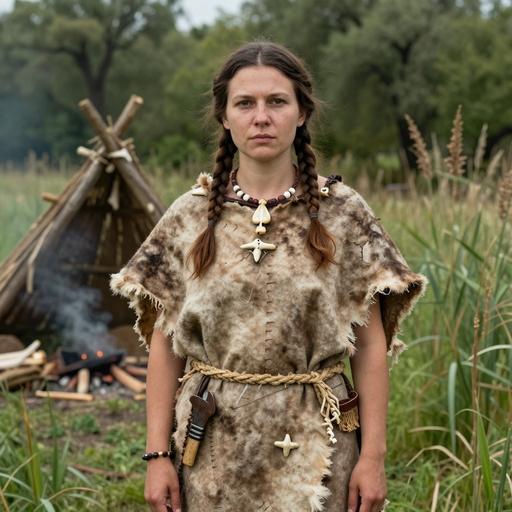
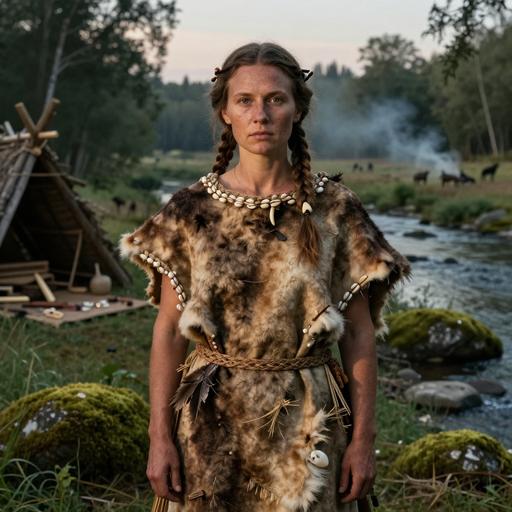
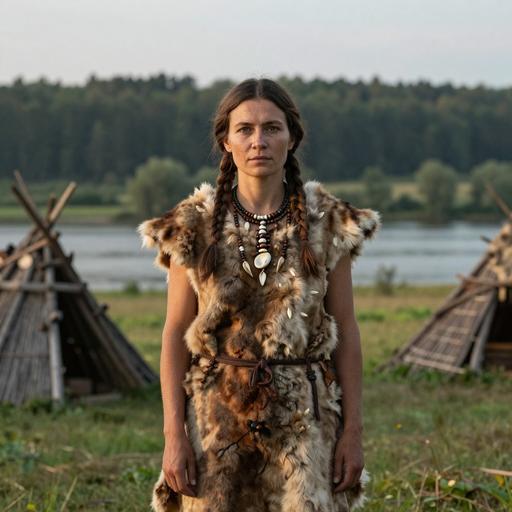
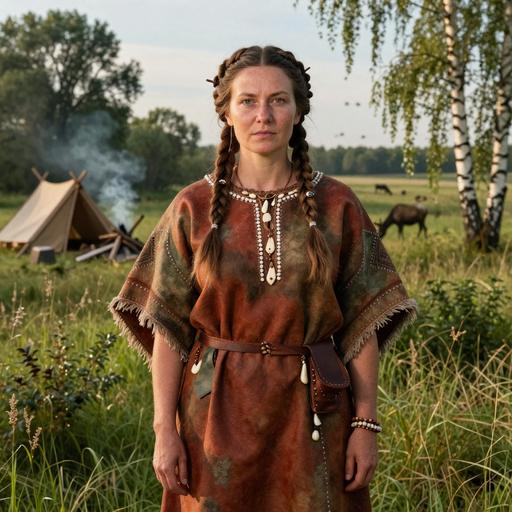
Archaeological traces paint a cinematic but pragmatic picture of Mesolithic life along rivers and wetlands. Camps and kill sites clustered near the Dnipro and smaller tributaries exploited a rich mosaic of fish, waterfowl, and large ungulates; archaeological data indicates heavy reliance on seasonally available riverine resources. Lithic evidence shows standardized microliths and retouched blades suitable for composite hunting implements, while worked bone and antler point to specialized fishing and sewing technologies.

Burials and disarticulated human remains recovered at several sampling locations provided the biological material for ancient DNA studies and, where preserved, offered taphonomic glimpses into mortuary practice. Communities were likely small, kin‑based, and mobile, tracking seasonal fisheries, rutting herds, and plant resources across a shifting landscape. Material culture displays local variability rather than a single uniform tradition: Veretye‑period elements appear in the north (Vologda), while southern sites near the Dnipro show distinct toolstone choices.

Because preservation and excavation intensity vary by site, reconstruction of social structure and ritual must remain cautious. Nevertheless, the archaeological record supports a resilient, adaptive lifeway sustained across millennia on the East European Plain.

  • Riverine and wetland subsistence: fish, waterfowl, and large mammals
  • Microlithic and bone tool industries; small, mobile kin groups
Chapter V

Genetic Profile

The genetic dataset for this cultural grouping comprises 28 dated individuals from Ukraine and northwest Russia (range 10,509–4,251 BCE). Maternal lineages are dominated by haplogroup U (14/28), a pattern repeatedly associated with European Mesolithic hunter‑gatherers. Secondary mtDNA lineages (K1, T, H, and U4b) occur in smaller numbers; these suggest limited maternal diversity and potential episodic contacts with neighboring groups or later admixture events.

On the paternal side, Y‑DNA shows a plurality of haplogroups: I (6) and R (6) are the most frequent, with Q present in four individuals and single occurrences of R1b and F. The presence of Q, in particular, may reflect eastern or northeastern gene flow into the East European Plain, while the coexistence of I and R lineages is consistent with a heterogeneous hunter‑gatherer population structure. Overall autosomal profiles (contextualized by broader studies of the region) are consistent with an Eastern European Hunter‑Gatherer (EHG) component that is distinct from Western Hunter‑Gatherer (WHG) groups further west.

Because sample counts per individual site can be small even though the total is 28, local patterns should be treated cautiously. The dataset is substantial enough to support a regional portrait of EHG‑aligned ancestry, but finer inferences about migration routes and micro‑demography await additional genomes and isotopic integration.

  • mtDNA dominated by U (14/28), typical of European Mesolithic maternal lineages
  • Y‑DNA plurality: I and R common; Q indicates eastern affinities; heterogeneous paternal landscape
Chapter VI

Legacy & Modern Connections

The Eastern European Hunter‑Gatherers left a layered legacy in both genes and archaeological traditions. Maternal U lineages that are abundant in this dataset persist at low frequencies across modern Europe, and the EHG genetic component identified in these Mesolithic individuals contributes to the complex ancestry of later populations on the plain. Archaeologically, elements of Mesolithic lifeways—riverine resource focus, specialized toolkits, and local raw‑material traditions—appear to feed into subsequent Neolithic and Eneolithic cultural mosaics such as Volosovo‑Lyalovo in later periods.

However, this legacy must be framed within the reality of subsequent population movements: incoming Neolithic farmers and later Bronze Age steppe expansions introduced new genetic and cultural layers that reshaped the region. The Eastern European Hunter‑Gatherers therefore represent a durable but partial chapter in the genetic and cultural prehistory of Ukraine and adjacent Russian regions. Continued aDNA sampling, combined with targeted archaeological excavation, will refine how these Mesolithic groups fit into the long story of European population change.

  • Contributes EHG ancestry and maternal U lineages to later regional gene pools
  • Cultural elements persist into later Neolithic/Eneolithic traditions, but later migrations reshaped the genetic landscape
Chapter VII

样本目录

20 份与 Echoes of Eastern Hunter‑Gatherers 文化相关的古 DNA 样本,为研究该时期的人群提供遗传线索。

20 / 20 samples
纵向 样本 国家 大纪元 日期 文化 性别 Y-DNA mtDNA
重建的肖像画 Eastern European Hunter-Gatherers individual, Ukraine
Eastern European Hunter-Gatherers individual, Ukraine
Ukraine Ukraine_Mesolithic 8282 BCE Eastern European Hunter-Gatherers M I-FT344596 U5b2d
重建的肖像画 Eastern European Hunter-Gatherers individual, Ukraine
Eastern European Hunter-Gatherers individual, Ukraine
Ukraine Ukraine_Mesolithic 9107 BCE Eastern European Hunter-Gatherers M R-M459 U5b2e*
重建的肖像画 Eastern European Hunter-Gatherers individual, Ukraine
Eastern European Hunter-Gatherers individual, Ukraine
Ukraine Ukraine_Mesolithic 9107 BCE Eastern European Hunter-Gatherers M R-M459 U5b2
重建的肖像画 Mesolithic individual, Ukraine
Mesolithic individual, Ukraine
Ukraine Ukraine_Mesolithic 9400-9250 BCE Eastern European Hunter-Gatherers M F U2e
重建的肖像画 Eastern European Hunter-Gatherers individual, Ukraine
Eastern European Hunter-Gatherers individual, Ukraine
Ukraine Ukraine_Mesolithic 9664 BCE Eastern European Hunter-Gatherers M R1b U5a1d
重建的肖像画 Mesolithic individual, Ukraine
Mesolithic individual, Ukraine
Ukraine Ukraine_Mesolithic 9400-9250 BCE Eastern European Hunter-Gatherers M I-BY71227 -
重建的肖像画 Mesolithic individual, Ukraine
Mesolithic individual, Ukraine
Ukraine Ukraine_Mesolithic 9400-9250 BCE Eastern European Hunter-Gatherers M P-P337 U4
重建的肖像画 Mesolithic individual, Ukraine
Mesolithic individual, Ukraine
Ukraine Ukraine_Mesolithic 9446-9252 calBCE (9869±42 BP, OxA-39349) Eastern European Hunter-Gatherers M Q U5a2
重建的肖像画 Eastern European Hunter-Gatherers individual, Ukraine
Eastern European Hunter-Gatherers individual, Ukraine
Ukraine Ukraine_Mesolithic 9664 BCE Eastern European Hunter-Gatherers M I H2a
重建的肖像画 Mesolithic individual, Ukraine
Mesolithic individual, Ukraine
Ukraine Ukraine_Mesolithic 9366-9237 calBCE (9826±40 BP, OxA-39312) Eastern European Hunter-Gatherers M I-S21825 H2a2a1
AI 电源

AI 助手

就 Echoes of Eastern Hunter‑Gatherers 文化提问

AI 助手 由DNAGENICS公司制作

解锁此特性
Ask questions about the Echoes of Eastern Hunter‑Gatherers culture. Our AI assistant can explain genetic findings, historical context, archaeological evidence, and modern connections.
AI 样本分析

Echoes of Eastern Hunter‑Gatherers 文化是人类历史中值得了解的一章……

遗传分析揭示了与早期种群的联系,同时显示了独特的适应和文化创新的证据。 古代DNA样本提供了对迁徙模式、社会结构以及古代种群之间的生物关系的深刻见解。

这是人工智能分析的预览。 解锁全AI 助手, 以探索关于:

  • 遗传组成和祖先
  • 移徙模式和起源
  • 日常生活和文化习俗
  • 现代遗传遗产

探索更古老的文化

揭开古代世界文明的故事

使用优惠码 可减免 35% • 11月12日 到期