Menu
Store
Blog
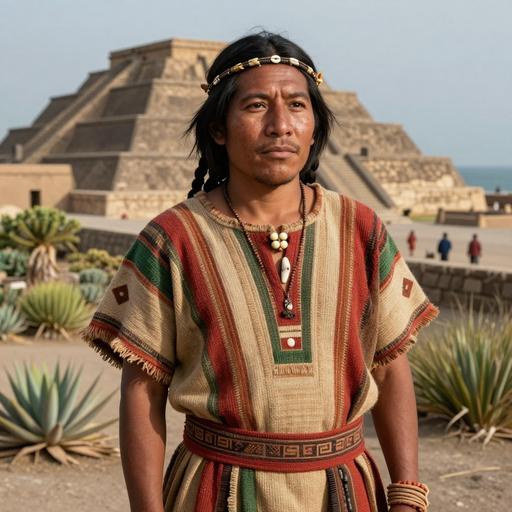
Portrait reconstruction of I0967
Ancient Individual

A man buried in Peru in the Pre-Columbian South America era

I0967
900 CE - 1470 CE
Male
Late Intermediate Period Ychsma Culture, Peru
Peru
Scroll to begin
Chapter I

Identity

The biological and cultural markers that define this ancient individual

Sample ID

I0967

Date Range

900 CE - 1470 CE

Biological Sex

Male

mtDNA Haplogroup

B2

Y-DNA Haplogroup

Q-M3

Cultural Period

Late Intermediate Period Ychsma Culture, Peru

Chapter II

Place

Where this individual was discovered

Country Peru
Locality Lima. Huaca Pucllana
Chapter III

Time

When this individual lived in the broader context of human history

I0967 900 CE - 1470 CE
Chapter IV

Story

The narrative of this ancient life

The Ychsma culture thrived during the Late Intermediate Period in the Andean region of what is now modern-day Peru, specifically from approximately 1000 to 1476 CE. This era is part of the broader timeline within pre-Columbian Andean civilizations, following the decline of the Wari and preceding the rise of the Inca Empire.

Geographic Setting

The Ychsma culture was primarily centered around the central coast of Peru, notably within the Rimac and Lurín river valleys near present-day Lima. This region is characterized by arid coastal deserts punctuated by fertile river valleys, which allowed for agricultural development and supported the growth of complex societies. The proximity to the Pacific Ocean also provided plentiful marine resources.

Social and Political Organization

The Ychsma social structure was organized into small chiefdoms, which were likely governed by local curacas or chiefs. These leaders administered their local ayllus, or communal groups, which were fundamental to social and economic life. Kinship and kin-based organization were prevalent, directing land allocation, labor distribution, and the management of local resources.

As a coastal society, the Ychsma maintained a relatively decentralized political structure compared to their Andean highland counterparts. This allowed for considerable regional autonomy until the eventual conquest by the Incas in the late 15th century.

Economy and Subsistence

The Ychsma economy was agrarian yet diversified. The region's fertile valleys enabled the cultivation of various crops, including maize, beans, squash, and cotton. Advanced irrigation techniques, inherited and enhanced from preceding cultures like the Wari, helped maximize agricultural output in an otherwise dry landscape.

In addition to agriculture, fishing and marine resource gathering were crucial, given the proximity to the ocean. The combination of terrestrial and maritime resources provided a stable food supply and enabled trade with neighboring societies.

Architecture and Urbanism

The Ychsma culture is renowned for its architectural contributions, particularly adobe constructions. Their settlements included a mix of residential areas and ceremonial complexes. A notable architectural site from this period is Pachacamac, a major pilgrimage center and religious site characterized by its impressive temple complex and pyramidal structures.

These adobe structures often featured stepped platforms and plazas, used for both religious ceremonies and administrative gatherings. The construction techniques exhibited by the Ychsma, emphasizing sun-dried bricks and earthen materials, demonstrated their adaptation to the coastal environment and its resource limitations.

Religion and Cultural Practices

Religion played a central role in Ychsma society, with Pachacamac serving as one of the most important worship centers of the pre-Columbian Andes. The deity Pachacamac, considered a creator god and earth-maker, was venerated widely beyond just the Ychsma people, attracting pilgrims from various Andean regions.

Religious practices likely included elaborate ceremonies, offerings, and possibly human sacrifices, reflecting widespread Andean cosmology themes. The integration of religious beliefs into everyday life underscored the sociopolitical structure, where religious leaders had significant influence.

Art and Material Culture

Ychsma artisans were skilled in textile production, ceramics, and metallurgy. Their pottery often featured geometric designs and anthropomorphic figures, occasionally showcasing the use of polychrome techniques. Textiles crafted by the Ychsma, using cotton, demonstrated intricate weaving methods and vibrant dyes.

Material culture also reflected trade interactions, with goods exchanged across Andean regions, indicating a network of economic and cultural exchange. The presence of Spondylus shells and metalwork crafted from copper and gold alloy suggests connections with distant societies.

Interaction with Other Cultures

The Ychsma culture's position along the Pacific coast facilitated interactions with other Andean civilizations. This cultural exchange is evident in their material culture, which incorporates influences from adjacent societies. The Ychsma ultimately came under the influence of the expanding Inca Empire in the mid-15th century, integrating into the vast Incan administrative system.

Legacy and Contributions

The Ychsma culture's contributions to Andean civilization, particularly through their architectural ingenuity and integration of complex religious structures, remain a testament to their societal achievements. While eventually absorbed into the Inca Empire, the Ychsma’s distinct cultural identity significantly impacted the cultural landscape of pre-Columbian Peru, influencing subsequent cultural and historical developments in the region.

Chapter V

Genetics

The genetic ancestry of this ancient individual

Ancient Genetic Admixture

This analysis compares the DNA profile of I0967 with ancient reference populations, showing the genetic composition in terms of prehistoric ancestral groups.

Ancient Native Americans 77.5%
Ancient Asians 22.5%

Modern Genetic Admixture

This analysis compares the DNA profile with present-day reference populations, showing what percentage of genetic makeup resembles modern populations from different regions.

America 91.2%
America 91.2%
Native American 91.2%
Asia 8.8%
Northern Asian 4.3%
Siberian 4.3%
Chinese & Southeast Asian 2.8%
Tibetan 2.3%
Japanese & Korean 1.7%
Japanese 1.7%

Closest Modern Populations

These are the modern populations showing the closest statistical alignment to A man buried in Peru in the Pre-Columbian South America era, ranked by genetic distance. Lower distance values indicate closer statistical similarity.

1
Piapoco
1.7873
2
Aymara
2.1859
3
Wichi
2.3287
4
Yukpa
2.3323
5
Karitiana
3.2771
6
Bolivian Lapaz
3.3132
7
Colla
3.8013
8
Cachi
4.3207
9
Surui
4.3396
10
Mixe
4.4303
Chapter VI

Context

Other ancient individuals connected to this sample

Sources

References

Scientific publications and genetic data

Scientific Publication

A Paleogenomic Reconstruction of the Deep Population History of the Andes

Authors Nakatsuka N, Lazaridis I, Barbieri C
Abstract

There are many unanswered questions about the population history of the Central and South Central Andes, particularly regarding the impact of large-scale societies, such as the Moche, Wari, Tiwanaku, and Inca. We assembled genome-wide data on 89 individuals dating from ∼9,000-500 years ago (BP), with a particular focus on the period of the rise and fall of state societies. Today's genetic structure began to develop by 5,800 BP, followed by bi-directional gene flow between the North and South Highlands, and between the Highlands and Coast. We detect minimal admixture among neighboring groups between ∼2,000-500 BP, although we do detect cosmopolitanism (people of diverse ancestries living side-by-side) in the heartlands of the Tiwanaku and Inca polities. We also highlight cases of long-range mobility connecting the Andes to Argentina and the Northwest Andes to the Amazon Basin. VIDEO ABSTRACT.

G25 Coordinates

The G25 coordinates for sample I0967 can be used for detailed admixture analysis in our G25 Studio tool.

I0967,0.05603194,-0.31971182,0.11055964,0.10001564,-0.112981,-0.00918434,-0.30581078,-0.35971956,-0.01557484,-0.01725336,0.00061108,-0.00094018,-0.00108744,0.0254023,-0.00569064,-0.00020462,0.00629218,0.00295886,0.00040362,-0.00207946,-0.00109916,0.00832156,-0.00238238,-0.00520752,-0.00587011
Analyze in G25 Studio
Use code for 40% off Expires Feb 27