Menu
Store
Blog
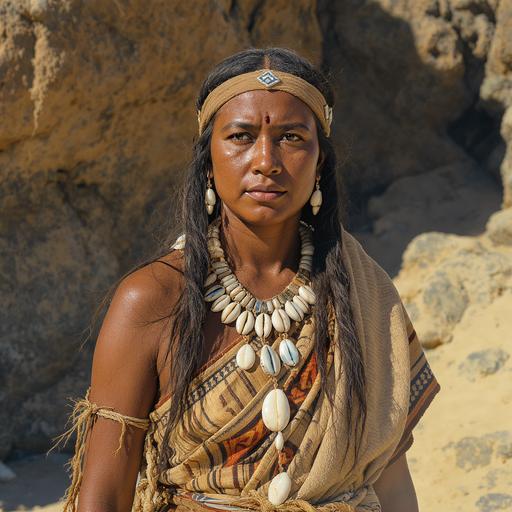
Portrait reconstruction of I11262
Ancient Individual

A woman buried in USA in the Native American era

I11262
896 CE - 1020 CE
Female
Chumash
USA
Scroll to begin
Chapter I

Identity

The biological and cultural markers that define this ancient individual

Sample ID

I11262

Date Range

896 CE - 1020 CE

Biological Sex

Female

mtDNA Haplogroup

D4h3a

Cultural Period

Chumash

Chapter II

Place

Where this individual was discovered

Country USA
Locality CA-SBA-17 (California, Carpinteria, Shalwaj)
Chapter III

Time

When this individual lived in the broader context of human history

I11262 896 CE - 1020 CE
Chapter IV

Story

The narrative of this ancient life

The Chumash are a Native American people who have historically inhabited the central and southern coastal regions of California, including the Channel Islands. This region is often referred to as Chumash territory, which includes modern-day San Luis Obispo, Santa Barbara, and Ventura counties, extending into parts of Los Angeles County. The Chumash culture is known for its rich tradition, complex society, and advanced maritime skills, which have been developed over thousands of years. Below is an extensive and detailed description of the Chumash culture and era:

Society and Social Structure

The Chumash society was hierarchically organized, with a sophisticated social structure that included a class of elites, commoners, and specialized craftspeople. The society was divided into different tribes or bands, each led by a chief or \wot," who held both political and spiritual authority. Leadership was typically hereditary, but leaders were expected to demonstrate personal ability and leadership skills. They played pivotal roles in decision-making, conflict resolution, and religious ceremonies.

The Chumash were also distinguished by their complex economic systems, including trade. They engaged in extensive trade networks that extended beyond their immediate region, exchanging goods such as shell beads, obsidian, and other highly valued materials with neighboring tribes.

Language and Communication

The Chumash people traditionally spoke a group of related languages, part of the larger Hokan language family. The most widely spoken language was probably the Barbareño Chumash, although several dialects existed throughout different regions. These languages were rich and complex, reflecting the intricacies of the Chumash culture.

Technology and Craftsmanship

One of the most significant technological achievements of the Chumash was the development of the "tomol," a plank-built boat. The tomol was a highly crafted canoe constructed from redwood or other local wood and sewn together with plant fibers. This engineering feat enabled long-distance travel and trade, facilitating the Chumash's control of coastal and island resources. These boats were pivotal in sustaining the Chumash economy and culture.

The Chumash were also skilled artisans, known for their basketry, stone tools, and shell bead making. Basketry was not only utilitarian but also an art form, showcasing intricate designs and techniques. Shell beads, particularly those made from Olivella shells, were used as a form of currency and were an essential element of trade.

Religion and Spirituality

The Chumash religion was deeply interconnected with their natural environment and cosmology. They practiced a shamanistic religion with complex rituals and ceremonies linked to their understanding of the world. The spiritual leaders, or "medicine men," played crucial roles in mediating between the physical and spiritual realms. These leaders were believed to have the power to heal, predict weather, and influence events through communication with spiritual entities.

The Chumash people placed a high value on dreams, visions, and spiritual experiences, often using datura (a psychoactive plant) to facilitate such experiences. Important religious centers, like the Painted Cave site in Santa Barbara County, feature intricate rock art that holds spiritual significance and provides insights into Chumash cosmology.

Art and Culture

Chumash art, particularly their rock art, is renowned for its complexity and beauty. The pictographs, found in sites like the Chumash Painted Cave State Historic Park, depict various shapes, animals, celestial bodies, and abstract designs, possibly representing spiritual visions or calendar events.

In addition to visual art, the Chumash possessed a rich oral tradition with stories and legends that conveyed moral lessons, historical events, and cultural knowledge. These stories were integral to maintaining cultural continuity and identity through generations.

Environment and Subsistence

Living in a resource-rich environment, the Chumash excelled in utilizing their natural surroundings. Their economy was based on a highly efficient system of subsistence that included fishing, hunting, and gathering. The coastal location provided abundant marine resources such as fish, shellfish, and sea mammals. They also hunted terrestrial animals like deer and rabbits and gathered plant foods including acorns, berries, and seeds.

The acorn, in particular, was a dietary staple. The Chumash developed a sophisticated process for leaching tannins from acorns to make them palatable and nutritious. This process involved grinding the acorns into meal, which was then washed and cooked to produce a porridge-like food called "wiwish."

Contemporary Chumash

Today, the Chumash people continue to celebrate and preserve their rich cultural heritage. They have established organizations to promote the revival and teaching of their languages, crafts, and traditions. Efforts are ongoing to protect sacred sites and to ensure the Chumash legacy endures for future generations. The Chumash Casino Resort, owned and operated by the Santa Ynez Band of Chumash Indians, is one contemporary manifestation of their continued presence and influence in the region.

In summary, the Chumash culture is exemplified by its adaptiveness, resourcefulness, and spiritual depth, characteristics that have not only enabled survival through changing historical circumstances but have also enriched the broader cultural mosaic of the Native American heritage."

Chapter V

Context

Other ancient individuals connected to this sample

Sources

References

Scientific publications and genetic data

Scientific Publication

Genetic continuity and change among the Indigenous peoples of California

Authors Nakatsuka N, Holguin B, Sedig J
Abstract

Before the colonial period, California harboured more language variation than all of Europe, and linguistic and archaeological analyses have led to many hypotheses to explain this diversity1. We report genome-wide data from 79 ancient individuals from California and 40 ancient individuals from Northern Mexico dating to 7,400-200 years before present (BP). Our analyses document long-term genetic continuity between people living on the Northern Channel Islands of California and the adjacent Santa Barbara mainland coast from 7,400 years BP to modern Chumash groups represented by individuals who lived around 200 years BP. The distinctive genetic lineages that characterize present-day and ancient people from Northwest Mexico increased in frequency in Southern and Central California by 5,200 years BP, providing evidence for northward migrations that are candidates for spreading Uto-Aztecan languages before the dispersal of maize agriculture from Mexico2-4. Individuals from Baja California share more alleles with the earliest individual from Central California in the dataset than with later individuals from Central California, potentially reflecting an earlier linguistic substrate, whose impact on local ancestry was diluted by later migrations from inland regions1,5. After 1,600 years BP, ancient individuals from the Channel Islands lived in communities with effective sizes similar to those in pre-agricultural Caribbean and Patagonia, and smaller than those on the California mainland and in sampled regions of Mexico.

Use code for 40% off Expires Feb 26