Menu
Store
Blog
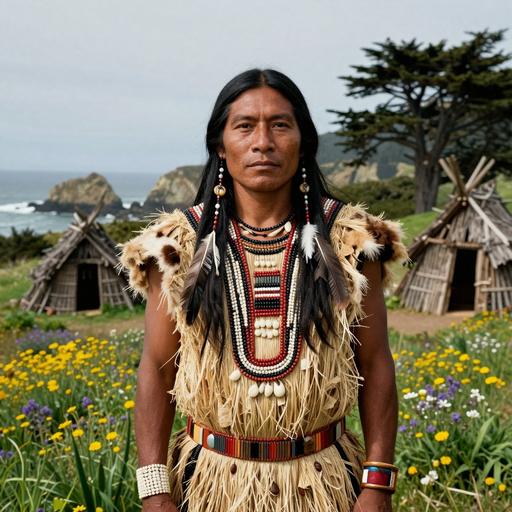
Portrait reconstruction of I11552
Ancient Individual

A man buried in USA in the Native American era

I11552
1666 CE - 1950 CE
Male
California Indigenous (Pacific Grove)
USA
Scroll to begin
Chapter I

Identity

The biological and cultural markers that define this ancient individual

Sample ID

I11552

Date Range

1666 CE - 1950 CE

Biological Sex

Male

mtDNA Haplogroup

D1f

Y-DNA Haplogroup

Q-M3

Cultural Period

California Indigenous (Pacific Grove)

Chapter II

Place

Where this individual was discovered

Country USA
Locality Pacific Grove (California)
Chapter III

Time

When this individual lived in the broader context of human history

I11552 1666 CE - 1950 CE
Chapter IV

Story

The narrative of this ancient life

The Ohlone people, also known as the Costanoans, are a Native American group that historically occupied the coastal areas of Northern California, primarily in what are today the San Francisco and Monterey Bay areas. The town of Pacific Grove, located on the Monterey Peninsula, lies within the traditional territory of the Rumsen Ohlone, one of the many linguistic groups that make up the broader Ohlone cultural complex. Understanding the culture of the Ohlone, particularly around Pacific Grove, requires an appreciation for their rich history, social structures, spiritual beliefs, and deep connection to the land.

Geography and Environment

The Ohlone territory stretches along California’s coast and inland areas, encompassing diverse ecosystems including coastal scrub, oak woodlands, grasslands, and estuaries. The Pacific Grove area, characterized by its rugged coastline, abundant marine life, and mild climate, provided the Rumsen Ohlone with a wide variety of natural resources. This region’s rich biodiversity supported complex networks of trade and sustenance for the indigenous people.

Social Structure and Community

The Ohlone were organized into small, semi-autonomous groups known as tribelets, each consisting of 50 to 500 individuals. The Rumsen Ohlone would have been one such group. These tribelets were largely self-sufficient but engaged in trade with neighboring groups to exchange goods not available locally. Tribelets were led by chiefs, who were responsible for maintaining social order, leading ceremonial activities, and making decisions regarding trade and warfare.

Subsistence and Economy

The Ohlone lifestyle was deeply connected to their environment which provided a bounty of resources. They practiced a hunter-gatherer economy, supplemented by seasonal activities and management of natural resources. The coastal location of Pacific Grove was especially advantageous, allowing the Rumsen Ohlone to harvest marine resources such as fish, shellfish, and sea mammals. Inland, they gathered acorns, seeds, fruits, and berries, and hunted game such as deer and rabbits. Traditional ecological knowledge guided their sustainable harvesting practices, including controlled burns to manage vegetation and encourage the growth of desired plant species.

Spiritual and Ceremonial Life

Spirituality among the Ohlone people was intimately tied to the land and natural world. They believed in the interconnectedness of all living things and the presence of spiritual forces in natural phenomena. The Ohlone had a rich oral tradition, with stories and songs that conveyed moral lessons and explained the origins of the world and their people.

Ceremonies played a vital role in Ohlone culture, serving both religious and social functions. The Rumsen, like other Ohlone groups, participated in rituals that marked important seasonal changes and life events such as births, marriages, and deaths. Dances, music, and the use of ceremonial regalia, such as feathered costumes and beadwork, were integral to these events.

Art and Technology

Ohlone craftsmanship was highly skilled, with a notable proficiency in basketry. They created intricately woven baskets using native plants like willow, sedge, and bulrush, which served both practical and decorative purposes. These baskets were not only utilitarian objects but also held cultural and artistic significance.

In terms of technology, Rumsen Ohlone utilized tools and instruments made from locally sourced materials. Stone, bone, and shell were fashioned into implements for hunting, cooking, and crafting. The use of tule reeds to construct boats and other items demonstrated their ingenuity and adaptability to the coastal environment.

European Contact and Historical Changes

The arrival of European explorers and missionaries in the 18th century marked a significant turning point for the Ohlone people. The establishment of Spanish missions led to the disruption of traditional ways of life. Many Indigenous people were forced to convert to Christianity, and their lands were appropriated for agriculture and settlement by European newcomers. This led to a dramatic decline in the Ohlone population due to disease, forced labor, and loss of territory.

Despite these challenges, the Ohlone people have persevered. Today, they are actively working to revitalize their cultural heritage and assert their rights as Native people. Efforts to preserve and revive traditional languages, crafts, and ceremonies continue, as the Ohlone communities engage in cultural education and advocacy for the recognition of their historical and contemporary presence in California.

In summary, the California Indigenous culture of the Pacific Grove area, as embodied by the Rumsen Ohlone, is characterized by a deep symbiotic relationship with the land, a rich spiritual and ceremonial life, and a complex society adapted to the coastal environment. Despite historical disruptions, their enduring legacy continues to shape the cultural landscape of the region.

Chapter V

Context

Other ancient individuals connected to this sample

Sources

References

Scientific publications and genetic data

Scientific Publication

Genetic continuity and change among the Indigenous peoples of California

Authors Nakatsuka N, Holguin B, Sedig J
Abstract

Before the colonial period, California harboured more language variation than all of Europe, and linguistic and archaeological analyses have led to many hypotheses to explain this diversity1. We report genome-wide data from 79 ancient individuals from California and 40 ancient individuals from Northern Mexico dating to 7,400-200 years before present (BP). Our analyses document long-term genetic continuity between people living on the Northern Channel Islands of California and the adjacent Santa Barbara mainland coast from 7,400 years BP to modern Chumash groups represented by individuals who lived around 200 years BP. The distinctive genetic lineages that characterize present-day and ancient people from Northwest Mexico increased in frequency in Southern and Central California by 5,200 years BP, providing evidence for northward migrations that are candidates for spreading Uto-Aztecan languages before the dispersal of maize agriculture from Mexico2-4. Individuals from Baja California share more alleles with the earliest individual from Central California in the dataset than with later individuals from Central California, potentially reflecting an earlier linguistic substrate, whose impact on local ancestry was diluted by later migrations from inland regions1,5. After 1,600 years BP, ancient individuals from the Channel Islands lived in communities with effective sizes similar to those in pre-agricultural Caribbean and Patagonia, and smaller than those on the California mainland and in sampled regions of Mexico.

Use code for 40% off Expires Feb 26