Menu
Store
Blog
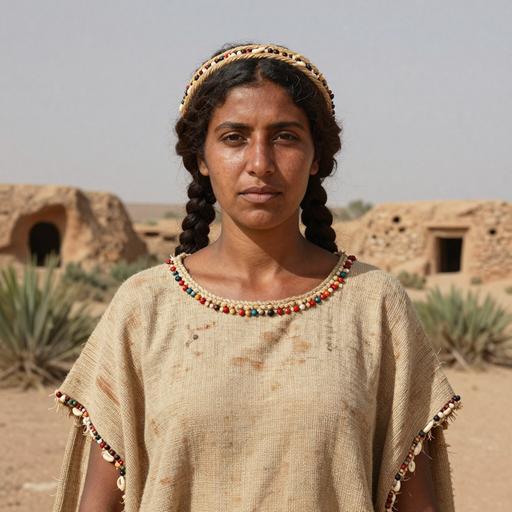
Portrait reconstruction of IAM.4
Ancient Individual

An individual buried in Morocco in the Neolithic era

IAM.4
4348 BCE - 4171 BCE
Not known
Early Neolithic Era in Morocco
Morocco
Scroll to begin
Chapter I

Identity

The biological and cultural markers that define this ancient individual

Sample ID

IAM.4

Date Range

4348 BCE - 4171 BCE

Biological Sex

Not known

mtDNA Haplogroup

U6a1b

Cultural Period

Early Neolithic Era in Morocco

Chapter II

Place

Where this individual was discovered

Country Morocco
Locality Ifri n'Amr or Moussa
Coordinates 33.8841, -5.9326
Chapter III

Time

When this individual lived in the broader context of human history

IAM.4 4348 BCE - 4171 BCE
Chapter IV

Story

The narrative of this ancient life

The Early Neolithic era in Morocco marks a significant transition in the region's prehistory, characterized by the advent of agricultural practices, permanent settlements, and the development of new technologies. This period, generally dating from around 6000 to 3000 BCE, saw profound changes in the way human societies were organized in North Africa, particularly among the ancestors of the Berber people.

Geography and Environment

Morocco's diverse geography—ranging from the Mediterranean and Atlantic coastlines to the rugged Atlas Mountains and the expansive Sahara Desert—played a crucial role in shaping human settlement and culture during the Early Neolithic. This period saw the spread of communities into various ecological zones, where they adapted their agricultural and pastoral practices to local conditions.

Subsistence and Economy

One of the defining features of the Early Neolithic period in Morocco is the shift from a predominantly hunter-gatherer lifestyle to one based on agriculture and animal husbandry. Archaeological evidence suggests that the communities began cultivating cereals like barley and wheat, introduced from the Near East. The domestication of animals such as sheep and goats also became prevalent, indicating a move towards a more sedentary lifestyle.

This transition to farming was not abrupt but rather gradual, with evidence of mixed economies that combined traditional hunting and gathering with new agricultural practices. The exploitation of marine resources along the coast also continued, contributing to a diversified subsistence strategy.

Settlements and Architecture

The Early Neolithic period saw the establishment of permanent and semi-permanent settlements. These early villages were often located in fertile valleys and near water sources, which were crucial for agriculture. Archaeologists have uncovered evidence of circular and oval houses made from perishable materials like wood and reeds, with later structures incorporating stone elements. These settlements indicate the beginning of more complex social structures and community organization.

Technology and Material Culture

The technological advancements of the Early Neolithic in Morocco were significant. The use of polished stone tools became widespread, representing a leap from the earlier flaked stone tools of the Paleolithic. Tools such as sickles, grinding stones, and digging implements highlight the importance of agriculture during this period.

Pottery also emerged during the Early Neolithic, with the creation of simple, undecorated vessels used for storage and cooking. This innovation reflects changes in food preparation and storage practices aligned with settled life.

Cultural and Social Developments

The Early Neolithic era was a time of increasing cultural complexity. While specific details about the social structures of these communities remain elusive, the existence of organized settlements and the investment in architectural projects suggest the beginnings of social stratification and perhaps the emergence of leadership roles.

Burial practices from this period, although not extensively documented, provide some insight into the spiritual or religious beliefs of these early Neolithic communities. The existence of grave goods within burial sites suggests a belief in an afterlife and the importance of ritual practices.

Genetic and Linguistic Aspects

The Early Neolithic in Morocco is also central to discussions about the ancestry and linguistic heritage of the Berber (Amazigh) peoples. While the specific origins of the Berber languages are not fully understood, the diffusion of Afroasiatic languages across North Africa is believed to have neolithic roots. Genetic studies suggest that contemporary Berbers are descendants of the pre-Neolithic populations mixed with subsequent waves of Neolithic farmers from the Near East.

Interaction and Exchange

Interaction with neighboring regions was a significant aspect of Neolithic Morocco. The diffusion of agricultural practices and domesticates from the Near East is evidence of long-distance contacts that facilitated the exchange of ideas, technologies, and materials. Additionally, the potential for cultural exchanges across the Sahara with Sub-Saharan Africa and across the Mediterranean with southern Europe might have influenced the development of Neolithic cultures in Morocco.

Conclusion

The Early Neolithic era in Morocco represents a foundational period in the region's history, marked by transformative changes in economy, society, and culture. As ancestors of the Berber people, these early communities laid the groundwork for the complex societies that would flourish in North Africa in subsequent millennia. Through careful archaeological investigation, researchers continue to uncover the rich legacy of this pivotal era.

Chapter V

Context

Other ancient individuals connected to this sample

Sources

References

Scientific publications and genetic data

Scientific Publication

Ancient genomes from North Africa evidence prehistoric migrations to the Maghreb from both the Levant and Europe

Authors Fregel R, Méndez FL, Bokbot Y
Abstract

The extent to which prehistoric migrations of farmers influenced the genetic pool of western North Africans remains unclear. Archaeological evidence suggests that the Neolithization process may have happened through the adoption of innovations by local Epipaleolithic communities or by demic diffusion from the Eastern Mediterranean shores or Iberia. Here, we present an analysis of individuals' genome sequences from Early and Late Neolithic sites in Morocco and from Early Neolithic individuals from southern Iberia. We show that Early Neolithic Moroccans (∼5,000 BCE) are similar to Later Stone Age individuals from the same region and possess an endemic element retained in present-day Maghrebi populations, confirming a long-term genetic continuity in the region. This scenario is consistent with Early Neolithic traditions in North Africa deriving from Epipaleolithic communities that adopted certain agricultural techniques from neighboring populations. Among Eurasian ancient populations, Early Neolithic Moroccans are distantly related to Levantine Natufian hunter-gatherers (∼9,000 BCE) and Pre-Pottery Neolithic farmers (∼6,500 BCE). Late Neolithic (∼3,000 BCE) Moroccans, in contrast, share an Iberian component, supporting theories of trans-Gibraltar gene flow and indicating that Neolithization of North Africa involved both the movement of ideas and people. Lastly, the southern Iberian Early Neolithic samples share the same genetic composition as the Cardial Mediterranean Neolithic culture that reached Iberia ∼5,500 BCE. The cultural and genetic similarities between Iberian and North African Neolithic traditions further reinforce the model of an Iberian migration into the Maghreb.

Use code for 40% off Expires Feb 27