Menu
Store
Blog
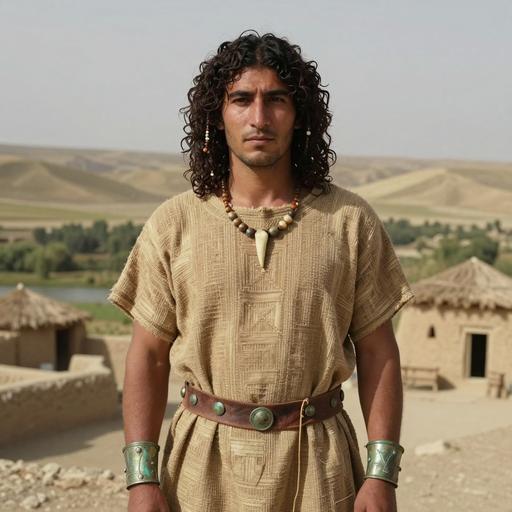
Portrait reconstruction of MT23
Ancient Individual

A man buried in Azerbaijan in the Bronze Age era

MT23
4000 BCE - 6000 BCE
Male
Shulaveri-Shomutepe Culture of Bronze Age Azerbaijan
Azerbaijan
Scroll to begin
Chapter I

Identity

The biological and cultural markers that define this ancient individual

Sample ID

MT23

Date Range

4000 BCE - 6000 BCE

Biological Sex

Male

mtDNA Haplogroup

Not available

Y-DNA Haplogroup

J-Z42957

Cultural Period

Shulaveri-Shomutepe Culture of Bronze Age Azerbaijan

Chapter II

Place

Where this individual was discovered

Country Azerbaijan
Locality Mentesh Tepe (western Azerbaijan, Tovuz district)
Coordinates 41.0018, 45.6506
Chapter III

Time

When this individual lived in the broader context of human history

MT23 4000 BCE - 6000 BCE
Chapter IV

Story

The narrative of this ancient life

The Shulaveri-Shomutepe culture, also often referred to as the Shulaveri-Shomu culture, represents an ancient Neolithic culture that was predominantly active in the Southern Caucasus region, covering areas that are now part of modern-day Azerbaijan, Georgia, and Armenia. It existed roughly between 6000 and 4000 BCE, long predating the Bronze Age. However, it laid some foundational aspects for the cultures that followed, including those during the Bronze Age in the Caucasus region.

Geographical Setting and Archaeological Sites

The Shulaveri-Shomutepe culture was primarily located in the Transcaucasian region. Key archaeological sites associated with this culture include Shulaveri in Georgia, Shomutepe in Azerbaijan, and other notable sites like Gadachrili Gora and Imiris Gora. Most of these sites are located in fertile valleys that provided rich opportunities for agriculture and pastoralism. The climate and geography allowed the culture to develop agricultural practices, which were supplemented by animal husbandry.

Social Organization and Economy

The Shulaveri-Shomutepe culture is characterized by its early village settlements, which signify a move towards a more sedentary lifestyle. These settlements usually consisted of circular mud-brick houses, often grouped closely together, indicating a communal lifestyle. The society was likely tribal and organized around kinship, with a prominent focus on agricultural activities.

Economically, this culture was based on a mixed economy of agriculture and livestock rearing. They practiced early forms of agriculture, cultivating plants such as wheat and barley and possibly legumes like peas and lentils. The domestication of animals such as goats, sheep, and cattle played an integral role in their subsistence strategy. Evidence of hunting, fishing, and gathering of wild fruits complements the picture of a diverse subsistence strategy.

Material Culture and Technology

The material culture of the Shulaveri-Shomutepe includes a rich tradition of pottery, which is one of its defining features. The pottery was typically handmade and decorated with various incised or impressed patterns. The ceramics were often simple and functional, used primarily for storage, cooking, and serving food.

Lithic tools were also prevalent, with flint and obsidian being the primary materials. These tools included primarily arrowheads, sickles, and scrapers, reflecting their agricultural and hunting activities. The presence of obsidian points to extensive trade networks, as it had to be sourced from regions rich in volcanic activity.

Spiritual and Religious Beliefs

While specific religious practices of the Shulaveri-Shomutepe culture are not well-documented, the presence of clay figurines and amulets suggests that they likely practiced animism or totemism. The figurines, often depicting humans and animals, may have been used in rituals or as part of a spiritual or religious belief system. Burial practices, though not extensively evidenced, likely included some form of rites, indicated by grave goods found in a few excavations.

Cultural Legacy and Influence

Though the Shulaveri-Shomutepe culture diminished by the end of the 4th millennium BCE, it laid essential foundations for subsequent cultures in the Early Bronze Age Caucasus region. It influenced the Kura-Araxes culture that followed, which adopted and adapted many of the subsistence strategies and technological advancements of the Shulaveri-Shomutepe peoples.

Conclusion

The Shulaveri-Shomutepe culture is an essential chapter in the prehistory of the Caucasus region, marking a transition from nomadic hunter-gatherer bands to more settled agricultural communities. Its contributions to agriculture, material culture, and possibly early trade laid a foundation that other cultures built upon, leading to more complex social and cultural dynamics in the Bronze Age and beyond. Despite its ancient roots, the study of this culture provides crucial insights into the early development of human societies in the Caucasus, a region that would become a crucial nexus of cultural interaction and development in ancient history.

Chapter V

Context

Other ancient individuals connected to this sample

Sources

References

Scientific publications and genetic data

Scientific Publication

Genome-wide analysis of a collective grave from Mentesh Tepe provides insight into the population structure of early neolithic population in the South Caucasus

Authors Guarino-Vignon P, Lefeuvre M, Chimènes A
Abstract

Despite the localisation of the southern Caucasus at the outskirt of the Fertile Crescent, the Neolithisation process started there only at the beginning of the sixth millennium with the Shomutepe-Shulaveri culture of yet unclear origins. We present here genomic data for three new individuals from Mentesh Tepe in Azerbaijan, dating back to the beginnings of the Shomutepe-Shulaveri culture. We evidence that two juveniles, buried embracing each other, were brothers. We show that the Mentesh Tepe Neolithic population is the product of a recent gene flow between the Anatolian farmer-related population and the Caucasus/Iranian population, demonstrating that population admixture was at the core of the development of agriculture in the South Caucasus. By comparing Bronze Age individuals from the South Caucasus with Neolithic individuals from the same region, including Mentesh Tepe, we evidence that gene flows between Pontic Steppe populations and Mentesh Tepe-related groups contributed to the makeup of the Late Bronze Age and modern Caucasian populations. Our results show that the high cultural diversity during the Neolithic period of the South Caucasus deserves close genetic analysis.

Use code for 40% off Expires Mar 01