Menu
Store
Blog
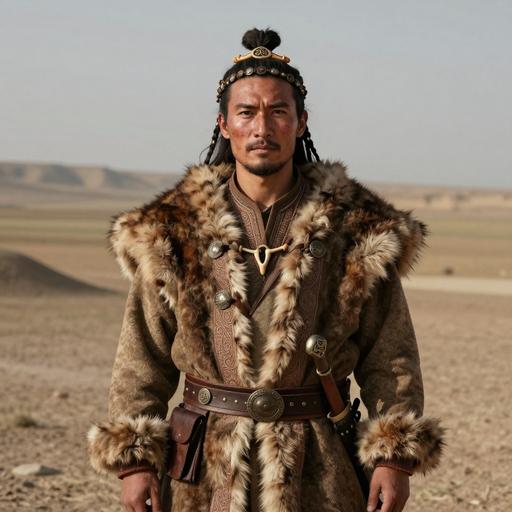
Portrait reconstruction of TAV005
Ancient Individual

A man buried in Mongolia in the Iron Age era

TAV005
200 BCE - 1500 CE
Male
Late Medieval Xiongnu
Mongolia
Scroll to begin
Chapter I

Identity

The biological and cultural markers that define this ancient individual

Sample ID

TAV005

Date Range

200 BCE - 1500 CE

Biological Sex

Male

mtDNA Haplogroup

D4j-c

Y-DNA Haplogroup

R-Y20747

Cultural Period

Late Medieval Xiongnu

Chapter II

Place

Where this individual was discovered

Country Mongolia
Locality Sukhbaatar. Tavan Tolgoi
Chapter III

Time

When this individual lived in the broader context of human history

TAV005 200 BCE - 1500 CE
Chapter IV

Story

The narrative of this ancient life

The Late Medieval period in the context of the Xiongnu and the broader nomadic steppe cultures of Mongolia, including the region of Sukhbaatar, presents a fascinating era marked by a complex interplay of cultural continuity and external influences. This period is characterized by the persistence of nomadic lifestyles and the integration of various cultural and technological innovations due to interactions with neighboring civilizations.

Historical Context

The Xiongnu were a confederation of nomadic tribes that inhabited the Central Asian steppes, emerging as a powerful entity around the 3rd century BCE. While the Xiongnu as an organized polity declined by the early centuries CE, their influences persisted in the region, echoing through subsequent cultures that occupied the steppes. By the Late Medieval period, the legacy of the Xiongnu was interwoven with other steppe cultures such as the Mongols, who rose to prominence under Genghis Khan in the 13th century.

Sociopolitical Structure

The Late Medieval steppe cultures, inheriting the Xiongnu's legacy, maintained a tribal and clan-based societal structure. They were predominantly pastoralists, relying on the mobility of their herds and equestrian skills, which were essential for their survival and economic prosperity. These societies were organized into loose confederations led by khans or tribal leaders, whose power was often rooted in both political acumen and military prowess.

The governance systems were fluid, with power dynamics frequently shifting due to inter-tribal alliances and conflicts. The concept of meritocracy was prevalent, where leaders gained authority based on their ability to lead and conquer rather than purely hereditary succession. This flexibility facilitated the emergence of formidable leaders capable of uniting disparate tribes.

Culture and Lifestyle

The culture of Late Medieval steppe societies was deeply tied to their environment. Nomads lived in felt-covered yurts, which were easy to dismantle and transport, suiting their itinerant lifestyles. These structures were not only practical but also richly adorned, reflecting the artistic expressions and cosmological beliefs of the people.

Social life was centered around clan and family units, with a strong emphasis on communal living and shared responsibilities. Storytelling, music, and oral traditions played a crucial role in preserving history and cultural values. Epic tales and songs narrated heroic deeds and moral lessons integral to the community’s identity.

Economy and Trade

The economy of the Late Medieval nomadic cultures was primarily based on livestock - horses, sheep, goats, and cattle formed the backbone of their livelihood. Trade played a significant role in their economy, evolving as a means to acquire goods not readily available in the steppes, such as silk, spices, and other luxury items from China and other settled societies.

Nomadic traders were instrumental in linking the East and West, facilitating cultural exchanges along the Silk Road. These interactions introduced new technologies, such as metallurgy and advanced weaponry, to the steppe cultures, enriching their material culture and military capabilities.

Religion and Beliefs

Religiously, the steppe nomads followed a shamanistic belief system that revolved around animism and the worship of Tengri, the sky god. Shamanism involved rituals and ceremonies believed to mediate between the human and spiritual worlds. This spiritual framework influenced every aspect of life, from societal customs to warfare tactics.

As time progressed, Buddhism gained a foothold, further modifying their spiritual landscape. The syncretism of shamanistic practices with Buddhist principles created a unique spiritual milieu that reflected a blend of indigenous beliefs and foreign influences.

Military and Warfare

Military capabilities were central to the steppe nomad success, characterized by highly mobile cavalry forces that capitalized on their unparalleled equestrian skills. Mastery in archery, particularly the use of the composite bow, gave them a tactical advantage over more sedentary armies.

Warfare was not just a means of territorial expansion but also crucial for defending pastures and trade routes. Alliances were often tested through conflicts, with successful campaigns leading to increased prestige and wealth for victorious tribes.

Conclusion

The Late Medieval era of Xiongnu and broader nomadic steppe cultures showcases a fascinating tapestry of resilience, adaptation, and cultural fusion. Despite their itinerant ways, these societies displayed remarkable stability, sustaining vibrant communities for centuries. Through strategic alliances, trade, and cultural exchanges, the nomadic tribes of Mongolia not only endured but thrived amidst the changing tides of history.

Chapter V

Genetics

The genetic ancestry of this ancient individual

Ancient Genetic Admixture

This analysis compares the DNA profile of TAV005 with ancient reference populations, showing the genetic composition in terms of prehistoric ancestral groups.

Ancient Asians 83.7%
Neolithic Farmers 7.3%
Western Steppe Pastoralists 7.0%
European Hunter-Gatherers 2.1%

Modern Genetic Admixture

This analysis compares the DNA profile with present-day reference populations, showing what percentage of genetic makeup resembles modern populations from different regions.

Asia 100.0%
Northern Asian 67.5%
Mongolian 42.6%
Siberian 24.9%
Central Asian, Northern Indian & Pakistani 32.5%
Central Asian 32.5%

Closest Modern Populations

These are the modern populations showing the closest statistical alignment to A man buried in Mongolia in the Iron Age era, ranked by genetic distance. Lower distance values indicate closer statistical similarity.

1
Mongol
3.2101
2
Khamnegan
3.5770
3
Buryat
4.1244
4
Kalmyk
4.3093
5
Mongolian
4.8844
6
Mongol Xinjiang
5.2178
7
Tuvinian
5.4191
8
Mogush
5.4680
9
Mongol Inner Mongolia
6.4440
10
Mongol IMAR
7.2983
Chapter VI

Context

Other ancient individuals connected to this sample

Sources

References

Scientific publications and genetic data

Scientific Publication

A Dynamic 6,000-Year Genetic History of Eurasia's Eastern Steppe

Authors Jeong C, Wang K, Wilkin S
Abstract

The Eastern Eurasian Steppe was home to historic empires of nomadic pastoralists, including the Xiongnu and the Mongols. However, little is known about the region's population history. Here, we reveal its dynamic genetic history by analyzing new genome-wide data for 214 ancient individuals spanning 6,000 years. We identify a pastoralist expansion into Mongolia ca. 3000 BCE, and by the Late Bronze Age, Mongolian populations were biogeographically structured into three distinct groups, all practicing dairy pastoralism regardless of ancestry. The Xiongnu emerged from the mixing of these populations and those from surrounding regions. By comparison, the Mongols exhibit much higher eastern Eurasian ancestry, resembling present-day Mongolic-speaking populations. Our results illuminate the complex interplay between genetic, sociopolitical, and cultural changes on the Eastern Steppe.

G25 Coordinates

The G25 coordinates for sample TAV005 can be used for detailed admixture analysis in our G25 Studio tool.

TAV005,0.04251482,-0.36311518,0.06953812,-0.02385784,-0.05300976,-0.02707294,0.0174339,0.01888964,0.00034672,0.00841186,-0.01197518,-0.00227808,-0.00191244,-0.00228826,-0.00030952,-0.01193192,-0.00767664,0.00371442,0.00698622,0.0074089,-0.01147408,-0.00729124,-0.00404144,0.00147564,0.00024696
Analyze in G25 Studio
Use code for 40% off Expires Feb 27